What is Generative Engine Optimization (GEO)? GEO is the practice of optimizing content so it can be effectively integrated into AI-driven search results, including platforms like ChatGPT, Perplexity, and Google AI Overviews.
As AI-powered tools continue to dominate the search landscape, ensuring your content is easily accessible to these systems has become more critical than ever. GEO goes beyond traditional SEO by focusing on how AI engines interpret, cite, and present content in their responses to user queries.
In the evolving digital ecosystem, AI-driven search is changing how people find information, with more users relying on AI to get direct answers without clicking on websites. As this trend grows, businesses need to adapt and optimize their content for these platforms to maintain visibility.
Centric helps businesses stay ahead in this rapidly changing environment by optimizing their content for both traditional search engines and AI-powered platforms, ensuring they remain visible and authoritative in the new age of search.
In this guide, you'll learn how to implement GEO effectively, strategies to boost your AI visibility, and platform-specific tactics that will help your content get cited in AI-generated answers.
What is Generative Engine Optimization?
Generative Engine Optimization (GEO) is the process of shaping content so that it can be easily discovered, understood, and cited by AI-powered platforms. Unlike traditional search engine optimization (SEO), which focuses on ranking web pages on search engines like Google, GEO prioritizes how content is processed and incorporated into AI-generated responses.
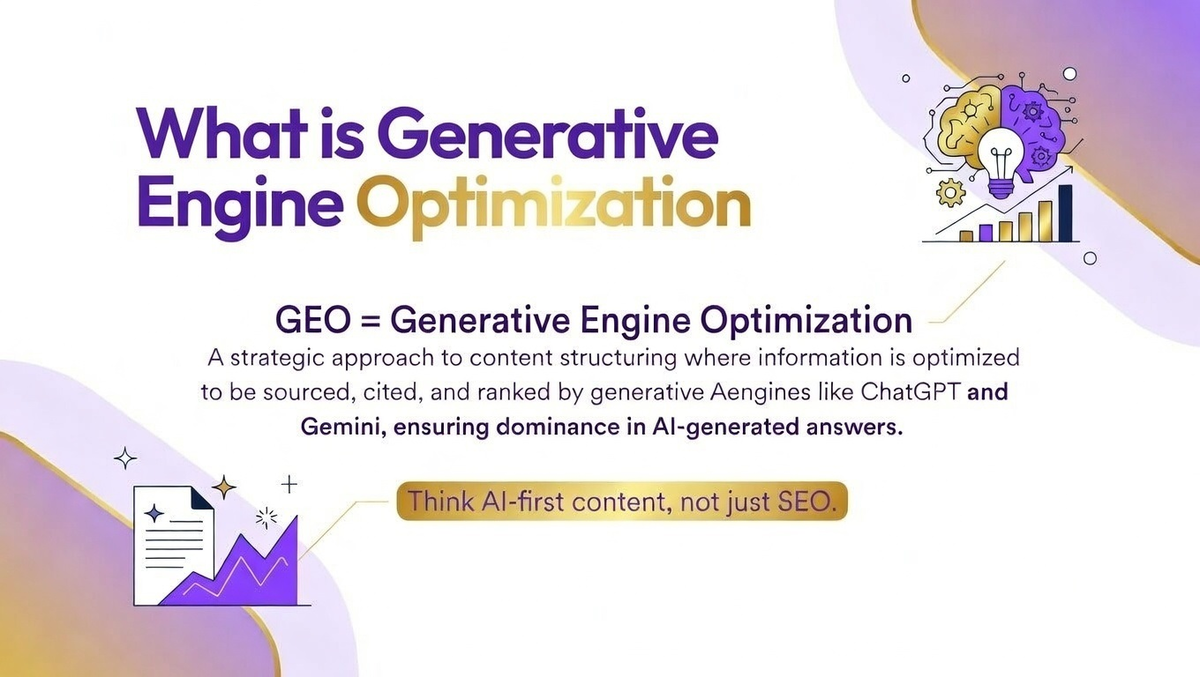
These platforms, such as ChatGPT, Perplexity, and Google AI Overviews, are revolutionizing how users find answers, often providing complete answers directly within the search results, without requiring them to click through to websites. GEO works by structuring content in a way that AI systems can efficiently parse and extract valuable information.
This involves creating content that is clear, fact-based, and semantically rich, which makes it more likely to be used in AI-generated answers. The focus is not just on ranking high in search results, but ensuring your content is cited as a trusted source in AI-driven responses. The key distinction between SEO and GEO lies in their end goals.
While SEO is about improving visibility in search rankings, GEO is about ensuring that your content gets featured and cited by AI engines. A closely related discipline worth understanding here is Answer Engine Optimization, which focuses specifically on structuring content to satisfy direct query responses a foundational concept that runs parallel to GEO's core goals.
This is where Generative AI & Knowledge Systems become foundational powering the very platforms that decide which content gets surfaced, cited, and trusted as authoritative in AI-generated responses.
GEO for AI-powered platforms emphasizes AI content optimization, enabling your content to be included in responses, which is becoming an increasingly crucial part of how search rankings and visibility are determined. As AI search systems evolve, the impact of GEO on search rankings will continue to grow.
How GEO Differs from Traditional SEO?
Traditional SEO focuses on improving website visibility through keyword ranking, backlinks, and user engagement signals. The primary goal is to secure higher positions on search engine results pages (SERPs) by optimizing content to match keyword intent and leveraging factors like page load speed, mobile-friendliness, and structured data.
It relies heavily on SEO tactics like generating high-quality, keyword-rich content, optimizing on-page elements (meta tags, headings), and building authority through external links. On the other hand, Generative Engine Optimization (GEO) shifts the focus from ranking to citation. Instead of aiming for clicks, GEO ensures that your content is used and cited by AI search engine algorithms like those in ChatGPT, Perplexity, and Google AI Overviews.
GEO optimizes content so that AI systems can extract and integrate it into their generated answers. It emphasizes generative content strategies that are clear, factual, and structured in a way that AI engines can easily interpret and incorporate into responses. Another significant difference lies in the role of generative content for SEO.
While SEO strategies optimize for user engagement and organic traffic, GEO optimizes for AI-driven citation, ensuring that your content is seen as a trusted source. As generative engine ranking factors evolve, content structured for AI platforms will become increasingly crucial.
Additionally, traditional SEO often relies on static, long-term content optimization, while GEO demands ongoing updates and adaptability to align with rapidly changing AI search systems.
Complementary strategies like Local SEO remain just as important in this landscape ensuring your business stays visible to geographically relevant audiences even as AI-driven search reshapes how broader queries are answered.
As search behavior shifts more towards AI search engine algorithms, GEO will be pivotal in maintaining visibility, even in environments where clicks are no longer the primary metric.
Start Optimizing for AI Search
Why Generative Engine Optimization is Important?
As search behavior continues to shift, Generative Engine Optimization (GEO) is becoming essential for businesses aiming to maintain visibility and stay competitive in a world dominated by AI-driven search engines.
While traditional SEO has been the backbone of digital marketing, GEO is emerging as a necessary complement, helping content stay relevant even as search engines evolve. By optimizing content for AI engines, businesses can ensure they remain visible in search results, even when users never visit their websites directly.
Zero-Click Search Trend
The rise of zero-click searches is significantly impacting organic traffic. In the past, search results primarily led to website visits. However, AI-driven platforms now provide direct answers within the search results themselves, often without requiring a click. This shift means that traditional SEO alone may no longer guarantee visibility.
How GEO impacts user experience is evident here: it ensures that your content is cited within these AI-driven answers, giving your brand exposure even without clicks. This trend highlights the importance of SEO Services for AI-based search engines to ensure your content is included in the answers AI systems generate.
Visibility in AI-Driven Responses
With AI-driven responses taking center stage, maintaining visibility is more challenging than ever. GEO allows your content to be featured in AI summaries and answers, helping to position your brand as a trusted source.
Generative content for SEO can drive your brand’s visibility in a world where traditional clicks are becoming less frequent. Through GEO, businesses can ensure their content is part of the conversation, even when users do not interact with a website directly.
The Changing Search Ecosystem
As AI continues to shape search behavior, it’s crucial for businesses to adapt to these changes. Generative content strategies that focus on AI-driven search are essential for staying relevant in this evolving landscape. The future of search is powered by AI, and Generative Engine Optimization is the key to ensuring your content continues to get discovered and cited.
GEO keeps your brand in the forefront of search results, making it an essential part of any long-term digital marketing strategy. The benefits of GEO in digital marketing will only continue to grow as AI search tools become more integrated into daily search experiences.
GEO as a Competitive Advantage
With AI platforms becoming the go-to source for information, businesses that embrace Generative Engine Optimization early will have a significant competitive advantage. GEO helps you stay ahead by making sure your content is recognized and cited by AI systems.
As the future of generative engine optimization unfolds, businesses that adopt GEO will be well-positioned to thrive in an AI-powered search ecosystem. This competitive advantage becomes even more important as AI-driven platforms take over traditional search roles.
Enhancing Brand Authority with GEO
AI search engines prioritize authoritative, fact-based content. By incorporating Generative Engine Optimization, businesses can ensure their content is seen as a credible source, which is vital for long-term success. GEO helps reinforce E-E-A-T (Experience, Expertise, Authoritativeness, Trustworthiness) signals, enhancing brand authority in the digital space.
Achieving this at scale, however, requires Secure, Governed GenAI Implementations ensuring that the AI systems surfacing your content operate within trusted, compliant, and transparent frameworks that reinforce rather than undermine your brand's credibility.
This is essential for ensuring your brand remains visible and recognized in AI-generated responses, even as the search landscape continues to evolve.
5 Key Factors to Implement GEO Successfully
To implement Generative Engine Optimization (GEO) successfully, it's crucial to focus on several key factors that make your content more likely to be cited by AI-powered search engines. These include building content authority, ensuring strong technical SEO foundations, and structuring content in a way that is AI-friendly.
As Generative engine ranking factors continue to evolve, understanding these core areas will help your content stand out in the competitive AI search landscape.
1. Content Authority & Trustworthiness (E-E-A-T)
One of the most important aspects of GEO is building content authority and trustworthiness. AI engines prioritize content that demonstrates E-E-A-T (Experience, Expertise, Authoritativeness, Trustworthiness). This means establishing your expertise by using credible sources, providing data-backed insights, and showcasing real-world experience.
Generative engine optimization techniques for building authority include linking to authoritative studies, citing peer-reviewed research, and featuring expert quotes or interviews in your content. The more your content is seen as trustworthy, the higher the likelihood that AI engines will select it for citation in generated responses.
2. Technical SEO Basics for GEO
Just as with traditional SEO, the technical aspects of your website play a significant role in GEO. To ensure AI engines can find and interpret your content, you need to make sure your website is fast, mobile-friendly, and free from technical issues.
Mobile optimization and site speed are important Generative engine ranking factors that directly affect how AI platforms assess your content. Structured content and proper schema markup are also essential for AI engines to understand and extract the right information from your pages. A clean, fast website with structured data improves your chances of appearing in AI-driven responses.
3. Content Structure for AI Engines
The way you structure your content is critical for AI engines. Generative engine optimization techniques suggest using clear headings, concise answers, and fact-based writing. AI engines tend to extract direct answers, so it’s vital to present information in a way that’s easy for these systems to process.
Break your content into well-defined sections, each answering a specific question or addressing a key point. Use H2 and H3 headings that mirror how users might ask questions in AI search, such as “What is the best practice for content marketing?” These structural tactics ensure that AI engines can easily pull your content and use it in their responses.
Start Growing with Content Today
4. Fresh and Relevant Content
AI-driven search engines prioritize up-to-date, relevant content. Regularly refreshing your content ensures that it remains useful and credible in the eyes of both users and AI platforms. By keeping your content current with the latest data, trends, and research, you increase its chances of being cited.
This is especially important for platforms like Perplexity, which heavily favor recent content. Generative engine ranking factors increasingly reward content that remains timely and aligned with current industry developments.
5. Multilingual and Multi-Format Content
In today's digital landscape, AI search engines pull content from a variety of formats, not just text. To make your content more accessible, consider creating multimedia elements such as videos, infographics, and podcasts that complement your written content.
Moreover, ensuring your content is available in multiple languages can further enhance its reach. These strategies allow you to optimize for Generative engine optimization across a broader spectrum, making your content more likely to appear in AI-generated responses across different platforms and languages.
Businesses that already invest in Programmatic SEO will find this particularly advantageous, as the scalable content frameworks used in programmatic approaches translate well into the structured, high-volume output that AI platforms favor for citation.

Platform-Specific GEO Optimization Strategies
Different AI platforms have unique preferences when it comes to selecting content for citation. Understanding the nuances of each platform will help ensure your content is optimized to meet their specific requirements.
This section focuses on the best practices for optimizing content for Generative Engine Optimization (GEO) across three key platforms: ChatGPT, Perplexity, and Google AI Overviews.
ChatGPT Optimization
To optimize for ChatGPT, focus on creating comprehensive, fact-based, and well-structured content. This AI platform values educational, authoritative content with clear sections, including definitions and detailed explanations.
Providing generative content strategies such as comparative analysis or answering specific user queries increases your content's likelihood of being cited by ChatGPT in its responses.
Perplexity Optimization
Perplexity AI prioritizes fresh, community-driven content, favoring recent data and real-world case studies. To optimize for Perplexity AI, include up-to-date statistics and relevant, user-generated examples.
Writing in a conversational style and addressing trending topics in your industry increases your chances of being cited. This Generative Engine Optimization strategy helps ensure your content stands out on Perplexity.
Google AI Overviews
Google AI Overviews look for structured content that answers queries directly. By using schema markup like FAQPage and HowTo, you make it easier for Google to pull your content for its AI-generated answers. Additionally, maintaining strong E-E-A-T signals and targeting position zero with concise, fact-based content ensures better chances of citation by Google’s AI system.
How to Measure GEO Performance?
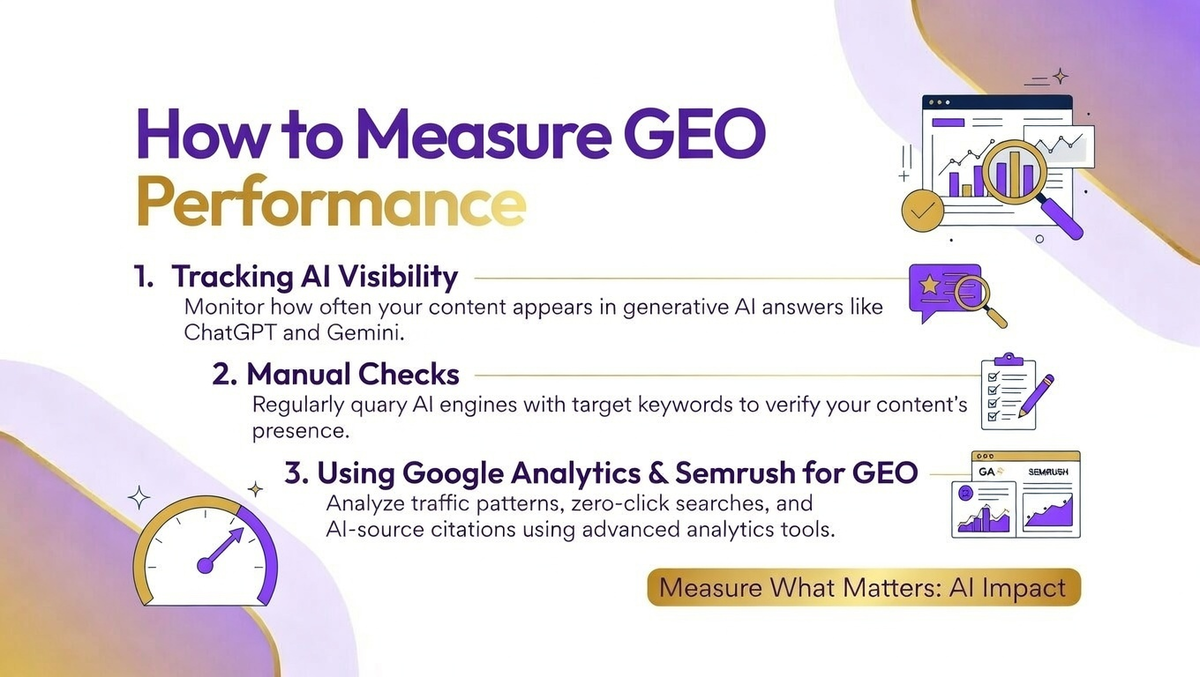
Measuring the performance of Generative Engine Optimization (GEO) requires tracking how often your content is cited by AI systems across multiple platforms. Monitoring your visibility in AI-generated responses ensures that your efforts are driving the desired results.
In this section, we’ll explore the tools and techniques to effectively measure GEO performance.
Tracking AI Visibility
There are dedicated tools to track your content’s visibility across multiple AI platforms. Tools like Frase AI Visibility monitor citations across ChatGPT, Perplexity, Google AI Overviews, and other platforms. These tools provide insights into how often your content is referenced, helping you track citation rates and make necessary adjustments to improve your Generative Engine Optimization efforts.
Manual Checks
Manual checks are a critical method to verify GEO performance. You can spot-check your content by querying AI platforms with key questions your content should answer. By assessing whether your content is cited, and the context in which it appears, you gain valuable insights into your content's relevance and visibility in AI-driven responses.
Using Google Analytics & Semrush for GEO
Both Google Analytics and Semrush offer valuable metrics for tracking AI-driven traffic. In Google Analytics, you can set up custom segments to monitor traffic from AI user agents like ChatGPT-User and PerplexityBot. Semrush’s AI Overview tracking lets you monitor AI visibility, providing data on Generative engine ranking factors and tracking how AI affects organic traffic.
4 Challenges and Best Practices in GEO
While Generative Engine Optimization (GEO) offers significant benefits, it also comes with its own set of challenges. Addressing these challenges requires ongoing effort and understanding of AI systems’ preferences. In this section, we’ll explore the common challenges.
1. Lack of Transparency in AI Systems
One of the major challenges of GEO is the lack of transparency in how AI platforms rank and cite content. AI systems like ChatGPT and Perplexity do not always disclose their reasoning for citations, making it difficult to predict how to optimize content. Continuous testing and adaptation are necessary for success in Generative content optimization.
2. Changing AI Algorithms
AI algorithms are constantly evolving, and keeping up with these changes is a significant challenge. Updates to AI platforms may shift the focus of Generative engine ranking factors, making previous optimization strategies obsolete. To counter this, regular audits and updates to your content are essential for maintaining strong AI visibility.
3. Content Freshness and Relevance
AI platforms prioritize fresh content, making it important to update your material regularly. Stale content, even if it ranks well on traditional search engines, may lose its relevance in AI-driven search results. Updating statistics, case studies, and industry trends will keep your content relevant, increasing your chances of being cited by AI systems.
4. Ensuring Quality and Accuracy
AI systems are trained to extract and synthesize data from various sources, which means ensuring content accuracy and quality is critical. Poor-quality content or misinterpreted facts can damage your chances of being cited. Maintaining high editorial standards and fact-checking your work regularly will help reinforce your credibility and trustworthiness.
4 Best Practices in GEO
Implementing Generative Engine Optimization (GEO) successfully requires following proven best practices that enhance your content’s chances of being cited by AI systems. These practices ensure that your content remains visible, relevant, and authoritative in the rapidly evolving AI search environment. Below are some best practices for GEO.
1. Prioritize High-Quality, Fact-Based Content
AI systems rely on content that is accurate, well-researched, and fact-based. To optimize for GEO, focus on producing content with clear, verifiable data, cited sources, and authoritative insights. Generative engine optimization techniques emphasize factual accuracy, making your content a trusted source for AI-driven platforms, ensuring it gets selected for citations.
2. Use Structured Data and Schema Markup
Implementing schema markup such as Article, FAQPage, and HowTo enhances AI systems’ ability to understand and display your content in response to queries. Structured data helps AI engines parse and pull content efficiently, improving the likelihood of your content being cited. Ensure that your content includes relevant schema to boost AI content optimization.
3. Write Clear and Concise Answers
AI platforms prefer content that provides clear, concise answers. Break down complex topics into easily digestible sections, each directly addressing a specific query. Use headings like "How to" or "What is" to frame content in a way that matches common AI search queries. This structure supports generative content for SEO by making your content AI-friendly.
4. Regularly Update Content to Maintain Relevance
AI platforms value content that remains current and relevant. Regularly refresh your articles with the latest data, statistics, and industry developments. This practice is crucial for ensuring your content remains competitive in AI-driven search results and continues to meet Generative engine ranking factors related to recency and relevance.
FAQs
What is Generative Engine Optimization (GEO)?
Generative Engine Optimization (GEO) is the practice of optimizing content to be easily cited by AI systems like ChatGPT and Google AI. Unlike traditional SEO, GEO focuses on improving content visibility within AI-driven search results, helping businesses stay relevant in the evolving digital landscape.
How does GEO differ from traditional SEO?
While traditional SEO focuses on ranking websites in search engine results, GEO prioritizes citation in AI-generated answers. GEO enhances content for AI algorithms to include it in responses, whereas SEO aims to drive clicks and increase organic search rankings through keywords and backlinks.
Why is Generative Engine Optimization important for SEO?
Generative Engine Optimization (GEO) is important because it helps content appear in AI-driven answers, ensuring visibility even in a zero-click search environment. As more users turn to AI platforms, integrating GEO into your SEO strategy will enhance brand authority and drive consistent exposure.
What are the best practices for implementing GEO?
Best practices for Generative Engine Optimization include using clear and concise content, implementing schema markup, prioritizing fact-based writing, and regularly updating material to ensure relevance. Structuring content for AI engines, with accurate data and authoritative sources, improves its chances of being cited in AI responses.
Conclusion
What is Generative Engine Optimization (GEO)? GEO is a vital strategy for businesses aiming to stay visible in the evolving AI-driven search landscape. As AI platforms like ChatGPT and Google AI Overviews continue to dominate search results, optimizing content for AI citation is becoming crucial.
By implementing GEO, businesses can maintain visibility even in a zero-click search environment, ensuring their content is recognized and trusted by AI systems.
Centric helps businesses leverage GEO for AI-powered platforms to stay ahead of the competition. Our expertise in Generative Engine Optimization (GEO) ensures that your content is optimized for maximum visibility, allowing your brand to thrive in the ever-changing digital ecosystem. Let Centric guide you through this shift and optimize your content for the future of search.