What are backlinks and why are they important for SEO?
Search engines like Google treat backlinks as votes of confidence, indicating that the linked content is valuable and trustworthy.
These links are a crucial part of SEO as they contribute to your website's authority and visibility in search results.
Backlinks play a significant role in improving your site's rankings.
The more high-quality backlinks you have, the more likely search engines are to consider your site as authoritative and rank it higher. However, not all backlinks are equal.
In this blog, we’ll dive into the importance of backlinks for SEO, how they influence search engine rankings, and effective strategies for building a strong backlink profile.
What are Backlinks?
Backlinks are links from one website to another. They act as signals of trust and authority in the eyes of best search engines like Google.
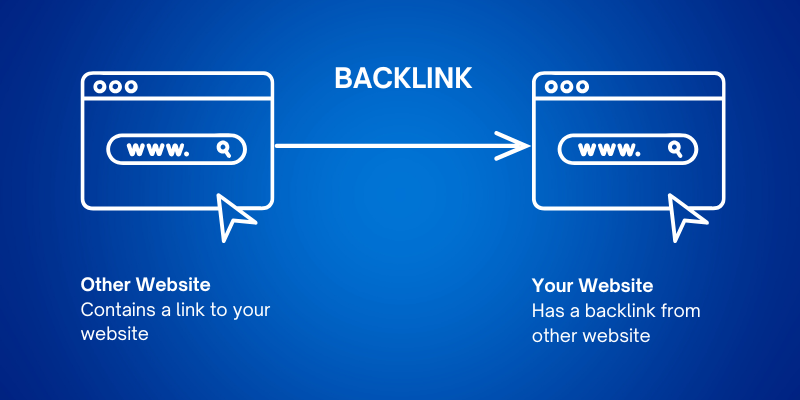
When a site links to your page, it’s essentially saying that your content is valuable and worth referencing.
Each backlink serves as a “vote” for your content’s credibility. The more high-quality backlinks your website earns, the more likely it is to rank higher in search results.
However, not all backlinks are equal; links from authoritative, relevant websites carry more weight than links from low-quality or unrelated sites.
Backlinks can be:
- Do-follow links: These pass authority (or “link juice”) to your site and help improve rankings.
- No-follow links: These don’t pass authority but still help drive traffic and diversify your link profile.
That said, backlinks are a key component of SEO, helping search engines determine how trustworthy and relevant your website is within its niche.
Why Backlinks Matter in SEO
Backlinks are crucial not only for improving your SEO rankings but also for other important reasons. Here’s why backlinks in SEO matter for your website:
-
Signal Credibility and Trust to Search Engines
Backlinks from authoritative websites act as a vote of confidence for your content. When high-quality websites link to your pages, it signals to search engines that your content is credible, trustworthy, and valuable. This can lead to a stronger domain authority, which positively impacts your SEO performance over time. -
Help Search Engines Discover Your Pages Faster
Backlinks help search engines discover and index your content more quickly. When other sites link to yours, it allows search engines to crawl and index your pages faster, which can accelerate your SEO rankings and ensure that your content is visible to a wider audience sooner. -
Drive Referral Traffic from Other Sites
In addition to SEO benefits, backlinks bring referral traffic directly from the websites that link to you. This type of traffic is highly valuable because it comes from visitors already engaged with the linking websites. It helps increase your website’s visibility, engage a new audience, and improve conversions.
What’s the Difference Between a Link and a Backlink?
Links are the connections that hold the web together. They allow users and search engines to move between pages and discover new content.
There are two main types of links:
- Internal links connect pages within the same website and help visitors navigate smoothly while guiding search engines through your site’s structure.
- External links lead to pages on other websites. They can provide context, cite sources, support claims, or recommend resources, adding value to the reader.
Every link has a direction. When it points outward from your page to another site, it’s an outgoing link. But from the perspective of the page receiving that link, it’s an incoming link, known as a backlink.
Search engines view backlinks as votes of confidence. When another website links to yours, it signals that your content is trustworthy and worth referencing.
Because of this, backlinks remain one of the strongest factors influencing search engine rankings.
Drive More Traffic with Our SEO Service!
How Backlinks Impact SEO?
Backlinks play a major role in how search engines evaluate and rank websites.
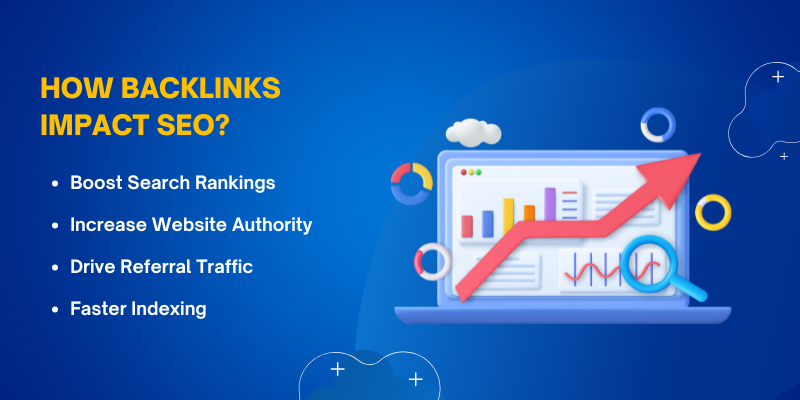
They act as endorsements, each link from another site tells search engines that your content is useful, credible, and worth showing to others.
Here’s how backlinks affect SEO:
- Boost Search Rankings: Search engines like Google treat backlinks as votes of trust. The more high-quality backlinks your site has, the higher it can rank in search results.
- Increase Website Authority: Backlinks from reputable websites strengthen your domain authority. This helps search engines see your site as a reliable source of information in your niche.
- Drive Referral Traffic: When users click on backlinks from other websites, they are directed to yours. This drives qualified, organic traffic that can lead to higher engagement or conversions.
- Faster Indexing: Backlinks help search engines find your content faster. When a search engine crawls another website that links to yours, it discovers your pages mong resources, or authority in your niche.re quickly.
In short, backlinks are one of the strongest SEO strategy signals.
How to Analyze and Monitor Your Backlink Profile for SEO Success?
Once you have started building backlinks, it’s crucial to monitor and analyze them regularly. Backlink analysis helps ensure that you are acquiring quality links that benefit your SEO strategy while avoiding harmful ones that could damage your website’s credibility and rankings.
Backlink Audits
Performing a backlink audit allows you to review the health and quality of your backlink profile. This step is essential because it helps identify links that may harm your rankings or come from low-authority sources. You can use best seo audit tool like Ahrefs, SEMrush, or Moz to perform a comprehensive backlink audit. These tools can show you:
-
Link Quality: Assess whether links are from authoritative sites.
-
Anchor Text Distribution: Ensure that anchor text is varied and not over-optimized for specific keywords.
-
Follow vs. No-Follow Links: Make sure your backlink profile has a healthy balance of do-follow and no-follow links.
Disavowing Toxic Backlinks
Not all backlinks are beneficial. Some links come from low-quality or spammy websites, which can trigger penalties from search engines. If you have identified toxic backlinks, it’s important to disavow them. Google’s Disavow Tool allows you to tell search engines to ignore specific backlinks. Here’s how to disavow links:
-
Identify toxic links via your backlink audit tools.
-
Create a file listing all URLs or domains you want to disavow.
-
Submit the disavow file to Google Search Console.
Remember, only disavow links that are genuinely harmful to your SEO disavowing too many links can also have a negative impact.
Ongoing Backlink Monitoring
Backlink monitoring is an ongoing process. Once you’ve established a strong backlink profile, it’s essential to keep an eye on it to ensure that your links remain valuable over time. You should regularly check your backlink profile to:
-
Track New Backlinks: Ensure new backlinks are from reputable sites.
-
Check for Lost Backlinks: Monitor backlinks that might have been removed or become broken.
-
Assess Backlink Velocity: Sudden spikes in backlink acquisition might look unnatural to search engines.
Tracking Backlink Impact
Monitoring your backlinks is also about measuring their impact on SEO performance. Here’s how to track the effects of your backlinks:
-
Organic Traffic: Use Google Analytics to track how much traffic your backlinks are driving to your website. A sudden increase in organic traffic after acquiring certain backlinks could indicate their effectiveness.
-
Search Rankings: Keep track of keyword rankings using SEO tools like SEMrush or Ahrefs. If your rankings improve after acquiring backlinks, it’s a good sign that they are helping.
-
Domain Authority (DA): Monitoring changes in your website's DA score can give you an idea of how the overall quality of your backlinks is affecting your site’s authority.
By regularly monitoring and analysing your backlinks, you can maintain a healthy backlink profile that continuously supports your SEO goals. It also allows you to quickly spot and fix any issues, ensuring that your website remains competitive in the search engine rankings.
Start Tracking Your SERP Positions
3 Common Types of Backlinks
Backlinks can be categorized into several types based on how they are acquired. Thus, understanding these different types is essential for developing an effective link building strategy.
Here are the main types of backlinks

1. Natural Backlinks
These are the most desirable type of backlinks. They occur organically when other websites find your content valuable and decide to link to it without any action required on your part. Natural backlinks are typically earned through high-quality content, compelling resources, or authority in your niche. Search engines consider these the most authoritative and relevant, which positively impacts your SEO.
2. Manual Backlinks
These backlinks are acquired through deliberate actions. In this case, a website owner or marketer actively reaches out to other websites for a link. This can include efforts like guest blogging, outreach campaigns, or requesting backlinks from influencers or authoritative sites. While these require more effort, manual backlinks can still be highly valuable if they come from relevant and reputable sources.
3. Self-Created Backlinks
These are the least desirable and potentially harmful types of backlinks. They are created by the website owner through self-promotion tactics, such as adding links to forums, comments, or directory listings where they control the content. While these backlinks can provide a quick way to gain links, they are often viewed as spammy by search engines, especially when used excessively. If not done cautiously, self-created backlinks can lead to penalties from search engines for violating their guidelines.
What Types of Backlinks Are Valuable?
Not all backlinks carry the same weight. Search engines prioritize quality over quantity, meaning that only certain types of backlinks truly help your SEO.
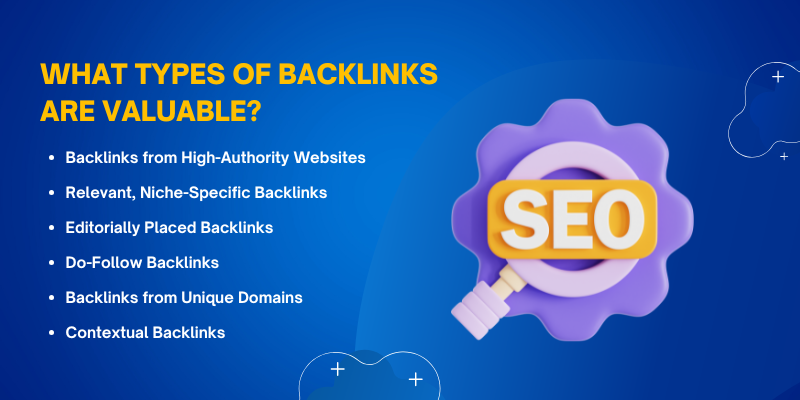
Here are the most valuable ones:
1. Backlinks from High-Authority Websites
Links from trusted, well-established sites (like major publications or government domains) signal strong credibility. These links pass more “link juice” and have a significant positive effect on rankings.
2. Relevant, Niche-Specific Backlinks
When the linking site’s content is closely related to your topic or industry, the backlink holds more value. Relevance helps search engines understand that your content fits within a specific subject area.
3. Editorially Placed Backlinks
These are natural links added by other site owners or writers because your content is genuinely useful. They differ from paid or forced links and are highly trusted by search engines.
4. Do-Follow Backlinks
Do-follow links allow search engines to follow them and transfer authority to your website. They are essential for improving domain authority and keyword rankings.
5. Backlinks from Unique Domains
Getting one backlink from ten different websites is far more powerful than ten links from a single domain. A diverse backlink profile signals broad trust and recognition.
6. Contextual Backlinks
Links placed naturally within relevant content, like in an article paragraph, are more valuable than links found in footers, sidebars, or author bios.
In short, valuable backlinks come from authoritative, relevant, and natural sources that align with your niche and add genuine value to readers.
How to Build High-Quality Backlinks for SEO Success?
A high-quality backlink, which is essential for boosting your website’s authority and improving its SEO rankings, is complemented by using the Best SEO Tools for Keyword Ranking Reports to track and enhance your performance.
Here are some effective strategies for building valuable backlinks:
1. Guest Blogging
Guest blogging is one of the most popular and effective ways to acquire backlinks. By writing valuable content for other reputable websites in your niche, you can include a backlink to your own website within the article. This not only helps you gain a backlink but also exposes your brand to a new audience. Make sure to focus on high-authority blogs and sites relevant to your industry for maximum impact.
2. Content Marketing
High-quality, shareable content is a great way to attract backlinks naturally. Use Content Marketing Tools to create informative, in-depth blog posts, infographics, case studies, or white papers that provide significant value to your audience. When other websites find your content useful, they are more likely to link back to it. Content marketing allows you to build backlinks over time and positions you as an authoritative source in your field.
3. Broken Link Building
Broken link building involves finding broken links on other websites and suggesting your own content as a replacement. Use best seo tools like Ahrefs or Check My Links to identify broken links on high-authority websites within your industry. Reach out to the site owner, inform them of the broken link, and offer your content as a relevant replacement. This strategy helps both you and the website owner by fixing a broken link while providing you with a new backlink.
4. Skyscraper Technique
The skyscraper technique involves finding top-performing content in your niche, creating something even better, and reaching out to websites that have linked to the original content. By offering a more valuable and updated resource, you increase the chances of acquiring backlinks from those sites. This method is a great way to capitalize on content that already has established backlinks.
5. Building Relationships with Influencers and Industry Experts
Establishing relationships with influencers, industry experts, and bloggers can help you secure valuable backlinks. By networking with thought leaders and contributing to discussions, interviews, or podcasts, you can earn backlinks to your website. Offering valuable insights or collaboration opportunities increases your chances of receiving backlinks from influential sites.
6. Social Media Promotion
While social media links are often no-follow, promoting your content on platforms like Twitter, LinkedIn, Facebook, and Instagram can indirectly help you earn backlinks. By sharing valuable content, your audience may share or reference it on their own websites or blogs, increasing the potential for organic backlinks.
Frequently Asked Questions (FAQs)
What are backlinks in SEO?
Backlinks are links from one website to another that search engines treat as endorsements of your site’s credibility and authority. They help signal to search engines like Google that your content is valuable and trustworthy, which can boost your visibility in search results.
How do backlinks impact my website’s search rankings?
Backlinks influence search rankings by acting as votes of confidence: the more high‑quality and relevant backlinks you have, the more likely search engines will rank your site higher. They also help increase your website authority and drive referral traffic from other sites.
What makes a backlink “high‑quality”?
A high‑quality backlink comes from an authoritative, niche‑relevant website and is placed naturally within valuable content (not hidden in footers or sidebars). These kinds of backlinks carry more “link juice” and are more influential for your SEO than links from low‑quality or spammy sites.
What are the different types of backlinks I should know about?
The main types of backlinks include natural backlinks (earned organically when other sites link to your content), manual backlinks (built through outreach or guest blogging), and self‑created backlinks (which can be low‑value or risky if overused). Each type has different impacts on your SEO profile.
Can too many or the wrong backlinks hurt my SEO?
Yes — if your backlink profile is dominated by links from irrelevant, spam‑filled, or low‑authority sites, your SEO can suffer. A link profile skewed toward poor‑quality or self‑created backlinks may trigger search engine penalties or erode trust signals.
Conclusion
Now that you know what are backlinks, you can improve your search engine rankings, enhance website authority, and drive organic traffic. They signal to search engines that your content is valuable and trustworthy, which ultimately helps increase visibility in search results. High-quality backlinks from authoritative sources carry more weight, improving your website's credibility and boosting its chances of ranking higher. For digital marketing, backlinks are not just about SEO; they also contribute to referral traffic and brand trust. Even leading companies like Centric, prioritize strong backlink strategies to reinforce their digital presence.
Websites with a strong backlink profile tend to attract more visitors and establish themselves as industry leaders. Therefore, building quality backlinks should be an integral part of any successful SEO and digital marketing strategy. By focusing on acquiring high-quality backlinks, you can improve your search rankings, enhance your brand’s authority, and ensure long-term success in the competitive digital landscape.