





What is AEO vs GEO is one of the most common questions marketers are asking as search continues to evolve. Terms like AEO, GEO, and AI-driven search are being used interchangeably, creating confusion across the industry.
While they may seem similar, understanding the differences is important for building a strong digital presence. This shift is why topics like AEO vs GEO explained and AEO vs GEO in digital marketing are gaining attention among businesses looking to stay visible.
Search behavior is no longer limited to typing short keywords into Google. Users are now asking detailed questions on platforms like ChatGPT and Gemini, expecting direct, conversational answers instead of a list of links. This change is pushing businesses to rethink how they create and structure content for both traditional search engines and AI-powered platforms.
Centric helps businesses adapt to these evolving search trends by aligning their strategies with both search engine optimization and emerging AI-driven discovery. In this blog, you will learn the key differences between AEO and GEO, how each approach works, and how to build a strategy that keeps your brand visible across both search engines and AI platforms.
What is Answer Engine Optimization (AEO)?
Answer Engine Optimization (AEO) is a method of creating content that directly answers user questions in a clear and structured way. If you are wondering what is AEO in SEO, it simply refers to optimizing content so search engines can easily extract and display answers on the results page.
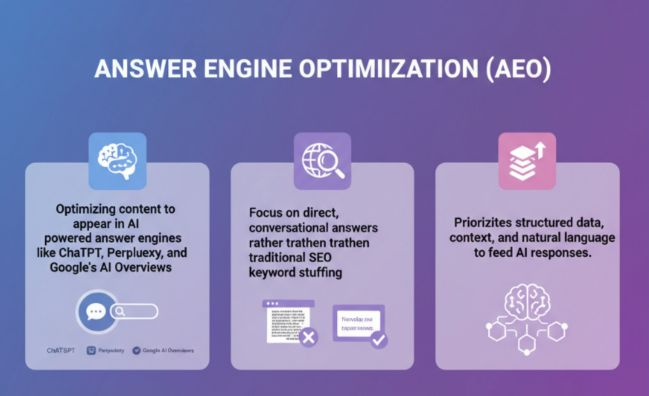
The answer engine optimization AEO meaning focuses on delivering precise, relevant information that satisfies user intent without requiring them to click multiple links.
AEO is built around structured content formats such as question-and-answer sections, concise explanations, and well-organized headings. Instead of only ranking pages, search engines now aim to provide instant answers.
This is where answer engine optimization techniques play a key role, helping content appear in featured snippets, knowledge panels, and voice search results.
How AEO Works in Practice?
AEO works by making content easy for search engines to understand and extract. This includes using structured formats like FAQs, clear headings, and direct answers to common questions. When done correctly, content can appear in positions such as AEO for featured snippets, where Google highlights a specific answer at the top of the search results.
It also supports voice search, where users ask questions naturally, and search engines respond with spoken answers. By aligning content with how people ask questions, businesses can improve their chances of being selected as the primary answer.
4 Benefits of AEO for Businesses
AEO services provide practical advantages for businesses aiming to improve their search presence. By focusing on clear and structured answers, it helps brands connect with users more effectively and stand out in competitive search environments.
As search engines prioritize direct responses, businesses using AEO can position themselves as reliable sources of information while improving both visibility and engagement.
1. Improved Visibility in Search Results
AEO increases the chances of your content appearing in featured snippets and direct answer boxes. This allows your brand to be seen at the top of search results without relying only on rankings.
2. Higher Quality Traffic
Users who click on AEO-optimized content already have clear intent. This results in more relevant traffic, which increases the likelihood of engagement and conversions.
3. Better SERP Positioning
AEO helps your content secure premium positions like featured snippets and voice search results. This improves your overall presence on the search engine results page.
4. Enhanced User Experience
Structured and clear answers make it easier for users to find information quickly. This builds trust and keeps users engaged with your content.
Explore Our Answer Engine Optimization Services
What is Generative Engine Optimization (GEO)?
Generative Engine Optimization (GEO) focuses on optimizing your brand’s presence within AI-generated answers. If you are wondering what is GEO in digital marketing, it refers to how businesses ensure their content and brand are recognized, understood, and included in responses generated by AI tools. Unlike traditional search, GEO is about being part of the answer itself, not just ranking for it.
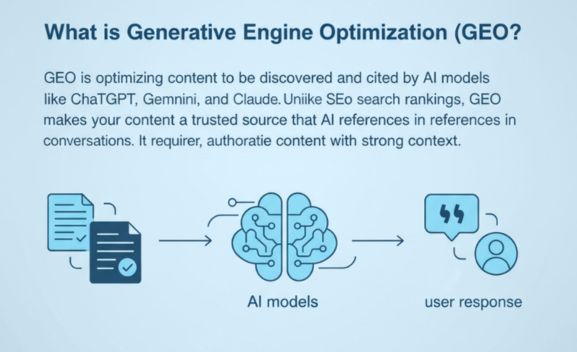
GEO works by aligning content with how AI systems process information. It involves creating high-quality, authoritative content that AI models can reference when generating responses. This is where GEO for AI search optimization becomes important, as businesses aim to appear in conversational results across different AI platforms.
How GEO Works in Practice?
GEO operates within AI-driven platforms like ChatGPT, Gemini, and other generative tools that provide direct answers to user queries. These platforms analyze vast amounts of data to generate responses, and your brand becomes part of that response when it has strong authority signals.
To achieve this, businesses need to focus on generative engine optimization strategies such as building strong content clusters, earning high-quality backlinks, and maintaining consistent brand mentions across trusted sources. AI systems rely heavily on entity authority and brand signals, meaning the more credible and consistent your digital presence is, the higher your chances of being included in AI-generated answers.
4 Benefits of GEO for Brands
GEO offers new opportunities for brands to stay visible in AI-driven environments. As users shift toward conversational search, being part of AI-generated responses becomes critical for long-term digital presence.
By focusing on GEO, businesses can strengthen their authority, improve brand recognition, and remain competitive in evolving search ecosystems.
1. Increased Brand Visibility in AI Responses
GEO ensures your brand appears within AI-generated answers across platforms like ChatGPT and Gemini. This allows your business to be seen even when users do not click through to a website.
2. Stronger Brand Authority and Trust
When AI systems consistently reference your brand, it builds credibility. Users are more likely to trust brands that appear in authoritative AI responses.
3. Better Positioning in Emerging Search Platforms
GEO helps businesses stay relevant as search shifts from traditional engines to AI-driven tools. This ensures long-term visibility across new discovery channels.
4. Enhanced Competitive Advantage
Early adoption of GEO gives brands an edge over competitors. Businesses that invest in GEO strategies now are more likely to dominate AI-driven search results in the future.
AEO vs GEO – Key Differences Explained
Understanding the AEO vs GEO difference is essential for businesses adapting to modern search. While both approaches aim to improve visibility, they operate in different environments and rely on different optimization methods. If you are wondering what is the difference between AEO and GEO, it comes down to how and where your content is discovered.
Platforms and Environments
-
AEO: Focuses on traditional search engines like Google and Bing, where users receive structured answers such as featured snippets, FAQs, and knowledge panels.
-
GEO: Applies to AI-driven platforms like ChatGPT and Gemini, where responses are generated conversationally instead of showing ranked lists of links.
Optimization Techniques
-
AEO: Relies on structured content, including clear headings, FAQ sections, and schema markup, to help search engines extract and display answers.
-
GEO: Focuses on entity-based authority, where brand credibility, consistent mentions, backlinks, and topical expertise signal trust to AI systems.
Measurement and Performance Tracking
-
AEO: Performance can be measured using tools like Google Search Console, where metrics such as rankings, impressions, and click-through rates are tracked.
-
GEO: Tracking is still limited, as there are no standardized tools available. It often requires manual audits of AI-generated responses to evaluate brand visibility, mentions, and accuracy.

When Should You Use AEO vs GEO?
Choosing between AEO and GEO depends on your business goals, audience behavior, and how users discover your brand. Both approaches serve different purposes, and understanding when to prioritize each can improve your overall visibility. In many cases, a balanced approach delivers the best results.
When AEO is the Right Choice?
AEO is ideal for industries that rely heavily on search engine traffic, such as healthcare, education, and local services. These sectors depend on users searching for direct answers, making structured content and featured snippets highly effective for visibility.
By optimizing content with clear answers, FAQs, and schema markup, businesses can secure top positions in search results. This approach helps attract users who are actively looking for specific information, resulting in consistent and high-intent traffic.
When GEO Becomes Essential?
GEO becomes important when your audience uses AI tools to discover solutions, especially in SaaS, B2B, and eCommerce industries. Users are increasingly relying on platforms like Gemini and ChatGPT to compare products, explore options, and make decisions.
In these cases, having strong brand authority, consistent mentions, and high-quality content increases the chances of being included in AI-generated responses. This ensures your brand remains visible even when users do not follow traditional search paths.
Why AEO and GEO Work Better Together?
AEO and GEO are not competing strategies but complementary ones. AEO focuses on capturing demand through traditional search engines, while GEO ensures your brand is represented in AI-generated answers.
By combining both approaches, businesses can maintain visibility across different user journeys. This creates a more complete strategy that supports both current search behavior and the growing shift toward AI-driven discovery.
How to Build a Combined AEO and GEO Strategy?
Building an effective AEO and GEO strategy requires aligning your content for both traditional search engines and AI-driven platforms. Businesses need to focus on clarity, authority, and consistency to stay visible across evolving search environments.
Understanding how to optimize for AEO and GEO ensures your brand can perform well in both structured search results and AI-generated answers.
Structuring Content for AEO
To succeed with AEO, content must be structured in a way that search engines can easily understand and extract. This includes using clear headings, FAQ sections, and concise answers that directly address user queries. These are key AEO GEO optimization techniques that improve your chances of appearing in featured snippets and voice search results.
Schema markup also plays an important role by helping search engines interpret your content more effectively. When your content is well-organized and focused on answering questions, it becomes easier for search engines to display it prominently in results.
Building Authority for GEO
GEO relies on building strong authority signals that AI systems can recognize and trust. This includes earning high-quality backlinks, maintaining consistent brand mentions, and creating content that demonstrates deep expertise within your niche.
A strong digital footprint is essential for GEO success. By developing topical authority and ensuring your brand is referenced across credible sources, you strengthen your chances of being included in AI-generated responses as part of a combined AEO and GEO SEO strategy.
Monitoring and Improving Performance
Tracking performance is important for both AEO and GEO, even though the methods differ. For AEO, businesses can rely on the best seo tools like Google Search Console to monitor rankings, impressions, and click-through rates.
For GEO, performance tracking involves auditing AI-generated responses to see how and where your brand is mentioned. Regular monitoring and adjustments help refine your strategy and ensure your content remains accurate, visible, and competitive across both search engines and AI platforms.
The Future of Search – AEO and GEO Together
Search is rapidly evolving as traditional search engines begin integrating AI-driven responses into their platforms. The distinction between search results and AI-generated answers is becoming less clear, making it important for businesses to adapt early. A combined approach ensures brands remain visible across both environments as user behavior continues to shift.
Convergence of Search and AI
Search engines are no longer limited to showing links. Platforms like Google are integrating AI-generated summaries and conversational responses directly into search results. This means users can get answers without leaving the search page.
As this convergence continues, AEO and GEO will naturally overlap. Businesses that structure content for both traditional indexing and AI interpretation will be better positioned to maintain visibility across all search experiences.
Emerging Opportunities in AI Search
AI search is creating new opportunities for brands to be discovered in ways that were not possible before. Instead of competing only for rankings, businesses can now appear directly within generated answers, increasing brand exposure.
This shift also improves brand positioning. When AI systems consistently reference a brand as a trusted source, it builds recognition and credibility, even without direct clicks or visits to a website.
Why Early Adoption Matters
Early adoption of AEO and GEO gives businesses a strong competitive advantage. As the landscape is still developing, there is less competition compared to traditional SEO, making it easier to establish authority.
Brands that invest early can build strong content foundations, authority signals, and visibility across platforms. This ensures they are well-positioned as AI-driven search becomes more mainstream and competitive.
FAQs
What is the main difference between AEO and GEO?
AEO focuses on optimizing content for search engines to display direct answers like featured snippets and FAQs. GEO, on the other hand, targets AI-driven platforms where responses are generated conversationally, ensuring your brand appears within AI-generated answers instead of just ranking on search engines.
Is AEO still important with the rise of AI search?
Yes, AEO remains important because traditional search engines still drive a large portion of traffic. It helps businesses appear in featured snippets and voice search results, making it a strong foundation while also supporting visibility in AI-integrated search environments.
How can businesses start implementing GEO?
Businesses can start GEO by building strong content authority, earning high-quality backlinks, and maintaining consistent brand mentions across trusted platforms. Creating in-depth, reliable content increases the chances of being referenced in AI-generated responses across tools like ChatGPT and Gemini.
Can AEO and GEO be used together in a strategy?
Yes, combining AEO and GEO creates a balanced approach. AEO helps capture visibility in traditional search engines, while GEO ensures presence in AI-driven platforms. Using both together allows businesses to reach users across different search behaviors and stay competitive in evolving digital landscapes.
Conclusion
Understanding what is AEO and GEO is essential for businesses aiming to stay relevant in a rapidly changing search landscape. AEO helps brands capture visibility through structured answers on traditional search engines, while GEO ensures presence within AI-generated responses across modern platforms.
Together, they create a complete strategy that supports both current search behavior and future discovery trends. As users shift toward conversational and AI-driven search experiences, businesses must adapt their content and strategies accordingly. Relying only on traditional SEO is no longer enough to maintain consistent visibility and engagement.
Centric supports businesses in building strong, future-ready strategies that align with both search engines and AI ecosystems. By combining structured content with authority-driven signals, brands can stay competitive and visible.
Partner with Centric to build a future-ready search strategy that keeps your brand visible across both search engines and AI-driven platforms.