What Is A Brand Audit and why do so many growing brands suddenly feel “off” despite strong products or services? The gap usually isn’t effort—it’s perception. Over time, how a brand thinks it shows up and how it’s actually experienced in the market can quietly drift apart.
As businesses scale, launch new offerings, or expand across digital channels, small inconsistencies start adding up. Messaging evolves, visuals change, teams interpret the brand differently, and customer expectations shift.
Without a regular brand assessment, these changes often go unnoticed until engagement drops, trust weakens, or competitors start to feel more relevant.
This is where a structured what is a brand audit approach becomes critical. A brand audit goes beyond surface-level design checks. It evaluates how clearly your brand promise is communicated, how consistently it’s delivered, and whether your positioning still aligns with your business goals.
For many organizations, this process also includes a brand identity audit, reviewing visuals, tone, and internal usage to ensure everything reflects the same story.
At Centric, we see brand audits as a practical way to bring clarity back into complex digital ecosystems—especially for brands operating across multiple platforms, teams, and markets. Knowing how to do a brand audit helps organizations move from assumptions to evidence-based decisions.
In this blog, you’ll learn exactly what a brand audit is, what it covers, when it’s needed, and how it helps brands regain alignment, build trust, and stay competitive in a crowded digital landscape.
What is a Brand Audit?
A brand audit is a comprehensive evaluation of how your brand is perceived both internally and externally. It involves examining various aspects of your brand’s presence in the market, including visual identity, messaging, customer perception, and overall alignment with business objectives.
The purpose of this exercise is to gather data on how your brand is performing compared to competitors and whether it is effectively communicating its value to the audience. It helps businesses uncover gaps, strengths, and weaknesses within their current strategy.
The brand audit process delves into multiple facets of your brand’s interactions with customers, employees, and external stakeholders.
Unlike a brand marketing audit, which focuses mainly on evaluating marketing efforts such as campaigns, sales channels, and ROI, a branding audit goes deeper into understanding the overall brand identity, consistency, and alignment with the brand's mission.
It helps identify whether the brand’s image matches the promises it makes and whether it is positioned correctly in the market. Furthermore, unlike a rebrand, which involves redefining or changing the entire brand’s identity, a brand audit aims to ensure the brand remains true to its core while identifying opportunities for improvement.
Brand Audit vs Brand Refresh
A brand audit is typically conducted when a business needs clarity on how its brand is performing and whether it is truly resonating with its target audience. It helps identify areas for improvement and growth without necessarily changing the core identity of the brand awareness.
A brand refresh, on the other hand, may be needed when there are deeper issues with the brand’s visuals, messaging, or positioning that cannot be fixed by simply tweaking strategies. A refresh is a more substantial shift, whereas an audit is a diagnostic tool.
Follow Our Branding Guidelines to Build Your Brand
When a Brand Audit Becomes Essential?
Certain key moments in your business lifecycle trigger the need for a brand audit. As your company grows, expands into new markets, or introduces new products, it’s important to assess whether your brand is still relevant and aligned with your evolving goals.
This is particularly essential during times of digital shifts, where brands must stay competitive by adapting to new online channels and changing consumer behaviors. Additionally, when a business faces declining trust, a brand audit can help uncover why customers may no longer engage with or trust the brand.
Conducting regular brand audit services helps keep the brand on track and ensures it remains competitive, relevant, and aligned with customer expectations.
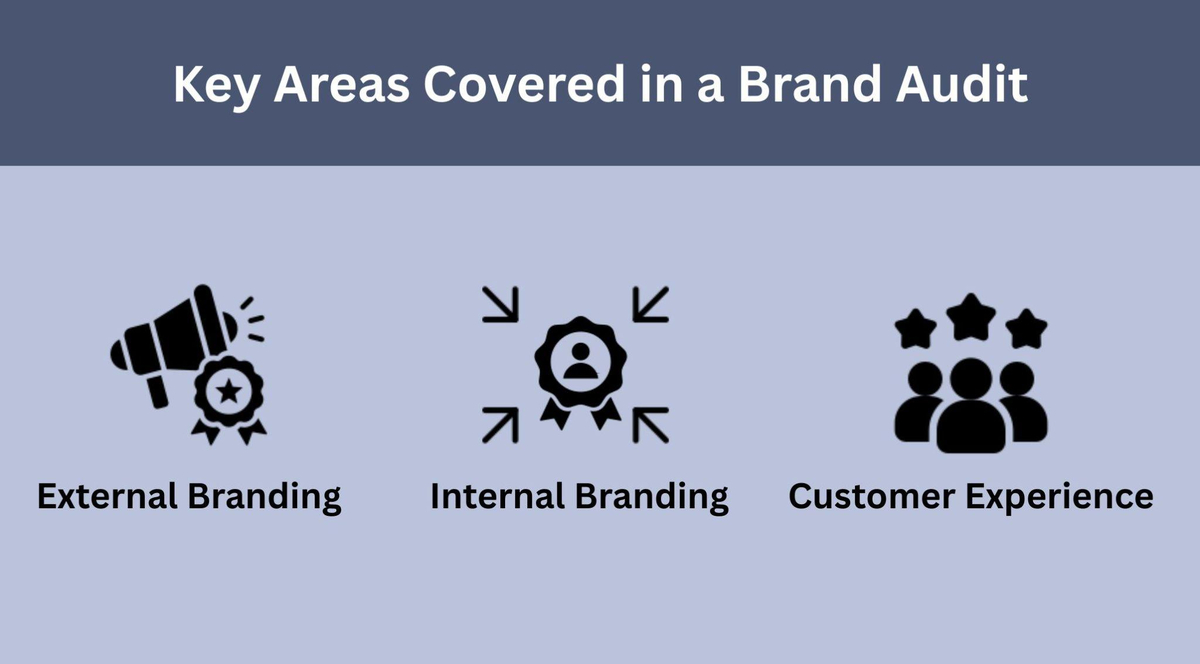
3 Key Areas Covered in a Brand Audit
A brand audit evaluates various dimensions of your brand, from how it’s perceived externally to how well it’s understood internally. By examining both tangible elements like visuals and more intangible factors like customer interactions, a brand audit checklist ensures thorough evaluation.
This process helps identify gaps and opportunities that inform better brand strategies.
External Branding
External branding includes your visual identity, marketing materials, website, digital presence, brand slogans and social media. A brand audit format helps ensure consistency in messaging and design across these touchpoints, ensuring the brand aligns with customer expectations and stands out in the market.
Internal Branding
Internal branding evaluates how well employees understand and align with your brand’s mission. This includes assessing internal communication, company culture, and how employees use the brand in documents and presentations. Alignment here ensures consistency across all operations and interactions.
Customer Experience
A brand audit measures the quality of customer interactions across sales touchpoints, support services, and post-purchase experiences. It ensures that the brand’s messaging is consistent, customer service is aligned with brand values, and the overall experience fosters loyalty and satisfaction.
Why a Brand Audit Matters More Than Ever?
In today's competitive market, competitive saturation makes it harder to stand out. Brands are constantly vying for attention, and staying relevant requires a clear, consistent message across all touchpoints. A brand audit is crucial for identifying how well your brand is resonating with customers and how it stacks up against the competition. Branding in business plays a major role in distinguishing one company from another, and a brand audit helps to ensure that your unique selling proposition (USP) is clear.
With trust-driven buying decisions becoming increasingly important, ensuring that your brand is perceived as authentic and reliable can make the difference between a customer choosing your product or looking elsewhere.
Additionally, digital-first brand exposure means your online presence plays a critical role in customer engagement, making it even more important to perform regular brand audits to stay aligned with your target audience's expectations.
How Consistency Builds Trust?
Consistency in branding, whether through messaging, visuals, or tone, builds trust with your audience. When customers see a uniform experience across all touchpoints, they feel more confident in your brand’s reliability. Mixed signals weaken credibility because customers begin to question whether they can trust the brand to deliver on its promises.
A brand compliance audit ensures that your brand message remains intact and that every interaction reinforces the trust you’ve worked hard to build.
The Cost of Ignoring Brand Gaps
Ignoring brand gaps can have significant consequences, such as missed opportunities to connect with your target audience or grow market share. If your brand’s messaging or visuals are inconsistent, it can lead to confusion and lost loyalty. Without a brand audit, it's easy for these gaps to go unnoticed until the damage is done.
For professional services, where trust and authority are crucial, not addressing these gaps can result in clients turning to competitors with clearer, more reliable brands. The brand audit cost of neglecting these areas is far greater than the investment required to fix them, making regular audits essential for maintaining long-term success.
4 Signs Your Brand Needs an Audit
A brand audit helps uncover underlying issues that may not be immediately obvious but can significantly affect your brand’s performance. If your brand is experiencing any of the following signs, it’s time to consider an audit.
1. Inconsistent Messaging
Inconsistent messaging across different channels or campaigns can confuse your audience and dilute your brand’s impact. If your brand's core message varies depending on where it’s presented—whether on your website, social media, or advertisements—it becomes difficult for customers to understand who you are and what you stand for.
A brand audit helps ensure that your messaging is unified and aligned with your core values, reducing the chance of unlinked brand mentions that may confuse or disconnect your target market.
2. Confused Audience Feedback
If your audience doesn’t seem to understand your brand’s positioning or has conflicting views about what your brand offers, it's a red flag. Customer surveys, reviews, and social media comments can reveal confusion, and addressing it through a brand audit to enhance social purpose can clear up misunderstandings.
When feedback consistently indicates mixed perceptions, a deeper look into brand consistency is necessary.
3. Outdated Visuals or Documents
Visual identity plays a huge role in how your brand is perceived. If your visuals—logos, website design, or marketing materials—are outdated, they can create a negative impression of your brand. Using old or inconsistent templates in documents also sends the wrong message about your brand’s attention to detail and professionalism.
A brand compliance audit can identify these inconsistencies and guide the necessary updates.
4. Declining Engagement or Conversions
A sudden drop in engagement or conversions is often a sign that your brand is no longer resonating with your audience. This could stem from misaligned brand messaging, a shift in customer expectations, or a disconnect between what your brand promises and what it delivers.
A brand audit for professional services can help pinpoint whether these declines are due to internal issues, such as unclear positioning, or external factors like market competition.

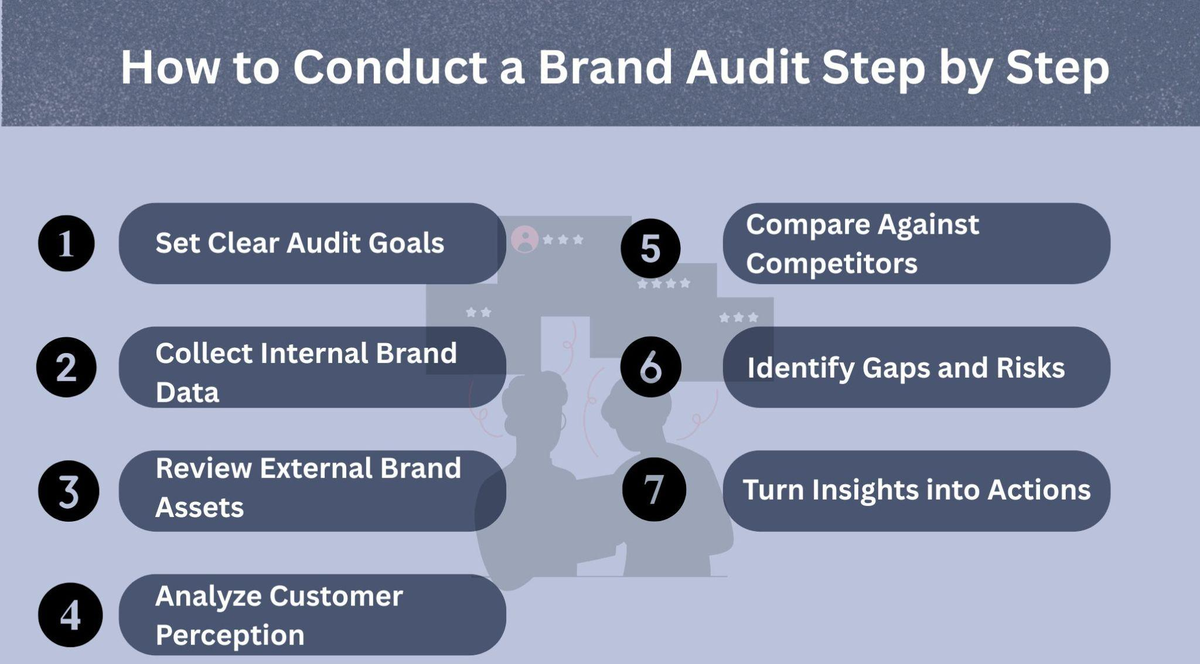
How to Conduct a Brand Audit Step by Step?
Conducting a brand audit is a methodical process that helps you evaluate your brand's performance and identify areas for improvement. Each step provides valuable insights that allow you to align your brand more effectively with your business goals and market needs.
Here’s a clear breakdown of the process.
Step 1: Set Clear Audit Goals
Before diving into a brand audit, it’s crucial to define what you want to fix or validate. Whether you’re addressing a decline in engagement, inconsistent messaging, or the need for a rebrand, having clear goals will guide the audit process.
By determining specific objectives, you can better assess which areas require immediate attention and which may need a more long-term strategy. Understanding how to conduct a brand audit effectively begins with this foundational step.
Step 2: Collect Internal Brand Data
The next step is to gather all the internal data that reflects how your brand is communicated and perceived within your company. This includes reviewing brand guidelines, templates, and feedback from employees.
You want to ensure that everyone in your organization understands the brand’s core values and that the internal materials align with your overall brand vision. This phase is crucial, especially for companies offering brand audit and assessment services, as it helps pinpoint any internal misalignments or inconsistencies.
Step 3: Review External Brand Assets
Once you’ve assessed internal brand alignment, the next step is to focus on your external brand assets. This includes reviewing your website, launching successful marketing campaigns, social media presence, and all external communications.
A digital brand audit service review here will evaluate the consistency and effectiveness of your online assets, ensuring that your brand message is clear and consistent across all digital touchpoints.
Transform your Ideas with our Creative Campaign
Step 4: Analyze Customer Perception
Customer perception is at the heart of any brand audit. This involves analyzing reviews, surveys, and sentiment across various platforms.
How do customers perceive your brand in comparison to competitors? Are they engaging with your brand as you expect, or do they see it differently? By collecting data on customer experiences and feedback, you can understand how your brand is truly being received, which is especially crucial for brand audit for manufacturing companies, where customer trust and quality perception are key drivers of success.
Step 5: Compare Against Competitors
A brand audit isn’t complete without looking at how your brand stands in comparison to competitors. This analysis includes examining your brand’s positioning, tone, and differentiation.
What sets you apart in the market, and where can you improve? By benchmarking your brand against others in your industry, you gain valuable insights into how well you’re resonating with your target audience and whether you’re offering something unique that your competitors aren’t.
Step 6: Identify Gaps and Risks
After gathering all the necessary data, it’s time to identify any gaps or risks in your brand strategy. This is where the audit truly comes into focus. Are there areas where your brand is misaligned with customer expectations, or where messaging and visuals are inconsistent?
Identifying these gaps early on will help you take proactive measures to protect your brand’s reputation and drive more meaningful customer connections.
Step 7: Turn Insights into Actions
Finally, it’s time to turn the insights gathered from your brand audit into actionable strategies. Prioritize the areas that need the most immediate attention, such as quick wins that can be implemented right away, and outline long-term fixes that require more time and resources.
Whether it's revisiting your brand compliance audit or updating your visual identity, the goal is to create a roadmap that helps you refine and strengthen your brand’s positioning for the future.
4 Brand Audit Mistakes to Avoid
A brand audit is a critical process for ensuring your brand stays relevant, competitive, and aligned with its mission. However, there are common mistakes that can undermine the effectiveness of your audit and the insights you gain from it. Avoiding these pitfalls will help you ensure that your brand audit delivers meaningful results.
1. Treating It as a One-Time Task
A brand audit should be an ongoing process. Markets, trends, and consumer preferences evolve, so regular audits help you stay aligned and adjust quickly, ensuring continued brand relevance and competitiveness.
2. Focusing Only on Visuals
A brand audit isn’t just about visuals. While important, it should evaluate messaging, tone, customer interactions, and employee alignment to provide a complete picture of how your brand performs across all touchpoints.
3. Ignoring Internal Teams
Internal teams play a key role in delivering your brand’s message. If they’re not aligned with your brand values, inconsistencies can occur. Internal feedback helps maintain cohesion across departments, ensuring that everyone supports the same brand vision.
4. Skipping Customer Input
Customer feedback is essential for a comprehensive brand audit. Ignoring it can lead to missed opportunities. Customers provide valuable insights that help you identify gaps in your messaging, products, or services, ensuring you stay connected to their needs and expectations.
How Often Should You Run a Brand Audit?
Running a brand audit regularly is essential for staying aligned with customer expectations and market trends. While an annual review can offer insights into long-term performance, ongoing assessments allow for more timely adjustments.
For businesses experiencing rapid growth, digital shifts, or frequent market changes, conducting a website brand audit and reviewing brand performance quarterly ensures you stay competitive and ahead of potential issues. In some cases, a brand audit should be done more frequently, especially when launching new products or doing product advertising.
Annual vs Ongoing Reviews
An annual brand audit provides an overall brand assessment, but ongoing reviews ensure your brand stays adaptable and relevant. Regular audits allow quick identification of issues and adjustments, especially for your website brand audit, ensuring your digital presence aligns consistently with your brand values.
When to Audit More Frequently
Frequent audits are crucial during product launches, market expansions, or shifts in customer behavior. If you’re undergoing a rebrand or experiencing engagement drops, more regular brand audits help spot gaps early. Regular checks keep your brand on track and responsive to changes, especially with a website brand audit.
FAQs
How long does a brand audit take?
The duration of a brand audit depends on the scope and complexity of the brand’s presence. Typically, a brand audit can take anywhere from a few weeks to a couple of months, especially when evaluating both internal and external touchpoints, including website brand audits.
Who should be involved in a brand audit?
A brand audit should involve key stakeholders, including marketing, design, and leadership teams. Additionally, customer-facing departments like sales and support should contribute insights. For comprehensive results, including a website brand audit, it’s beneficial to include external experts or agencies specializing in brand assessment.
Is a brand audit useful for digital-first brands?
Yes, a brand audit is essential for digital-first brands. It helps assess how well the brand’s online presence, content, and user experience align with the brand’s values. A digital brand audit services approach ensures consistency and optimization across digital channels, crucial for maintaining customer trust.
Can small businesses benefit from a brand audit?
Absolutely. Small businesses can greatly benefit from a brand audit by identifying areas of improvement in their brand messaging, visual identity, and market positioning. Regular audits help ensure growth by refining strategies, even with limited resources, ensuring that small businesses stay competitive and relevant in their markets.
Conclusion
What Is A Brand Audit and why is it crucial for your brand’s success? A brand audit provides valuable insights into how well your brand is perceived and how aligned it is with its goals. Understanding your brand clearly is the foundation for building consistency, trust, and long-term loyalty with your audience.
When your messaging, visuals, and customer experiences are in sync, your brand becomes a trusted, recognizable entity that resonates deeply with customers. Centric specializes in helping businesses translate brand audit insights into actionable strategies that enhance brand performance.
By identifying gaps and opportunities, we help brands stay relevant and competitive. A brand audit is not just about assessing where you are but also about setting the path to where you want to go, ensuring you always stay ahead in a dynamic market.