





Curious about what is brand awareness?
In simple terms, brand awareness refers to how well consumers recognize or recall a brand, its products, or its services. It measures how familiar and memorable a brand is to its target audience.
Building strong brand awareness is vital for businesses that want to stand out in competitive markets. It lays the groundwork for brand equity, customer loyalty, and sales growth. Without it, even the most innovative products can struggle to gain attention.
In today’s crowded marketplace, where consumers face countless choices daily, brand awareness helps companies cut through the noise. When customers easily recognize a brand, they are more likely to consider it during their buying decisions.
To achieve this, businesses use various marketing channels, such as advertising, social media, and public relations, to maintain a consistent and engaging brand presence.
This blog explores what brand awareness means, why it matters, and how businesses can use smart strategies to strengthen their visibility and connect effectively with their audience.
What is Brand Awareness?
Brand awareness is the extent to which people recognize and remember your brand, its products, or its services. It reflects how familiar your target audience is with your brand and how easily they can recall it when making purchasing decisions.
Why Is Building Brand Awareness Important?
Building brand awareness is important because it helps your business become recognizable and trustworthy in the eyes of consumers. When people are familiar with your brand, they’re more likely to choose it over competitors.
A strong level of awareness builds credibility and emotional connection. Customers tend to buy from brands they know and trust, even if similar alternatives exist. This recognition also makes marketing efforts more effective since people are already aware of your brand’s value and message. How to measure brand awareness is a critical part of this process to understand if your efforts are reaching their target audience and resonating with them.
Brand awareness also drives long-term growth. It increases customer loyalty, encourages word-of-mouth referrals, and boosts market share. The more people recognize your brand, the easier it becomes to launch new products or enter new markets successfully.
What Are The Types of Brand Awareness?
Brand awareness measures how familiar your target audience is with your brand. It helps evaluate brand performance and marketing effectiveness.
There are two key types: aided and unaided brand awareness.
1. Aided Brand Awareness (Brand Recognition)
Aided brand awareness refers to consumers recognizing your brand when shown prompts such as logos, names, or a list of brands. It measures recognition rather than recall. Larger brands usually achieve higher aided awareness, as they are more frequently seen or heard by audiences.
2. Unaided Brand Awareness (Brand Recall)
Unaided brand awareness measures how easily consumers recall your brand without any prompt. It shows how “top of mind” your brand is within its category. For example, asking “What is the first brand that comes to mind when you think of refrigerators?” gauges spontaneous recall. Unaided awareness is harder to achieve, especially for smaller brands, but it indicates stronger brand presence and loyalty. Together, both metrics help businesses understand how well their brand stands out and stays memorable.
In the context of B2B marketing, these two types of brand awareness become even more important as businesses need to recognize not just their product but their role in solving problems for other businesses.
How to Build Brand Awareness?
Building brand awareness takes consistency, creativity, and a clear understanding of your audience. It’s about making your brand recognizable and memorable so that people think of you first when they need your product or service. As part of your strategy, leveraging digital marketing services can help amplify your brand’s reach. Whether through SEO, social media management, or paid advertising, digital marketing ensures that your message reaches the right people at the right time.
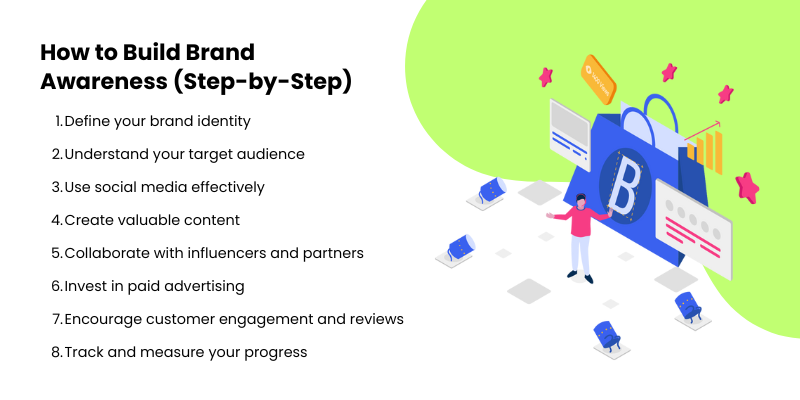
By following structured steps, you can gradually strengthen your brand’s visibility and credibility in the market.
- Define your brand identity
- Understand your target audience
- Use social media effectively
- Create valuable content
- Collaborate with influencers and partners
- Invest in paid advertising
- Encourage customer engagement and reviews
- Track and measure your progress
Let’s explore each.
1. Define Your Brand Identity
Start by clearly defining your brand’s mission, vision, tone, and visual style.
A strong identity helps create consistency across all marketing channels. Your logo, tagline, and messaging should reflect your brand personality and values.
2. Understand Your Target Audience
Knowing who your audience is and what they care about is key. Conduct market research to identify demographics, preferences, and pain points. This ensures your message resonates with the right people.
3. Use Social Media Effectively
Social media is one of the fastest ways to build awareness. Choose platforms your audience uses most and post regularly. For that, having the right content marketing tools can make a significant difference. Tools for scheduling, analytics, and engagement can optimize your strategy, ensuring your content reaches the right people at the right time.
Share engaging visuals, stories, and interactive content to strengthen your presence and encourage sharing.
4. Create Valuable Content
Content marketing builds trust and positions your brand as an authority.
Write blogs, videos, infographics, and case studies that educate or entertain your audience. High-quality content attracts attention and boosts SEO visibility.
5. Collaborate with Influencers and Partners
Partnering with influencers or complementary brands expands your reach. Choose collaborators whose audiences align with yours to gain credibility and attract new followers.
6. Invest in Paid Advertising
Use paid ads on platforms like Google, Facebook, or LinkedIn to reach targeted audiences quickly. Sponsored posts, PPC campaigns, and display ads can significantly boost brand visibility.

7. Encourage Customer Engagement and Reviews
Happy customers are your best promoters. Ask for reviews, testimonials, and user-generated content. Respond promptly to feedback to build trust and humanize your brand.
8. Track and Measure Your Progress
Use analytics tools to measure website traffic, engagement rates, and conversions. Monitoring results helps refine your strategies and ensure your brand awareness efforts deliver measurable impact.
Explore Our Digital Marketing Services!
SUTS Strategy for Brand Awareness
The SUTS strategy is a focused approach to building brand awareness, emphasizing four essential elements: Simplicity, Uniqueness, Targeting, and Storytelling.
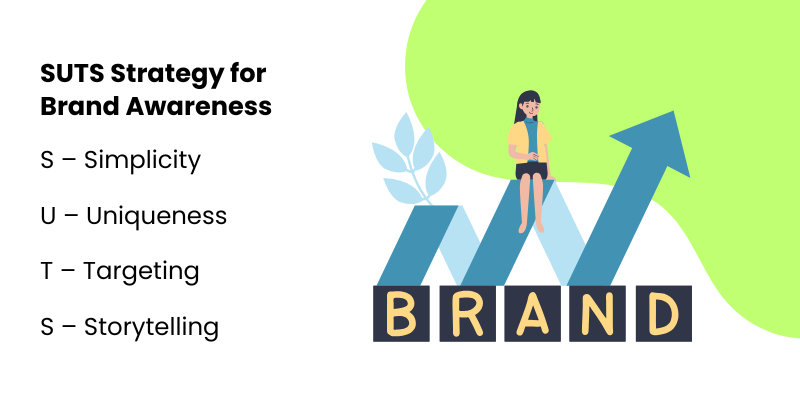
Implementing this strategy can significantly enhance how your brand resonates with your audience.
1. S – Simplicity
Keep your messaging clear and straightforward. In a world saturated with information, concise and easily understandable content ensures your brand's message is not lost. Brands like Dove have successfully used simple, relatable campaigns to connect with their audience
2. U – Uniqueness
Develop distinctive brand characteristics that set you apart from competitors. This could be through innovative products, exceptional customer service, or a unique brand voice. For instance, minimalist fashion brands like Everlane focus on transparency and quality, resonating with consumers who value authenticity
3. T – Targeting
Focus your efforts on reaching the right audience. Understanding your target demographic allows for tailored messaging and more effective campaigns. Utilizing data analytics can help identify and reach your ideal customers, ensuring your brand's message is received by those most likely to engage.
4. S – Storytelling
Craft compelling narratives that resonate emotionally with your audience. Effective brand storytelling can humanize your brand and build deeper connections. Companies like Nike have mastered storytelling by highlighting personal triumphs and aligning with their audience's values
Measuring the Success of Brand Awareness
Effectively measuring brand awareness is crucial for understanding how well your brand is recognized and recalled by your target audience. Tracking Marketing Funnel Stages can provide valuable insight into how consumers move from awareness to consideration and ultimately to purchase. By evaluating these stages, you can fine-tune your strategies and ensure you are nurturing your leads effectively. By utilizing key performance indicators (KPIs) and gathering consumer feedback, businesses can assess the impact of their branding efforts and make informed decisions to enhance their market presence.
To measure the effectiveness of brand awareness campaigns, consider tracking the following KPIs:
- Branded Search Volume: The number of searches for your brand name indicates how often consumers are actively seeking your brand.
- Share of Voice (SOV): Measures your brand's presence in the market compared to competitors, reflecting the share of conversations and media coverage.
- Social Media Engagement: Analyzing likes, shares, comments, and mentions on platforms like Instagram, Facebook, and LinkedIn provides insights into audience interaction and content resonance.
- Website Traffic: An increase in direct visits or organic search traffic can signify growing brand recognition.
- Earned Media Value (EMV): Quantifies the value of media coverage and mentions your brand receives without paid advertising.
- Net Promoter Score (NPS): Assesses customer loyalty and the likelihood of recommending your brand to others.
Consumer Surveys and Feedback
Direct feedback from consumers offers valuable insights into brand awareness levels:
- Brand Recall Surveys: Ask respondents to name brands they associate with a particular product category without any prompts.
- Brand Recognition Surveys: Present a list of brands and ask participants to identify those they recognize.
- Perception and Sentiment Analysis: Gauge how consumers feel about your brand through open-ended questions and sentiment analysis tools.
- Customer Satisfaction and Loyalty Surveys: Assess overall satisfaction and the likelihood of repeat business or referrals.
5 Key Challenges in Building Brand Awareness
Building brand awareness is a critical step for businesses aiming to establish a strong market presence.
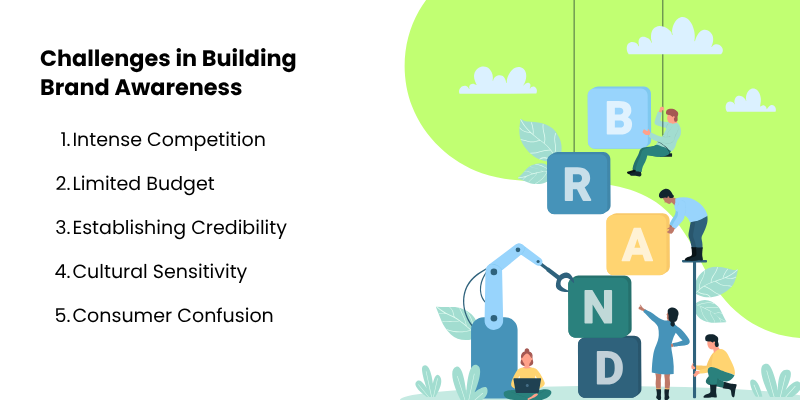
However, several challenges can impede this process:
1. Intense Competition
Established brands often dominate the market, making it challenging for new entrants to gain visibility. For instance, emerging brands may struggle to differentiate themselves from well-known competitors, leading to difficulties in capturing consumer attention.
2. Limited Budget
Many businesses face financial constraints that limit their ability to invest in extensive marketing campaigns. This limitation can hinder efforts to reach a broader audience and build brand recognition effectively.
3. Establishing Credibility
New brands often need help gaining consumer trust due to their lack of established reputation. Building credibility requires consistent quality, positive customer experiences, and strategic partnerships to foster trust among potential customers
4. Cultural Sensitivity
In international markets, brands must navigate cultural differences to avoid misinterpretations or offenses. A lack of cultural understanding can lead to branding missteps, as seen in instances where slogans or product names have unintended negative connotations in different languages.
5. Consumer Confusion
Overwhelming consumers with too many choices or unclear messaging can lead to confusion, making it difficult for them to make purchasing decisions. This confusion can negatively impact brand perception and loyalty.
Conclusion
What is brand awareness? It is the degree to which consumers can recognize or recall a brand, its products, or services. This foundational element in marketing signifies how familiar and memorable a brand is to its target audience. Establishing strong brand awareness is crucial for businesses aiming to stand out in competitive markets. Building brand awareness is not a one-time effort but an ongoing process that requires consistent and strategic actions. By implementing effective strategies, companies can enhance their visibility and recognition among their target audience. This, in turn, fosters consumer trust, loyalty, and ultimately drives sales.
In 2025, businesses must adapt to evolving consumer behaviors and technological advancements to effectively enhance their brand presence. Embracing authenticity, leveraging AI and personalization, investing in omnichannel experiences, and engaging in experiential marketing are pivotal strategies for building brand awareness. Partnering with agencies like Centric, a leading digital marketing agency, can help businesses leverage these strategies to maximize their impact. These approaches not only increase visibility but also create meaningful connections with consumers.