eCommerce Technical SEO is a critical aspect of optimizing online stores to enhance search engine visibility and improve user experience.
It focuses on the technical elements of a website, such as site speed, mobile-friendliness, crawlability, and structured data, that impact a site's performance in search engine rankings. Implementing effective eCommerce Technical SEO practices ensures that your online store is easily accessible to both search engines and customers, which ultimately boosts traffic, conversions, and sales.
In today’s highly competitive eCommerce landscape, technical SEO plays a vital role in ensuring your store stands out among competitors.
Proper optimization ensures faster page loading times, improved mobile optimization, and better indexing by search engines.
Additionally, structured data helps search engines understand your content better, leading to rich snippets and increased visibility.
This guide will walk you through essential eCommerce Technical SEO strategies and best practices.
What Is An eCommerce Technical SEO Audit?
An eCommerce technical SEO audit is a complete evaluation of how well your online store performs in search engines. It examines key factors such as rankings, visibility, bounce rate, traffic, and overall site health.
A detailed audit reveals technical issues that limit your website’s performance. Once identified, these issues can be fixed to improve search visibility, user experience, and conversions.
To achieve stronger results, an eCommerce technical SEO audit focuses on correcting:
- SEO errors affecting current website performance
- Performance gaps in past and ongoing ad campaigns
- Weak content optimization and poor keyword implementation
Addressing these areas helps build a clear eCommerce SEO roadmap for sustained growth.

Key pages covered in an ecommerce technical SEO audit, highlight areas such as the homepage, product pages, category pages, and search filters. Each of these key pages should be carefully reviewed to ensure they meet the highest SEO standards.
1. Homepage
The homepage plays a major role in search visibility and user engagement. It includes critical SEO elements such as titles, headings, descriptions, and internal links. Proper internal linking from the homepage guides users to important product and category pages. Weak navigation or poor linking increases bounce rate and causes users to leave without converting.
2. Product Pages
Product page audits focus on page speed, load time, redirects, internal linking, duplicate content, and 404 errors. A well-optimized product page improves rankings, supports paid campaigns, and converts visitors more efficiently.
3. Category Pages
Category page audits ensure proper internal linking between categories and products. This improves crawlability and helps users move smoothly from browsing to checkout. Ensuring that these category pages are optimized for top Search Engines like Google will further improve indexing, driving more organic traffic to your site.
4. Search Filters
Search filter audits improve user navigation and speed up product discovery. Since users rely heavily on filters, optimizing them ensures faster results and better usability. This experience can be further improved by adding advanced search features that support flexible and accurate product discovery.
Why is an eCommerce Technical SEO Audit Important?
In today’s competitive digital market, skipping an eCommerce technical SEO audit is not an option. Online shopping continues to grow rapidly, and websites that fail to stay technically optimized risk falling behind.
With global eCommerce revenue projected to reach trillions of dollars, competition is only increasing. To stay ahead, businesses must ensure their websites are fully optimized for search engines and users.
A proper technical SEO audit improves organic rankings, boosts visibility, and increases conversions. While paid campaigns offer short-term results, organic traffic delivers long-term, cost-effective growth. It also serves as the foundation of sustainable SEO success. By using SEO services tailored to your needs, you can maintain optimal performance and outpace competitors.
For marketers focused on increasing traffic, revenue, and conversions, prioritizing organic search through a strong eCommerce technical SEO audit is essential.
Now that you understand its importance, let’s move on to the eCommerce technical SEO checklist.
6 Key Elements of eCommerce Technical SEO
The key elements for eommerce technical SEO are as follows:
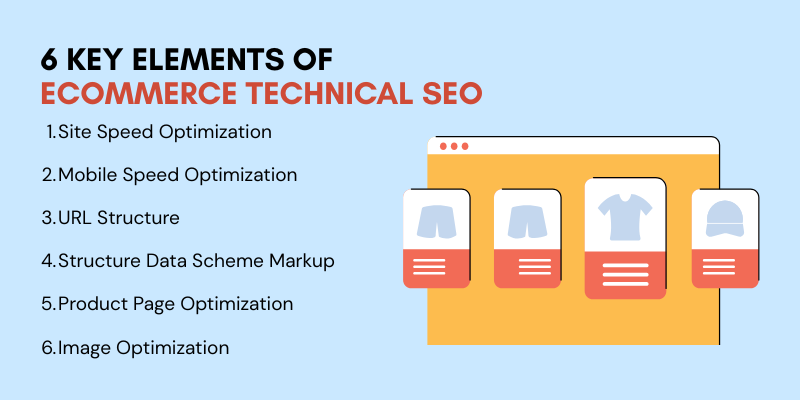
1. Site Speed Optimization
Site speed affects rankings, user experience, and conversions. Slow websites increase bounce rates and reduce sales. Speed optimization includes image compression, file minification, CDN usage, and browser caching. Faster sites perform better in search and provide smoother shopping.
2. Mobile Optimization
With mobile-first indexing, mobile optimization is essential. A mobile-friendly site uses responsive design, fast loading, and touch-friendly navigation. Google prioritizes mobile-optimized websites for better rankings.
3. URL Structure
Clear and descriptive URLs improve both SEO and usability. URLs should be short, readable, and keyword-focused. For example, product pages should use descriptive URLs like /category/product-name/ rather than random numbers or characters. This approach is part of the SEO Audit Checklist and ensures both better user experience and better SEO results.
4. Structured Data (Schema Markup)
Schema markup helps search engines understand product data such as price, availability, and reviews. It also enhances search listings with rich snippets, improving visibility and click-through rates.
5. Product Page Optimization
Well-optimized product pages use clear titles, quality descriptions, proper keywords, strong images, reviews, and detailed specifications. This improves relevance, engagement, and conversions. Additionally, implementing Link Building strategies, such as acquiring high-quality backlinks, can further improve product page authority, boosting search rankings and driving more organic traffic.
Explore Our eCommerce SEO Services!
6. Image Optimization
Optimized images improve load speed and search visibility. This includes compressing image size, using correct formats, and adding keyword-rich alt text for better indexing.

eCommerce Technical SEO: Step-by-Step Guide Outline
A comprehensive approach to optimizing your eCommerce site for better search engine visibility, user experience, and performance. Here are some of the major steps of eCommerce Technical SEO:
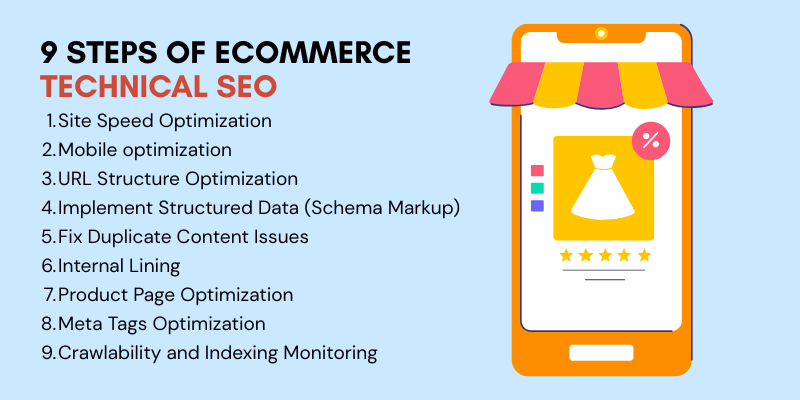
1. Site Speed Optimization
Site speed is a crucial factor for both user experience and SEO performance. A slow website not only frustrates users but also negatively impacts search engine rankings, as search engines like Google prioritize fast-loading sites.
Here are some of the key aspects of site speed optimization
- Image Compression: Large image files are often the primary culprit behind slow loading times. Compressing images reduces their file size without compromising quality, ensuring faster page load times. Tools like TinyPNG, ImageOptim, or built-in compression in platforms like WordPress can help optimize images.
- Content Delivery Network (CDN): A CDN stores copies of your website's static assets (like images, JavaScript, and CSS files) on multiple servers worldwide. When a user visits your site, the CDN serves the content from the server closest to them, drastically reducing load times. This also helps handle traffic spikes more efficiently.
- Minify CSS/JS Files: CSS and JavaScript files can become bloated with unnecessary spaces, comments, and characters. Minifying these files removes these redundancies, making the files smaller and enabling faster loading. Tools like UglifyJS for JavaScript and CSSNano for CSS can be used to minify these files.
2. Mobile Optimization
Mobile optimization is essential for providing a seamless user experience and improving SEO rankings, as Google prioritizes mobile-first indexing.
To ensure your eCommerce site is optimized for mobile, ensure your website adapts its layout, images, and content based on the user's device, offering a consistent experience across smartphones, tablets, and desktops.
Mobile-Friendly Test helps evaluate your site’s mobile usability, identifying issues such as font sizes, touch targets, and content layout, ensuring it meets Google’s mobile optimization standards.
3. URL Structure Optimization
Optimizing your URL structure is crucial for both SEO and user experience. Well-structured URLs make it easier for search engines to crawl and index your site while providing users with clear, understandable links. Best SEO Audit Tools can quickly identify poorly structured URLs, ensuring your site is fully optimized for both search engine crawlers and human users.
Here are three specific methods for optimizing URLs:
- Clean URLs: Keep URLs simple and free from unnecessary characters, such as symbols or long strings of numbers. This makes them more readable and easier to share.
- Descriptive URLs: Ensure that the URL clearly describes the content of the page, helping both users and search engines understand what the page is about.
- Keyword-Rich URLs: Include relevant keywords in the URL to improve SEO and help your page rank for specific search queries. For example, use /category/product-name/ instead of /product123/.
Optimizing your URL structure helps enhance site navigation, improves SEO, and makes it easier for users to identify relevant pages.
4. Implement Structured Data (Schema Markup)
Structured data helps search engines better understand the content on your eCommerce site, leading to enhanced visibility in search results through rich snippets. Implementing structured data as part of your eCommerce SEO audit checklist ensures that you provide search engines with detailed product insights for improved SEO performance. By marking up product information with schema, you can provide search engines with detailed insights, improving your site's SEO performance.
Here are some of the major schema markups for structured data:
- Product Schema: Use schema to define key product details such as name, price, availability, and brand, helping search engines present this information directly in search results.
- Offer Schema: Implement offer schema to highlight pricing, discounts, and special offers, making your products stand out with up-to-date pricing information.
- Review Schema: Add review schema to display customer ratings and reviews in search results, increasing trust and encouraging click-throughs.
5. Fix Duplicate Content Issues
Duplicate content can harm your eCommerce site’s SEO by confusing search engines about which page to index or rank.
To resolve this, use techniques that guide search engines to the preferred version of your content.
Use canonical tags to indicate the original source of content, preventing duplicate content issues when similar pages exist. This helps consolidate ranking signals to the preferred page.
Apply noindex meta tags to pages you don’t want search engines to index, such as duplicate product pages, filter variations, or thank-you pages, ensuring only valuable pages are crawled and indexed.
Get Your Free SEO Audit Report Today!
6. Internal Linking
Internal linking is essential for guiding both top search engines and users through your eCommerce site, ensuring that important pages are easily discoverable. It helps distribute link equity across your site, boosting the visibility of key pages.
Key factors of internal linking include
- Link Important Pages: Ensure that high-priority pages, such as product categories, best-sellers, and new arrivals, are linked from other relevant pages to increase their crawlability and visibility.
- Use Breadcrumbs: Implement breadcrumb navigation to improve site structure and help both users and search engines easily navigate between categories, subcategories, and product pages.
Effective internal linking enhances site navigation, improves SEO, and ensures that search engines can easily crawl all key pages on your site.
7. Product Page Optimization
Optimizing product pages is essential for improving both user experience and search engine visibility. Well-optimized product pages can drive more traffic and conversions by making it easier for customers to find what they are looking for.
- Keyword-Optimized Titles: Ensure product titles include relevant keywords that customers are likely to search for, while keeping them clear and descriptive.
- Product Descriptions: Write unique, detailed descriptions that highlight the key features, benefits, and specifications of the product, while incorporating targeted keywords naturally.
- Optimized Images: Use high-quality images with descriptive alt text and proper file names, ensuring they load quickly and are optimized for both SEO and user experience.
8. Meta Tags Optimization
Meta tags play a crucial role in improving the visibility and click-through rate (CTR) of your eCommerce pages in search engine results. Well-crafted title tags and meta descriptions help search engines understand your content while attracting potential customers.
Ensure each page on your eCommerce site has a unique, keyword-optimized title tag that clearly describes the page’s content and entices users to click. Using SEO ranking report software helps track how well these meta tags perform, offering insights into which pages need optimization. Write engaging meta descriptions that summarize the content of the page and include relevant keywords, encouraging users to visit your site.
9. Crawlability and Indexing Monitoring
Monitoring crawlability and indexing is essential to ensure that search engines can properly access and index your eCommerce site’s pages, helping improve your SEO performance.
Leverage Google Search Console to check how Googlebot is crawling and indexing your site, identify any crawl errors, and submit sitemaps for better indexing.
Regularly check for crawl errors in Google Search Console, such as 404 pages or server issues, and fix them promptly to ensure that search engines can crawl all important pages.
Conclusion
Let's now wrap up! eCommerce Technical SEO is essential for improving both search engine rankings and user experience. By implementing best practices such as site speed optimization, mobile responsiveness, structured data, and effective URL structures, you ensure that your online store is accessible and easily indexed by search engines. Addressing common technical issues like duplicate content, crawl errors, and slow loading times will further enhance your site’s performance and visibility. Centric, a digital marketing agency, specializes in eCommerce SEO, providing expert solutions to help your site thrive in the competitive digital marketplace. By regularly auditing your eCommerce site and staying updated with SEO trends, you can maintain a competitive edge and continue driving growth in the rapidly expanding ecommerce marketing landscape.