





If your website isn’t showing up where you expect it to on Google, it might be trying to tell you something.
That’s where an SEO audit steps in. But what is SEO audit really about?
Think of it as a complete diagnostic test for your website, uncovering what’s helping you rank and what’s holding you back.
An SEO audit dives deep into every layer of your site, from technical performance and mobile responsiveness to on-page content, keyword optimization, and backlink quality. It also checks how search engines crawl and index your pages, ensuring nothing is blocking your visibility.
For business owners, marketers, and content creators, an SEO audit acts as a roadmap. It highlights the fixes and opportunities that can make your site faster, more user-friendly, and more visible to your target audience.
Thus, regular audits keep your website aligned with ever-changing search algorithms, so you stay competitive and continue to attract qualified traffic.
In this blog, we’ll explore what makes SEO audits crucial for every business’s digital success.
What Is SEO Audit?
An SEO audit is a comprehensive process that evaluates various aspects of your website to assess its performance in search engines. It aims to identify areas for improvement that can impact your site's visibility and rankings. This process involves a deep dive into multiple factors, including on-page optimization, content quality, site structure, loading speed, backlinks, technical health, and user experience. By analyzing these elements, an SEO audit pinpoints weaknesses that could be hindering your website's performance in search engine results pages (SERPs).
The audit examines factors such as keyword usage, meta tags, alt text, URL structure, and internal linking. It also looks at external factors like backlink quality, domain authority, and social signals. Furthermore, technical issues such as broken links, crawl errors, and mobile optimization are evaluated to ensure that search engines can properly index your site.
Why is an SEO audit important?
An SEO audit is essential for identifying and resolving technical issues, optimizing on-page elements, and enhancing user experience to improve search engine rankings. It ensures your website is aligned with current algorithm updates, maximizes organic traffic, and boosts conversion rates. By analyzing competitor performance and uncovering content gaps, an SEO audit provides actionable insights that help maintain a competitive edge and deliver a seamless, high-performing website.
When to Perform an SEO Audit?
An SEO audit isn’t a one-time task, it’s an ongoing part of maintaining your website’s health and visibility. Ideally, you should conduct a full audit every three to six months to stay aligned with algorithm updates and catch issues before they impact performance.

There are certain red flags that signal it’s time for an immediate audit, such as:
- A sudden drop in organic traffic
- An increase in bounce rate (users leaving quickly)
- Declining conversion rates despite steady traffic
- A noticeable fall in Google rankings for key pages or keywords
If you’ve noticed any of these warning signs, or if it’s been more than six months since your last audit, it’s time to take action.
Run a Free AI SEO Audit For Your Website
4 Key Components of an SEO Audit
An SEO audit is a comprehensive evaluation of a website's performance in search engines, encompassing technical, on-page, off-page, and user experience (UX) elements. This process identifies areas for improvement, ensuring that the site is optimized for better visibility and user engagement.
For a well-rounded SEO strategy, ensuring your SEO campaign includes an evaluation of both on-page and off-page factors is essential. You can track the progress of your SEO Campaign using audit results and improve tactics accordingly.
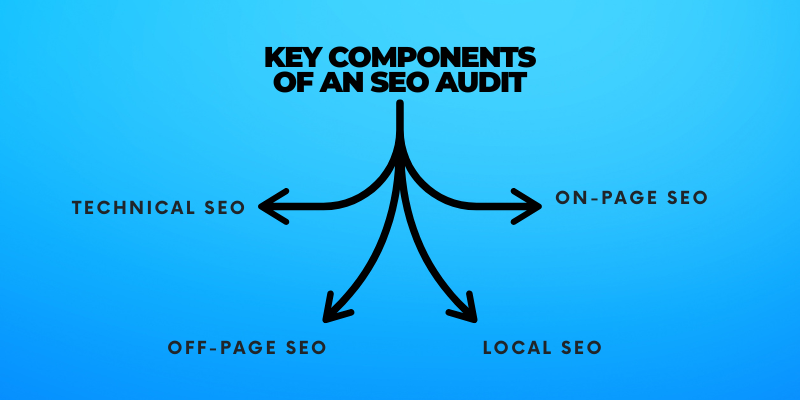
The key components of SEO Audit are:
1. Technical SEO
Technical SEO focuses on the backend elements that affect a website's crawlability and indexability. Key aspects include:
- Site Crawlability and Indexability: Ensuring search engines can access and index important pages.
- Mobile-Friendliness: Verifying that the site is responsive across various devices.
- Site Speed and Performance: Analyzing load times and optimizing for faster performance.
Tools like Google Search Console and Lighthouse are instrumental in identifying and addressing technical issues
2. On-Page SEO
On-page SEO involves optimizing individual pages to rank higher and earn more relevant traffic. This includes:
- Meta Tags and Descriptions: Crafting compelling title tags and meta descriptions.
- Header Tags and Content Optimization: Using appropriate header tags and ensuring content is relevant and keyword-optimized.
- Image Alt Text and Internal Linking: Providing descriptive alt text for images and creating a logical internal linking structure.
These elements help search engines understand the content and context of your pages, improving rankings
3. Off-Page SEO
Off-page SEO refers to actions taken outside of your website to impact your rankings within search engine results pages. Key components include:
- Backlink Profile Analysis: Assessing the quality and quantity of backlinks.
- Social Media Signals: Evaluating the brand's presence and activity on social platforms.
A strong off-page SEO strategy can significantly enhance a site's authority and trustworthiness.
4. Local SEO
Local SEO focuses on improving a website’s visibility in local search results, the kind that appear when users look for services “near me” or within a specific area. Local SEO service involves targeting location-based keywords and ensuring that your website ranks in local searches relevant to your business.
Local SEO typically involves:
- Google Business Profile optimization: Ensuring your business listing is verified, complete, and regularly updated with accurate details (address, hours, photos, reviews).
- Local keywords: Targeting phrases that include your location, such as “digital marketing services in USA.”
- NAP consistency: Keeping your Name, Address, and Phone number identical across all directories and websites.
- Customer reviews: Encouraging positive local feedback to boost trust and ranking.
That said, local SEO ensures that when people nearby search for what you offer, your business appears front and center, right where it matters most.
Explore Our Local SEO Services!
6 Key Tools to Perform an SEO Audit
Except for very small websites, performing an SEO audit manually is nearly impossible. Modern websites generate enormous amounts of data, from technical performance and traffic patterns to backlinks, keyword rankings, and competitor activity.
Reviewing all of this information without specialized tools would be extremely time-consuming and inaccurate.
Thankfully, several powerful SEO tools make the auditing process faster, more accurate, and more insightful. Here are some of the best ones to include in your SEO toolkit:
1. Google Search Console
Google Search Console is a free tool that offers valuable data on your website's presence in Google search results. It provides information on search queries, click-through rates, and indexing status, helping you identify and rectify issues affecting your site's visibility.
2. Google Analytics
Google Analytics is another free tool that tracks and reports website traffic. It offers insights into user behavior, acquisition channels, and conversion metrics, allowing you to assess the effectiveness of your SEO efforts and user engagement.
3. Screaming Frog SEO Spider
Screaming Frog SEO Spider is a desktop-based website crawler that analyzes your site's SEO performance. It identifies issues such as broken links, duplicate content, and missing meta tags, providing detailed reports to help optimize your website's structure.

4. Ahrefs
Ahrefs is a comprehensive SEO toolset that includes a site audit feature. It scans your website for over 100 SEO issues, including performance, HTML tags, and social tags, offering actionable recommendations to enhance your site's SEO health.
5. SEMrush
SEMrush is an all-in-one digital marketing toolkit that provides an SEO audit tool. It checks your website for over 140 on-page and technical SEO issues, including crawlability and indexability issues, redirect issues, and broken links, offering detailed reports and recommendations.
6. SEO Report Generator
An SEO report generator is a tool that automates the process of creating SEO performance reports. It gathers data from various SEO metrics and provides an easy-to-understand overview of your website’s SEO health and performance.
Generate an SEO Report in 1 Click
How to Create an Actionable SEO Audit Report?
Once you’ve completed an SEO audit, the next critical step is turning the findings into a clear, actionable SEO audit report. This report helps stakeholders understand the issues identified and outlines the steps needed to improve website performance. Here’s how you can create an actionable SEO audit report:
1. Structure the Report Clearly
An effective SEO audit report should be well-organized, with a clear structure that allows readers to easily follow and understand the findings. The report should include:
-
Executive Summary: A high-level overview of the audit’s main findings, including key issues and their potential impact.
-
Detailed Findings: A section with specific issues identified during the audit, categorized into technical, on-page, off-page, and local SEO issues.
-
Recommendations: Actionable steps to fix each issue, including prioritized tasks and recommendations for further optimization.
-
Visuals: Charts, graphs, and screenshots to illustrate issues, performance metrics, and progress over time.
2. Set Priorities
Once the issues are identified, the next step is to prioritize them based on their impact on the website’s performance. Focus on the most pressing issues that are hindering search engine rankings or user experience. These could include:
-
Critical Issues: Broken links, slow site speed, mobile usability problems, and any technical errors that impact crawlability and indexability.
-
High-Impact SEO Problems: Content gaps, missing meta tags, and poor keyword optimization on high-traffic pages.
-
Long-Term Improvements: Link-building opportunities, local SEO enhancements, and structural changes that can help grow domain authority.
By setting clear priorities, you can ensure that your team or stakeholders know which issues to address first.
3. Develop an Action Plan
An actionable SEO audit report should include a clear action plan that outlines the steps to resolve each issue. This action plan should include:
-
Timelines: A realistic timeline for addressing each issue. High-priority problems should be resolved quickly, while others can be tackled in phases.
-
Responsibility: Assign specific tasks to team members or departments. For example, technical fixes might fall under the IT team, while content optimization may be handled by the marketing team.
-
Milestones: Set milestones for when specific tasks should be completed and when progress will be reviewed.
This plan ensures that the issues identified in the audit are addressed systematically and efficiently.
4. Measure Improvements
After implementing the recommended changes, it’s essential to track progress and measure the improvements over time. Some ways to measure the effectiveness of your SEO efforts include:
-
Google Analytics: Track traffic, conversion rates, bounce rates, and other important metrics.
-
Keyword Rankings: Monitor changes in keyword rankings and organic traffic to see if the adjustments lead to improvements.
-
SEO Tools: Use tools like SEMrush, Ahrefs, or Google Search Console to track technical improvements, backlink growth, and overall site health.
It’s important to regularly revisit the action plan to ensure that the fixes continue to deliver positive results.
6 Ways To Interpret Your SEO Audit Results
After completing an SEO audit, interpreting the results, prioritizing issues, and developing an action plan are crucial steps to enhance your website's performance.
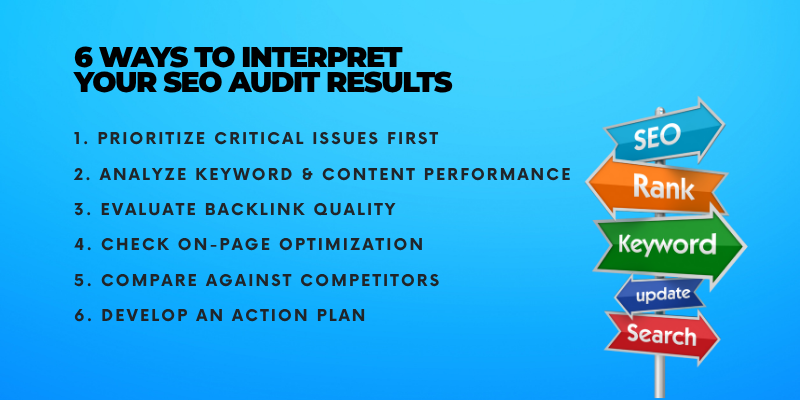
Here’s how to make sense of your SEO audit results:
1. Prioritize Critical Issues First
Start by addressing high-impact technical problems such as broken links, crawl errors, slow page speed, or mobile usability issues. These directly affect user experience and search visibility, so fixing them should be your top priority.
2. Analyze Keyword and Content Performance
Review your keyword rankings and top-performing pages. Identify pages that are close to ranking on the first page and optimize them further. Also, look for content gaps, topics or keywords your competitors rank for but you don’t.
3. Evaluate Backlink Quality
Examine your backlink profile to ensure links come from reputable, relevant sites. Disavow or remove spammy or toxic backlinks that can hurt your rankings. Strengthen your authority by pursuing new, high-quality backlinks opportunities.
4. Check On-Page Optimization
Assess your titles, meta descriptions, headings, and internal linking. Ensure they include relevant keywords and accurately represent the content. Improve readability and engagement to keep users on your page longer.
5. Compare Against Competitors
Use ai audit tools to benchmark your site against competitors. Identify where they’re outperforming you, such as backlinks, keywords, or technical speed, and use those insights to refine your strategy
6. Develop an Action Plan
Turn your audit findings into a clear, step-by-step action plan. Assign priorities, set timelines, and track progress over time to ensure continuous improvement.
Frequently Asked Questions
What is SEO in simple words?
SEO (Search Engine Optimization) is the process of improving your website to make it more visible and attractive to search engines like Google. It helps your site rank higher in search results, driving more organic traffic.
Is an SEO audit worth it?
Yes, an SEO audit is worth it as it helps identify issues and opportunities to improve your website's performance. It ensures your site is optimized for better search engine rankings and user experience.
Can ChatGPT do an SEO audit?
ChatGPT can assist with basic SEO tasks, such as providing advice on optimization, keyword research, and content strategies. However, a full SEO audit requires specialized tools to analyze data and technical aspects of the site.
How to do a complete SEO audit?
To perform a complete SEO audit, analyze key factors such as on-page optimization, site speed, backlinks, mobile-friendliness, and technical issues. Use SEO tools to assess performance and identify areas for improvement.
Conclusion
Now that you understand what is SEO audit is, let’s summarize it. An SEO audit is a detailed evaluation of a website’s performance in search engines, covering technical aspects, content quality, and user experience. This process identifies areas for improvement, ensuring that a website adheres to best practices and enhances its visibility in search engine results pages (SERPs). Centric conducts weekly SEO audits to maintain and improve a website's performance. These audits help identify technical issues, optimize content, and enhance user experience, leading to improved search engine rankings and increased organic traffic. By systematically analyzing and addressing areas of concern, businesses can stay competitive and ensure their websites meet the ever-evolving standards of search engines.