A link audit SEO is the process of analyzing the links pointing to your website, both internal and external. By conducting a link audit, you identify harmful links that could negatively impact your website's ranking on search engines.
It involves checking for broken links, poor-quality backlinks, and ensuring that your internal linking structure is optimized for both user experience and search engine crawlers.
Link audits are crucial for improving search engine rankings as they provide insight into how search engines view your website.
High-quality backlinks are one of the most important ranking factors, and a link audit helps ensure you’re attracting the right types of backlinks.
On the other hand, toxic or spammy links can lead to penalties, lowering your rankings. Regular link audits allow you to disavow harmful backlinks, fix broken links, and improve your overall link profile.
In this blog, you’ll Learn how a link audit in SEO can boost your rankings, improve website health, and ensure a clean, authoritative link profile.
What is a Link Audit?
A link audit SEO is a process that involves reviewing and analyzing all the links on a website. It assesses the quality, relevance, and effectiveness of both internal and external links, ensuring they align with SEO best practices.

The primary goal of a link audit is to identify harmful, broken, or low-quality links that can negatively impact a website’s performance in search engine rankings.
A comprehensive audit helps maintain a healthy link profile by identifying areas for improvement, such as disavowing toxic backlinks, fixing broken links, or optimizing anchor text.
What is The Role Of Link Audit SEO?
Link audits play an important role in SEO because search engines like Google use backlinks as a key ranking factor.
By conducting a link audit, website owners can ensure they have a clean, authoritative link profile, which enhances their chances of ranking higher in search results.
Addressing toxic backlinks, fixing internal link structures, and building high-quality external backlinks can significantly improve a website’s SEO performance.
Some of the different types of links include:
1. Internal Links
These are links that point to other pages within the same website. They help search engines understand the structure of the website, distribute link equity, and enhance user navigation.
2. External Links
These are links that point to pages on other websites. External links contribute to a website’s credibility and authority, but only if they come from high-quality, relevant sources.
3. Backlinks
Backlinks are links from external websites that point to your site. They are highly valuable in SEO because they signal trust and authority from other websites, influencing your website’s ranking potential.
Why is Link Audit Important?
A link audit is important because Google now evaluates links based on quality, relevance, and intent, not just quantity. Search engines use links as signals to understand a website’s credibility, topical relevance, and overall trustworthiness. High-quality links from relevant, authoritative sources help reinforce a site’s expertise and support long-term organic visibility.
At the same time, Google’s recent updates place stronger emphasis on identifying unnatural, manipulative, or low-value links. Spammy backlinks, paid links without proper attributes, or links from irrelevant sources can dilute a site’s trust signals. While Google is better at ignoring many poor-quality links, a heavily polluted link profile can still limit ranking potential and weaken overall performance.
Link audits are also essential for uncovering technical and structural link issues. Over time, websites may accumulate broken internal links, outdated external references, or redirects that no longer serve a purpose. These issues can impact crawl efficiency, reduce link equity flow, and negatively affect user experience.
 Download PDF Now
6 Steps Involved in Conducting a Link Audit
A link audit involves systematically reviewing and analyzing all internal and external links on your website.
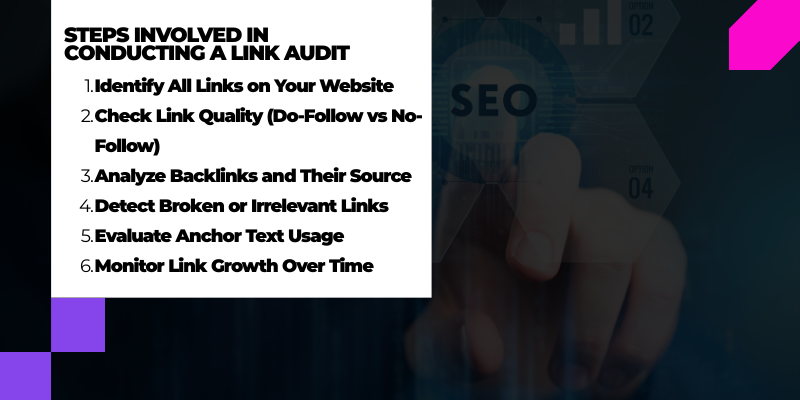
Following key steps such as identifying all links, checking link quality, analyzing backlinks, detecting broken or irrelevant links, evaluating anchor text usage, and monitoring link growth to assess their quality, relevance, and impact on SEO performance.
1. Identify All Links on Your Website
The first step in conducting a link audit is to identify all the links on your website, including internal links (links to other pages on your site) and external links (links to other websites).
This can be done using SEO tools such as Google Search Console, Ahrefs, or SEMrush, which crawl your site and provide a comprehensive list of all the links. Having a complete overview of your links is essential to assess their quality and effectiveness.
2. Check Link Quality (Do-Follow vs No-Follow)
After identifying the links, it’s important to evaluate their quality. Links can either be do-follow or no-follow. Do-follow links contribute to your site's authority by passing link equity, which helps improve rankings.
On the other hand, no-follow links don't pass link equity but are still useful in maintaining a natural link profile.
Ensure that your most valuable links (e.g., backlinks from reputable sites) are do-follow, and no-follow links are appropriately used for user-generated content or external sources that don’t require link equity.
3. Analyze Backlinks and Their Source
Backlinks, or inbound links from other websites to your site, are vital for SEO success. A link audit should assess the quality and relevance of these backlinks, focusing on their source.
High-quality backlinks from authoritative and related websites boost your site's SEO, while links from low-quality or irrelevant sites can harm your rankings. Identifying and managing backlinks from reputable sources is key to maintaining a strong link profile.

4. Detect Broken or Irrelevant Links
Broken or irrelevant links can significantly hurt your website’s user experience and SEO performance. A link audit helps identify pages that no longer exist, external sites that are no longer active, or internal links pointing to deleted or moved content.
Fixing or removing these broken links ensures that users and search engines can navigate your site effectively, improving both SEO performance and the user experience.
5. Evaluate Anchor Text Usage
Anchor text is the clickable text in a hyperlink. During a link audit, it's important to evaluate how anchor text is used throughout your website.
Anchor text should be descriptive, natural, and varied. Over-optimized anchor text (using the same keywords repeatedly) can trigger penalties from search engines.
A healthy anchor text profile should balance keyword-rich text with descriptive and natural phrasing that accurately reflects the linked content.
6. Monitor Link Growth Over Time
A link audit isn’t just a one-time activity; it’s a continuous process. Monitoring your website’s link growth over time helps ensure that you are steadily gaining high-quality backlinks.
Regular audits allow you to track the success of your link-building strategies and make adjustments when necessary.
Additionally, keeping an eye on your link profile helps you identify and address potential issues, such as the accumulation of toxic backlinks, before they negatively impact your SEO.
Get Your Free SEO Audit Report Today!
Top 3 Tools for Link Audits
Tools like Google Search Console, Ahrefs, and SEMrush help identify, analyze, and monitor the quality of links on your website to improve SEO performance. These platforms also function as SEO ranking report software, allowing website owners to track keyword positions, backlink health, and overall ranking changes alongside link audit data.
Some of the main tools for link audit include
1. Google Search Console
Google Search Console is a free tool that provides valuable insights into how Google views your website. It helps identify broken links, track backlinks, and monitor the overall health of your site’s link profile. It also offers a URL Inspection tool to spot issues with individual links and pages.
2. Ahrefs
Ahrefs is a popular paid tool that specializes in backlink analysis. It allows you to track the backlinks pointing to your site, analyze their quality, and detect any toxic or harmful links. Ahrefs also offers a detailed report on your website’s link profile, including link growth, anchor text distribution, and referring domains.
3. SEMrush
SEMrush is another powerful SEO tool that provides comprehensive link audit features. It helps identify broken links, evaluate the quality of backlinks, and monitor your link-building progress over time. SEMrush’s backlink SEO audit tool can also identify toxic links and offer suggestions on disavowing harmful backlinks.
How To Fix Link Issues?
Fixing link issues is essential for maintaining a strong and healthy SEO profile.
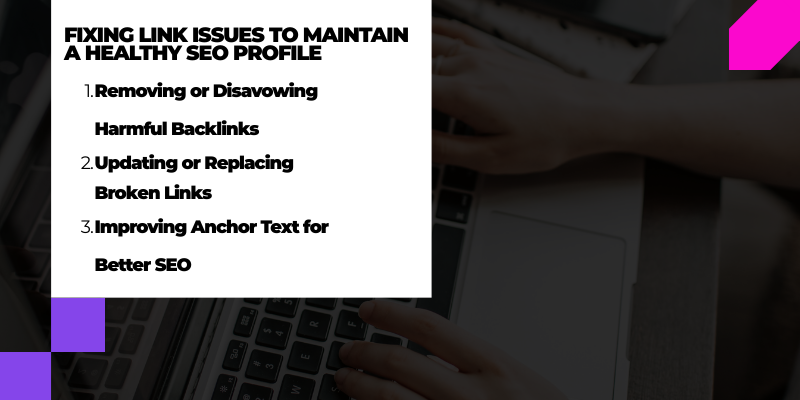
Over time, websites can accumulate harmful backlinks, broken links, or poorly optimized anchor text, which can affect search visibility and user experience. A structured link audit helps identify and resolve these issues efficiently.
Here’s how to fix link issues:
1. Removing or Disavowing Harmful Backlinks
Low-quality, spammy, or irrelevant backlinks can weaken your site’s trust signals. Identifying these links and requesting removal is the first step.
When removal isn’t possible, using Google’s Disavow Tool helps prevent such links from impacting your site’s authority. Regular backlink monitoring reduces long-term SEO risks.
2. Updating or Replacing Broken Links
Broken internal or external links disrupt user experience and limit search engine crawling. These often occur due to deleted pages, URL changes, or unavailable external sites.
Fixing or replacing broken links improves crawlability, preserves link equity, and supports better SEO performance.
3. Improving Anchor Text for Better SEO
Anchor text helps search engines understand the context of linked pages. Over-optimized or irrelevant anchor text can harm SEO.
Using clear, natural, and varied anchor text improves usability and helps search engines accurately assess page relevance.
Conclusion
Regular link audit SEO are essential for maintaining a healthy and effective SEO strategy. They help ensure your website’s link profile remains clean, relevant, and aligned with search engine guidelines. By identifying and fixing issues such as harmful backlinks, broken links, and poorly optimized anchor text, you can enhance both user experience and search engine rankings, an approach trusted by many digital marketing agencies like Centric to deliver sustainable SEO results.
A well-maintained link profile signals to search engines that your site is trustworthy, authoritative, and user-friendly, which are all key factors for improving SEO performance. Conducting regular link audits is vital for boosting your website’s SEO and ensuring long-term success.
By staying proactive in monitoring your links, you can avoid penalties, improve visibility, and create a solid foundation for future SEO growth. Make link audits a regular part of your SEO strategy to keep your website in top shape.