The research data lifecycle refers to the series of stages that data goes through from its initial collection to its eventual disposal or preservation. These stages are crucial for managing data effectively in research projects.
Whether you’re conducting experiments, surveys, or observations, understanding the data lifecycle is essential for ensuring data integrity, accessibility, and reproducibility.
Now, you might ask, "Which of the following most accurately describes the research data lifecycle?" This is a key question for any researcher or organization looking to optimize their data management practices. The lifecycle not only outlines the steps data takes but also emphasizes the importance of managing data responsibly and efficiently.
Centric helps organizations streamline their data management processes by providing tailored solutions that ensure proper handling of data at each stage of the research data lifecycle. By doing so, it improves research outcomes, foster collaboration, and guarantee compliance with best practices and industry standards.
The Research Data Lifecycle: What Exactly Does It Mean?
The research data lifecycle is a framework that outlines the stages of data management in a research study, from initial planning to final disposal or preservation.
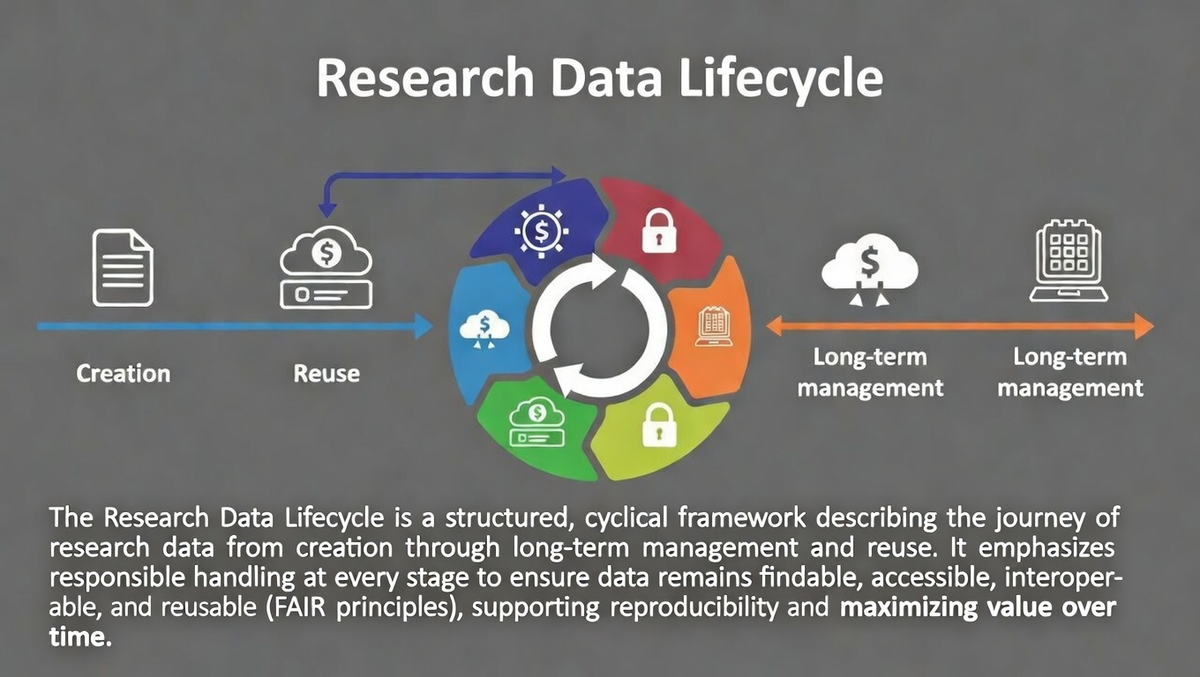
Understanding this lifecycle is crucial because it helps researchers and organizations maintain data quality, ensure compliance, and foster collaboration throughout the research process. This concept also aligns with the broader marketing concept, which emphasizes understanding and responding to the needs of the target audience—much like ensuring research data meets the needs of researchers, stakeholders, and future users.
So, Which Option Best Describes the Research Data Lifecycle?
Question: Which of the following most accurately describes the research data lifecycle?
-
A. It refers to the obligation imposed by federal law to uphold data confidentiality.
-
B. It refers to a particular organization’s data collection requirements.
-
C. It refers to how data are handled during and after a research study.
-
D. It refers to the obligation imposed by professional journals to share data.
Final Answer: C. It refers to how data are handled during and after a research study.
The research data lifecycle isn’t just about collecting data. It involves managing, analyzing, sharing, and eventually preserving or disposing of data, all of which are critical for maintaining data integrity and ensuring that research results are transparent, reproducible, and accessible.
What Are the Phases of the Research Data Lifecycle?
The research data lifecycle consists of several key phases that guide data from its initial creation through to its final disposal or preservation.
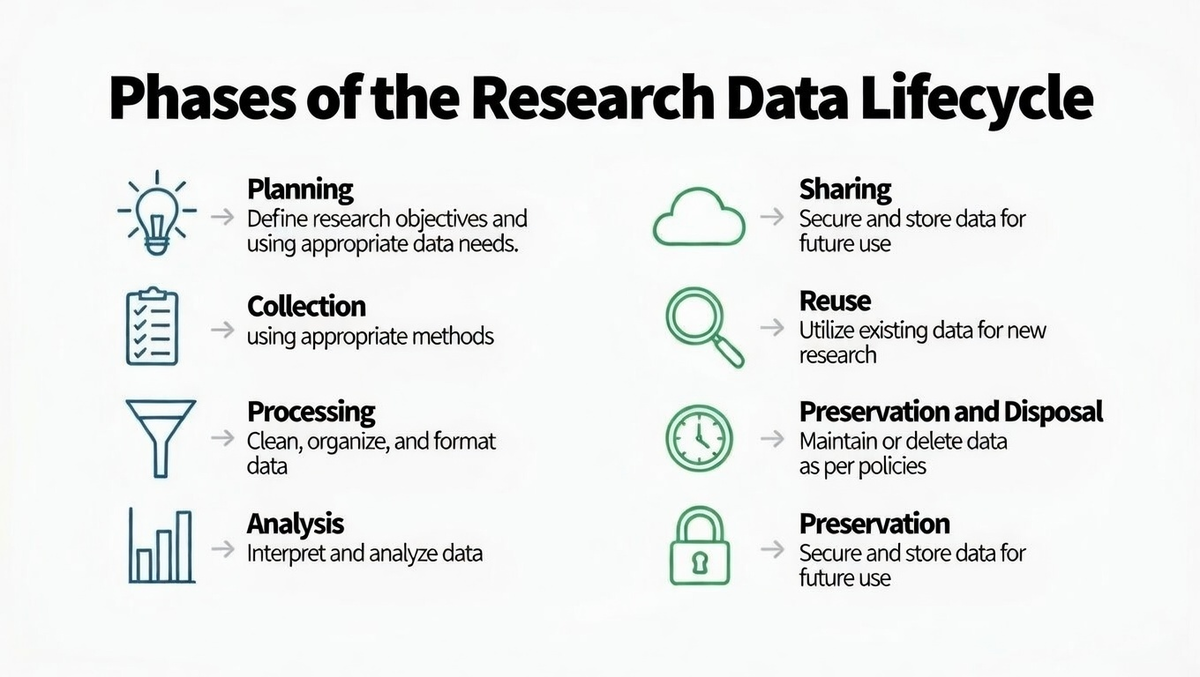
Each phase plays an important role in ensuring the data remains accurate, accessible, and compliant with legal and ethical standards. Let’s explore each phase in the lifecycle to understand how data is managed at every stage of the research process.
1. Planning
The planning phase is the foundation of any successful research project. It involves careful preparation that ensures the research data will be properly managed throughout its lifecycle.
During this phase, researchers define the scope of the study, determine the types of data needed, and establish a strategy for how the data will be collected, processed, and analyzed. A well-thought-out plan minimizes the risk of data issues later in the research process and ensures that the study will yield reliable and reproducible results.
Why is Planning Essential for Research Data?
Planning is essential because it sets the tone for the entire research process. By clearly defining research questions and data requirements, researchers can ensure that they collect the right type of data in the right format.
A solid data management plan outlines best practices for data collection, storage, and sharing, which helps maintain data integrity and improves the efficiency of the research process. Proper planning also ensures that legal, ethical, and privacy concerns are addressed from the outset, helping researchers comply with regulations and protect sensitive information.
2. Collection
The collection phase is where the research begins to take shape, as it involves gathering raw data that will drive the entire study. This stage is critical because the accuracy and reliability of the data collected directly impact the outcome of the research.
Researchers use a variety of methods to collect data, and selecting the right technique is key to ensuring that the research is built on a solid foundation. Careful planning during this phase ensures that the data meets the research objectives and is ready for processing and analysis.
How is Data Collected in Research Studies?
Data in research studies can be collected using several methods, depending on the nature of the research and the questions being investigated.
Common techniques include surveys, where participants respond to questions in a structured format; experiments, where researchers manipulate variables to observe outcomes; and observations, where data is gathered through direct or participant observation.
Each method has its strengths and weaknesses, but the key is to ensure that the data collected is accurate, representative, and aligned with the research goals. Accurate data collection from the start ensures the integrity of the research and minimizes the risk of errors that could compromise the study’s results.
3. Processing
After data is collected, the next step is the processing phase, where raw data is transformed into a format that can be easily analyzed. This phase is crucial for ensuring that the data is clean, accurate, and free from inconsistencies.
Data processing involves a range of tasks that ensure the data is ready to deliver meaningful insights in the next stages of the research. Proper processing not only improves data quality but also ensures that researchers can make reliable conclusions from their data.
What Happens During the Processing Phase?
During the processing phase, raw data is cleaned, formatted, and organized to make it usable for analysis. Data cleaning involves identifying and correcting errors, such as missing values, duplicates, or outliers, that could distort the results.
Data formatting is the process of converting the data into a consistent structure, making it easier to work with. For example, transforming data into numerical values or standardized text formats helps ensure uniformity.
Finally, organizing the data involves structuring it in a way that is aligned with the research objectives, such as grouping data into categories or variables that can be analyzed effectively. Proper processing ensures that the data is accurate, consistent, and ready for detailed analysis, reducing the chances of errors and improving the reliability of the research findings.
4. Analysis
The analysis phase is where raw data starts to provide value, as it is transformed into actionable insights that can drive research conclusions. This phase is critical because it allows researchers to make sense of the data, uncover trends, and test hypotheses.
Through careful analysis, researchers gain a deeper understanding of the phenomena they are studying, which can lead to new discoveries, innovations, and directions for future research. Data analysis is often considered the heart of the research process, as it directly influences the outcomes and significance of the study.
How Data Analysis Fuels Research and Innovation
Data analysis is fundamental to deriving meaningful conclusions from research data. By examining data using statistical techniques, patterns, and relationships emerge that may not have been apparent at first glance. Researchers can test hypotheses, validate theories, and explore potential causal links between variables.
The insights gained from analysis can lead to groundbreaking discoveries or improvements in existing practices. For instance, trends and correlations identified in data can inspire new research questions or even lead to the development of innovative products or solutions.
Effective data analysis not only enhances the depth of the research but also opens doors for future studies, applications, and industry advancements.

5. Preservation
Once data has been collected, processed, and analyzed, it’s crucial to preserve it for future use. Data preservation is about ensuring that valuable research data remains intact and accessible over the long term.
This phase ensures that the information collected today will remain available for further analysis, review, or reuse in the future. As research evolves and new questions arise, preserved data becomes a key resource for building upon previous work and ensuring that research is reproducible and transparent.
Why is Data Preservation Crucial?
Data preservation is essential for maintaining the long-term value and integrity of research data. By safely storing data, researchers ensure that it remains accessible even as technologies change or as time passes. This allows future researchers to revisit the data, validate results, or use it for additional studies.
Additionally, preserving data ensures compliance with legal and ethical standards, particularly when it comes to data privacy and confidentiality. However, there are challenges associated with data preservation, such as choosing appropriate storage formats, managing large datasets, and ensuring continued accessibility over time.
Researchers and organizations must address these challenges by implementing robust storage solutions and establishing clear data retention policies to ensure that their research data remains valuable, secure, and usable for years to come.
6. Sharing
Data sharing is a vital step in the research data lifecycle, ensuring that the results of a study are accessible to others within the scientific community. By making data publicly available, researchers contribute to a culture of openness, transparency, and collaboration.
Sharing data not only enhances the credibility of the research but also allows for validation and replication, which are fundamental to the scientific method. In today’s data-driven world, sharing research data has become a standard practice that promotes trust and facilitates the advancement of knowledge.
Why Should Researchers Share Their Data?
Data sharing is important for several key reasons. First, it promotes transparency, allowing others to verify the results of the study and ensuring that findings are not based on selective reporting or biases. By sharing data, researchers allow others to examine their work, fostering greater trust in the findings.
Second, reproducibility is a cornerstone of good science. When data is shared, other researchers can replicate the study and confirm the results, which strengthens the credibility and reliability of the research. Lastly, data sharing encourages collaboration within the research community.
Researchers can build on one another’s work, leading to new insights, discoveries, and innovative solutions that might not have been possible if the data remained isolated. Ultimately, data sharing accelerates the pace of scientific discovery and enhances the impact of research.
7. Reuse
The reuse phase is a powerful aspect of the research data lifecycle, allowing valuable data to serve multiple purposes beyond its original research context. Rather than letting data sit unused after a study concludes, researchers can repurpose it for new investigations, further analysis, or even cross-disciplinary research.
Just as digital marketing tools allow marketers to repurpose content for various campaigns, data reuse can drive new research inquiries, improving efficiency and generating new insights from existing datasets.
Data reuse contributes to efficiency, cost savings, and accelerated discovery, as it enables researchers to build upon existing work rather than starting from scratch.
How Can Data Be Reused in Future Research?
Data reuse involves taking data from previous studies and applying it to new research questions or projects. Researchers may reuse data to validate existing findings, test new hypotheses, or explore alternative interpretations of the same dataset.
This process is particularly useful in areas where collecting new data is time-consuming or expensive, as it allows researchers to get more value from data that has already been gathered. Additionally, data can be repurposed for cross-disciplinary applications, where findings from one field of study can be applied to another, leading to innovations and new insights.
By reusing data, researchers can also contribute to broader knowledge-sharing efforts, supporting transparency and collaboration across the scientific community.
8. Preservation and Disposal
The final phase in the research data lifecycle involves making decisions about whether to preserve or dispose of data. This process requires careful consideration of ethical guidelines and legal responsibilities, as researchers must handle data in a way that protects individuals' privacy, complies with regulations, and ensures that data is not retained unnecessarily.
Proper data management in this phase ensures that valuable information is preserved for future use, while also ensuring that data is safely disposed of when it is no longer needed.
When to Preserve and When to Dispose of Data?
Ethically, researchers must consider the long-term value of the data when deciding whether to preserve or dispose of it. Data should be preserved if it has ongoing value, such as contributing to future research, verifying findings, or promoting transparency and reproducibility.
The preservation of sensitive data, however, must be handled with care to protect confidentiality and comply with legal standards, such as data protection laws (e.g., GDPR). On the other hand, data that is no longer useful or that contains personally identifiable information should be safely disposed of.
Disposal must follow established guidelines to ensure that it is done securely and that no confidential information is at risk. Researchers must adhere to legal guidelines regarding retention periods—often determined by funding bodies, institutions, or regulatory agencies. Overall, data disposal and preservation require a balance between ethics, legal requirements, and practical considerations to ensure responsible data management.
FAQs
What is the research data lifecycle?
The research data lifecycle refers to the stages data undergoes from its initial creation to disposal or preservation. These phases ensure effective management, transparency, and reproducibility, supporting research integrity. Proper management in each phase enhances the quality and usability of research data.
Why is data preservation important in research?
Data preservation ensures that research data remains accessible and intact for future use. It supports long-term access for validation, reuse, and compliance with legal and ethical guidelines. Without proper preservation, valuable research insights and findings could be lost or compromised over time.
How can data be reused in future research?
Data reuse allows researchers to build on existing data for new studies, further analysis, or cross-disciplinary applications. Reusing data increases efficiency, reduces costs, and fosters innovation, as previous research can be leveraged to test new hypotheses and explore alternative outcomes.
What are the ethical considerations when disposing of research data?
When disposing of research data, ethical considerations include ensuring data confidentiality and compliance with privacy laws. Researchers must securely delete sensitive data to prevent unauthorized access. Data disposal guidelines must be followed to protect individuals’ rights and maintain trust in the research process.
Conclusion
Understanding the research data lifecycle is essential for maintaining the quality, integrity, and compliance of research data. So, which of the following most accurately describes the research data lifecycle? It refers to how data is handled during and after a research study, ensuring transparency, reproducibility, and long-term accessibility.
Centric specializes in helping organizations manage their research data lifecycle more efficiently. By implementing best practices at each stage, from planning to disposal, it ensures that data remains secure, compliant, and ready for future use.
Its expertise supports businesses in maximizing the value of their research data, driving innovation, and ensuring successful research outcomes. With Centric's guidance, organizations can confidently navigate the complexities of data management, ensuring ongoing success and compliance.