Digital marketing tools are essential software solutions that help businesses optimize their online marketing campaigns across various platforms.
These tools are designed to streamline processes, improve targeting, and measure success, ensuring that marketing efforts are efficient and effective.
From automating tasks to providing in-depth insights into customer behavior, digital marketing tools play a pivotal role in helping businesses reach their target audience and achieve their goals.
The importance of digital marketing tools cannot be overstated. With the rise of online platforms and the increasing complexity of digital campaigns, businesses need reliable tools to manage, analyze, and optimize their efforts.
These tools can range from SEO and social media management to email marketing and content analytics, providing a comprehensive approach to digital marketing.
By using the right tools, businesses can boost engagement, increase conversions, and ensure a higher return on investment (ROI).
This blog will explore various types of digital marketing tools, their benefits, and how they can help businesses improve their online marketing strategies.
Why Digital Marketing Tools Are Essential?
Digital marketing tools are crucial for optimizing online campaigns, automating tasks, and driving better results. They make marketing more efficient, targeted, and data-driven, helping businesses streamline operations and achieve greater success. For instance, DevOps Automation Tools can significantly speed up the process of deploying new campaigns, allowing teams to focus more on strategy and creativity.
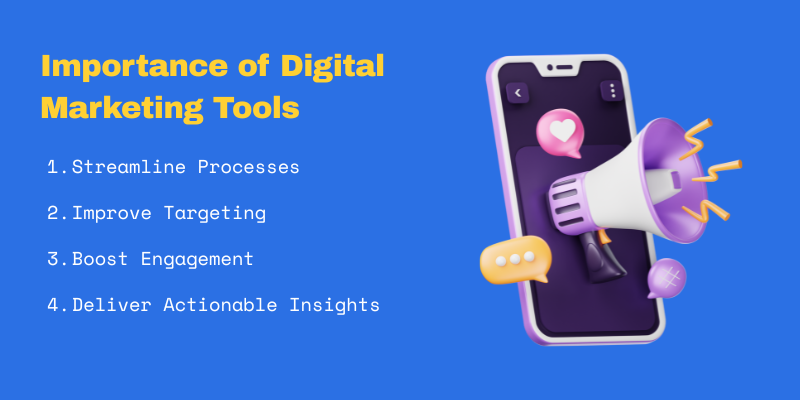
- Streamline Processes: Tools like Hootsuite and Mailchimp automate posting, email scheduling, and reporting, saving time and allowing teams to focus on strategy and creativity.
- Improve Targeting: Platforms such as Google Ads and SEMrush enable precise audience segmentation, ensuring the right message reaches the right people for higher conversion rates.
- Boost Engagement: Tools like BuzzSumo, Buffer, and Sprout Social help identify trending topics and foster real-time audience interaction, strengthening relationships and brand loyalty.
- Deliver Actionable Insights: Analytics tools like Google Analytics and HubSpot track performance, customer behavior, and ROI, empowering marketers to make data-driven decisions for continuous growth.
Explore Our Digital Marketing Services!
6 Types of Digital Marketing Tools
Digital marketing tools are essential for streamlining various aspects of online marketing, from social media management to SEO optimization and content creation. These tools help businesses manage and track their marketing campaigns effectively, ensuring they reach their target audience and achieve optimal results.
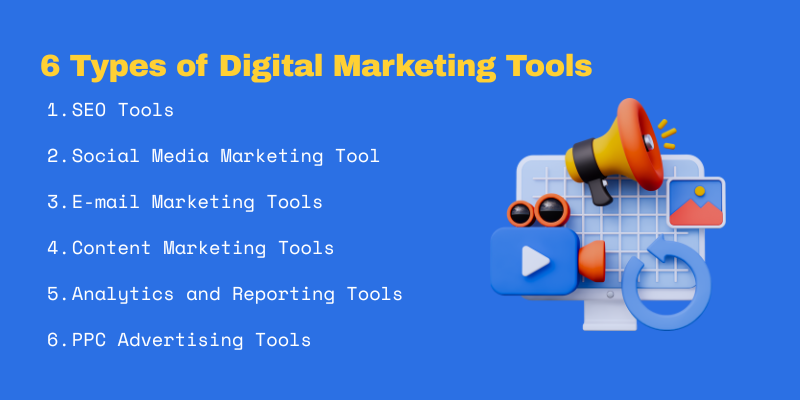
Some of the key types of digital marketing tools include:
- SEO Tools: Google Analytics, Ahrefs, SEMrush, Moz & Centric seo tool
- Social Media Marketing Tools: Hootsuite, Buffer, Sprout Social, Later
- Email Marketing Tools: Mailchimp, Constant Contact, SendinBlue, ActiveCampaign
- Content Marketing Tools: BuzzSumo, CoSchedule, Grammarly, Canva
- Analytics and Reporting Tools: Google Analytics, HubSpot, Tableau, Kissmetrics
- PPC Advertising Tools: Google Ads, Bing Ads, Facebook Ads Manager, WordStream
Each of these tools plays a vital role in enhancing marketing efforts, improving performance, and achieving long-term growth for businesses.
1. SEO Tools
SEO tools are essential for improving and maintaining a website’s performance in search engines. These tools help identify areas that need optimization, track performance, and analyze key metrics to enhance a site’s visibility and ranking. Among the Best SEO Tools For Small Businesses, Google Analytics is particularly helpful in providing detailed insights into user behavior and performance metrics.
Example: Google Analytics
Google Analytics is one of the most powerful SEO tools. It provides detailed insights into user behavior, traffic sources, and engagement metrics such as page views, session duration, and conversions.
You can see where visitors come from, organic search, paid ads, or social media, and determine which channels drive the most traffic.
It also reveals which content performs best, helping you enhance underperforming pages and replicate successful strategies for better search visibility and growth.
2. Social Media Marketing Tools
Social media marketing tools help businesses efficiently manage, schedule, and analyze their social media activities. They automate posting, track engagement, and provide insights to refine strategies across platforms.
By using these tools, businesses can maintain consistent content, measure audience interaction, and adjust campaigns based on performance data. This leads to stronger engagement and a more impactful online presence.
Example: Hootsuite
Hootsuite allows businesses to manage multiple social media accounts from one dashboard, schedule posts, monitor conversations, and track performance, all in one place.

3. Email Marketing Tools
Email marketing tools help businesses build stronger customer relationships, boost sales, and improve communication. They simplify campaign creation, automation, and analysis, making outreach more effective and personalized.
Example: Mailchimp
Mailchimp automates and tracks email campaigns for maximum impact. It lets businesses create targeted workflows, like welcome or re-engagement emails, based on user actions.
The platform tracks key metrics such as open rates, click-through rates, conversions, and unsubscribes. Its detailed reports provide insights into campaign performance, helping businesses refine strategies and increase engagement.
Explore Our Email Marketing Services!
4. Content Marketing Tools
Content marketing tools help businesses create, distribute, and optimize engaging content that attracts the right audience and drives traffic. Content marketing tools make it easier to find trending topics, analyze performance, and refine strategies for better results.
Example: BuzzSumo
BuzzSumo helps businesses discover the most shared and trending content across the web. It tracks competitor performance and highlights which posts generate the most engagement.
The tool also identifies key industry influencers and provides detailed analytics on shares, likes, and comments. These insights help businesses understand what works, refine their strategy, and create content that resonates with their audience.
Explore Our Content Marketing Services!
5. Analytics and Reporting Tools
Analytics and reporting tools are essential for tracking and improving digital marketing performance. They provide deep insights into website traffic, SEO metrics, and user behavior, helping businesses make data-driven decisions and refine their strategies.
Example: SEMrush
SEMrush is a leading analytics platform that monitors website performance through key metrics like traffic volume, bounce rate, and page views. It also tracks keyword rankings and competitor backlinks, helping businesses strengthen their SEO and link-building strategies.
By analyzing competitor data, SEMrush enables businesses to identify trends, optimize campaigns, and stay ahead in the digital landscape.
6. PPC Advertising Tools
Pay-Per-Click (PPC) advertising tools help businesses attract targeted traffic through paid search campaigns. They boost visibility, drive leads, and increase sales by ensuring ads reach the right audience at the right time. Many Tech marketing agencies specialize in PPC, helping businesses run effective campaigns and maximize their return on investment through precise targeting and data-driven strategies."
Example: Google Ads
Google Ads is a leading PPC platform that enables businesses to create and manage paid campaigns across Google’s network. It allows advertisers to bid on specific keywords so their ads appear in relevant searches, increasing conversion potential.
With flexible targeting options, such as location, device, demographics, and interests, businesses can deliver personalized ads in multiple formats, including text, display, and video.
Google Ads also provides full budget control, letting advertisers set daily or monthly limits. By leveraging Google Ads, businesses can efficiently manage campaigns, reach their audience, and achieve measurable marketing goals.
Conclusion
Digital marketing tools are vital for enhancing the performance of marketing campaigns and ensuring better return on investment (ROI). These tools enable businesses to streamline their processes, target the right audience more effectively, and engage with customers in a meaningful way. By providing valuable insights into campaign performance, digital marketing tools allow businesses to make data-driven decisions, optimize strategies, and improve overall results.
Whether it’s automating tasks, analyzing data, or refining targeting efforts, Centric plays a crucial role in achieving long-term success and maximizing the impact of marketing efforts. Whether it’s automating tasks, analyzing data, or refining targeting efforts, digital marketing tools play a crucial role in achieving long-term success and maximizing the impact of marketing efforts.