





The oil and gas industry is one of the most important pillars of the global economy. It fuels cars, powers industries, supports modern infrastructure, and even provides the raw materials for essential goods like plastics, fertilizers, and chemicals. But behind the headlines about oil prices or drilling discoveries lies a complex network of operations that stretches from resource exploration to consumer use.
Two of the most commonly used, and often misunderstood, terms in this system are “upstream” and “downstream.” These terms describe the two ends of the value chain, each with unique roles, challenges, and opportunities.
To understand the distinctions, it's important to know the differences between upstream vs downstream, which refer to the exploration and production phases versus refining and distribution, respectively. If you’ve ever wondered what separates upstream from downstream in oil and gas, this article breaks it all down. If you’ve ever wondered what separates upstream from downstream in oil and gas, this article breaks it all down.
What Is Upstream Oil and Gas?
Upstream refers to the exploration and production side of the industry. It’s the first step in the value chain, focused on finding oil and gas reserves and bringing them to the surface.
What is midstream oil and gas? Midstream refers to the transportation and storage activities that bridge the gap between upstream and downstream operations.
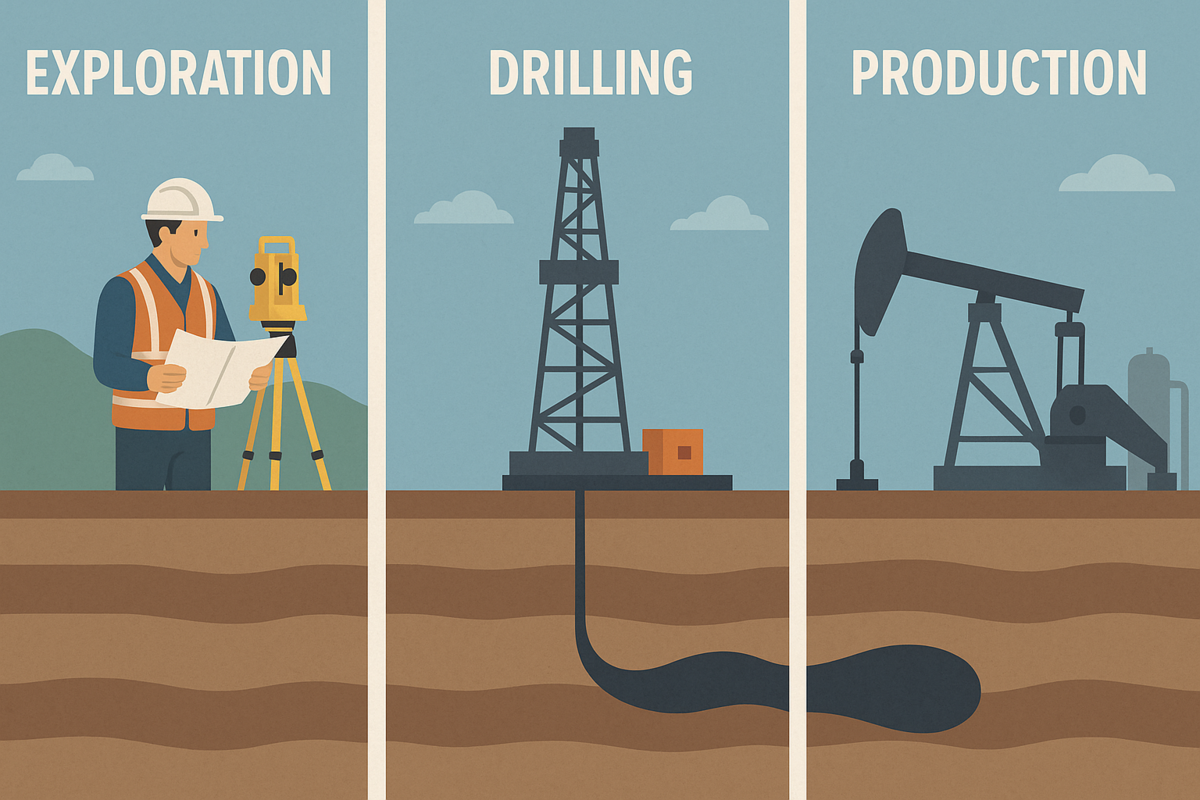
Often referred to as the “E&P sector” (exploration and production), upstream includes the search for hydrocarbon deposits, drilling exploratory wells, and developing full-scale production fields.
Activities in the upstream often include:
- Exploration: Using geological surveys, seismic imaging, and advanced technologies to locate new oil and gas deposits.
- Drilling: Creating exploratory and production wells to access the resources.
- Production: Extracting hydrocarbons and preparing them for transport to processing facilities.
The upstream sector is typically high-risk and capital-intensive. Companies must invest heavily in exploration with no guarantee of discovery, and success often depends on commodity price fluctuations. For this reason, upstream is strongly influenced by global oil demand, geopolitical events, and investment trends.
To navigate these challenges, many firms lean on Content Marketing Services to clearly communicate their capabilities, manage investor confidence, and differentiate themselves in a competitive market.
What Is Downstream Oil and Gas?
Downstream is the refining and distribution side of the oil and gas industry. Once hydrocarbons are extracted, they are transported to refineries where crude oil is processed into usable products such as gasoline, diesel, jet fuel, lubricants, and petrochemicals.The downstream sector also covers marketing, distribution, and sales of refined products to end users.
Retailers in the downstream space often wonder what are five marketing strategies that retailers spend half of their annual budget on, with digital marketing being a key focus. Digital presence plays a crucial role in the retail space of the oil and gas industry, from fuel stations to industrial products. Digital presence plays a crucial role in the retail space of the oil and gas industry, from fuel stations to industrial products. For businesses in the downstream sector, working with an oil and gas marketing agency can help them refine their strategies, ensuring they are visible and accessible to customers through optimized digital campaigns.
In many ways, downstream is the part of the industry consumers interact with most directly, from filling up at gas stations to using household products derived from petrochemicals.
Activities in the downstream include:
- Refining: Converting crude oil into fuels and chemicals.
- Storage and Transport: Moving refined products to markets via pipelines, tankers, barges, trucks, and rail.
- Retail and Marketing: Supplying fuel stations, utilities, and industries with finished energy products.
Compared to upstream, downstream revenues tend to be steadier, but companies face pressures from refining margins, changing consumer demand, and regulatory requirements for cleaner, low-carbon fuels.
To stay competitive in a shifting marketplace, many leverage Search Engine Optimization (SEO) to ensure their offerings remain visible and accessible to customers and stakeholders online.
Upstream vs Downstream: 3 Core Differences
Although part of the same value chain, upstream and downstream operate in very different environments.
1. Focus
Upstream deals with discovering and extracting resources, while downstream focuses on refining and delivering finished products.
2. Risk and Investment
Upstream is highly sensitive to oil price volatility and requires significant upfront investment. Downstream, while less volatile, depends heavily on refining margins and regulatory standards. What is the digital marketing strategy that tracks users across the web is a key part of downstream retail strategies, allowing companies to target consumers with precise ads based on their interests.
3. Consumer Connection
Upstream is far removed from public visibility, while downstream touches consumers directly through retail and fuel distribution.
Despite these differences, both sectors rely on the midstream industry to connect them. Midstream provides the pipelines, storage, and transport that make it possible for hydrocarbons to move efficiently from the field to the refinery and eventually to the consumer. For businesses operating across these sectors, strong positioning is key, which is why many invest in B2B Marketing Services to craft targeted strategies that communicate their unique value within the broader energy ecosystem.
Explore Our Oil And Gas Marketing Agency!
Why Are Both Sectors Important?
The energy value chain wouldn’t function without the collaboration of upstream and downstream.
Upstream provides the raw materials, crude oil and natural gas, while downstream ensures those materials are transformed into the energy and products society depends on.
This collaboration is what allows oil, gas, and renewables to drive global economies, support industries, and deliver reliable energy to billions of people worldwide.
In short, upstream discovers resources, downstream delivers them, and together they keep the energy system running.
Retailers, especially in the downstream sector, can leverage best website builders for small businesses to ensure their digital storefront is effective in meeting consumer needs.

What Are The Challenges in Upstream and Downstream?
Both sectors face significant challenges that shape their strategies and investments.
Upstream challenges include:
- High exploration and drilling costs.
- Dependence on commodity prices and demand.
- Stricter environmental regulations and carbon reduction targets.
- Risks tied to geopolitics, resource nationalism, and access to reserves.
Downstream challenges include:
- Pressure to reduce emissions and produce cleaner fuels.
- Adapting refining operations to new environmental standards.
- Competition from renewable energy and alternative fuels.
- Fluctuations in consumer demand and refining margins.
While these challenges differ, they share a common theme: the need for innovation, adaptability, and sustainable practices to remain competitive.
Explore Our Digital Marketing Services!
Innovations Transforming the Value Chain
The oil and gas industry is evolving, with technology and sustainability driving change across both upstream and downstream.
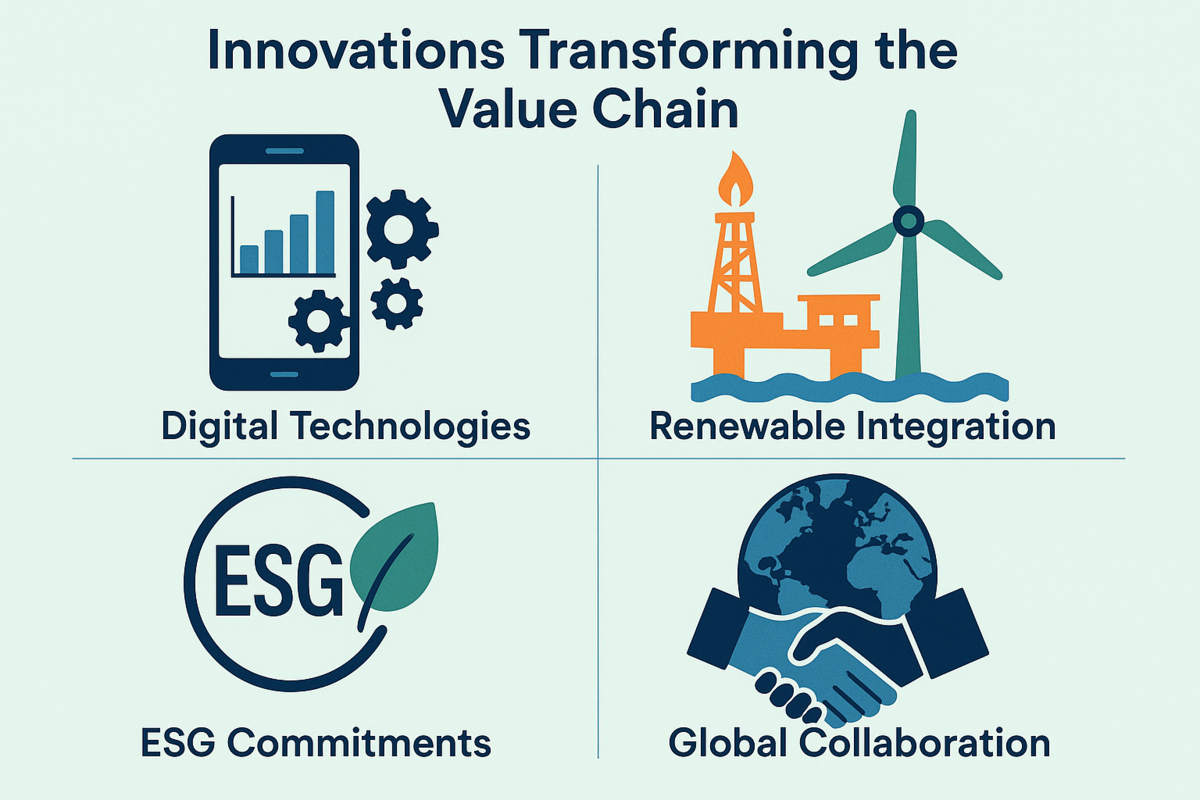
- Digital Technologies: AI, IoT, and big data analytics are helping upstream companies optimize drilling and exploration, while downstream refineries adopt digital twins and automation to improve efficiency.
- Renewable Integration: Biofuels, hydrogen, and carbon capture are being incorporated into refining and distribution systems, blurring the lines between traditional and new energy.
- ESG Commitments: Both sectors are under pressure to improve transparency and reduce environmental impacts, influencing how they operate and communicate.
- Global Collaboration: As supply chains span continents, digital platforms and smarter collaboration tools are helping teams work across geographies in real time.
These innovations are not just modernizing operations but also shaping how the industry prepares for a future less dependent on fossil fuels. Many companies are embracing Digital Transformation Services to implement these technologies at scale, ensuring efficiency, sustainability, and competitiveness in a rapidly changing energy landscape.
For digital marketing, understanding Google keyword ranking and optimizing websites accordingly ensures increased visibility for companies within the energy industry.
Frequently Asked Questions
What is the difference between upstream and downstream in oil and gas?
Upstream focuses on exploration and production of crude oil and natural gas, while downstream involves refining, distribution, and marketing of finished products to consumers.
Is refining upstream or downstream in oil and gas?
Refining is part of the downstream sector because it processes crude oil into usable products such as gasoline, diesel, and petrochemicals.
What are examples of upstream and downstream activities?
Upstream examples include drilling wells and extracting crude oil. Downstream examples include refining that crude into fuel and selling it at gas stations.
Which is more profitable, upstream or downstream oil and gas?
Profitability depends on market conditions. Upstream can be highly profitable when oil prices are high, while downstream tends to generate steadier but smaller margins from refining and retail.
Why are both upstream and downstream important?
Both are essential parts of the energy value chain. Upstream provides raw materials, while downstream ensures these resources are converted into energy and products that consumers and industries rely on daily.
Conclusion
The upstream and downstream sectors may look different, but together they form the backbone of the oil and gas value chain. Upstream drives discovery and production, while downstream transforms resources into usable products and delivers them to consumers. Both are critical, both face unique challenges, and both are adapting to a future defined by innovation, sustainability, and new energy demands. In the context of upstream vs downstream, while these sectors are distinct, they are intrinsically connected in achieving the overall success of the energy industry. For those in the downstream space, using best SEO reporting software can help track their performance and adjust strategies for better engagement.
As the industry transforms, businesses must find ways to increase conversion rate and stay competitive through digital optimization. As the energy sector continues its transformation, companies must balance traditional operations with digital modernization and sustainability goals. In this evolving landscape, organizations need partners that can help them communicate their value, strengthen stakeholder trust, and build a resilient digital presence. This is where Centric supports energy and industrial companies, providing the strategies and tools they need to thrive in a world where technology, transparency, and adaptability define success.