Wondering how to build an e-commerce website? This is one of the most common questions for businesses looking to grow in today’s digital-first world.
An e-commerce website is an online platform that allows businesses to showcase and sell their products or services directly to customers over the internet.
In today’s digital economy, having an e-commerce website is not just an option, it’s a necessity. It helps businesses reach a global audience, reduce operational costs, and analyze customer behavior through data-driven insights.
Whether you're just starting out or looking to expand, a well-designed e-commerce site can help enhance your brand, build trust, and increase sales by providing a seamless user experience.
Plus, it opens doors to global markets, reduces operational costs, and provides valuable insights into customer behavior.
In this blog, you’ll learn step-by-step how to build an e-commerce website, including the tools, design principles, and strategies needed to create a professional and profitable online store.
10 Key Steps Involved in Building a Successful E-Commerce Website
Building a successful e-commerce website involves key steps such as selecting the right platform, designing a user-friendly interface, and ensuring secure payment and shipping configurations.
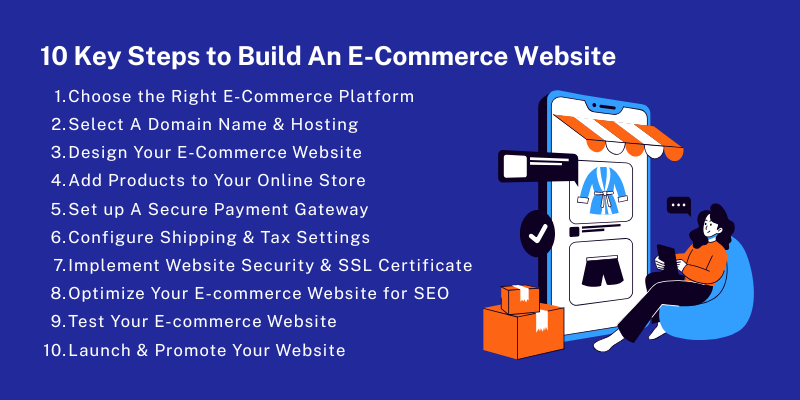
Here are 10 key steps involved in building a successful e-commerce website:
-
Choose the Right E-Commerce Platform
-
Select a Domain Name and Hosting
-
Design Your e-commerce Website
-
Add Product to your online store
-
Set up a Secure Payment Gateway
-
Configure Shipping Options and Tax Settings
-
Implement Website Security and SSL Certificate
-
Optimize your E-Commerce website for SEO
-
Test Your E-Commerce Website
-
Launch and Promote Your Website
Let’s explore each in detail.
1. Choose the Right E-Commerce Platform
Selecting the right e-commerce platform is crucial for building your website. Different platforms offer varying flexibility, ease of use, and pricing, so it’s important to choose one that fits your business needs. If you’re searching for the best ecommerce platform, consider factors like scalability, ease of customization, and built-in SEO features.
Here’s a quick overview of popular platforms:
-
Shopify: User-friendly with customizable themes, secure payment gateways, and inventory management. Ideal for fast setup and ease of use.
-
WooCommerce: A WordPress plugin that’s highly customizable and open-source. Great for businesses looking for design control at a lower cost.
-
Magento: Powerful and scalable, suitable for larger businesses with complex needs. Requires technical expertise for management.
-
BigCommerce: Flexible with built-in features for growing businesses, offering scalability and customization.
Explore Our E-Commerce Portal Services!
2. Select a Domain Name and Hosting
Your domain name is often the first interaction customers will have with your brand, so it’s crucial to make it memorable, easy to spell, and relevant to your business. For those starting small, choosing the best hosting for small businesses ensures reliable performance, security, and scalability without breaking the budget.

A strong domain name builds trust with customers, as it indicates professionalism and credibility, while also contributing to your site's search engine optimization (SEO).
Here’s a breakdown of different hosting options:
-
Shared Hosting: Cost-effective but limited in performance and scalability. Suitable for small businesses with low traffic.
-
VPS Hosting: Offers more control and flexibility than shared hosting, making it ideal for moderate-sized e-commerce sites.
-
Dedicated Hosting: Provides the highest performance, security, and control, ideal for large e-commerce sites with high traffic. However, it comes at a higher cost.
3. Design Your E-Commerce Website
Designing your e-commerce website involves creating a clean, user-friendly layout with intuitive navigation, responsive themes, and essential shopping features. Using the best website builder for SEO can help ensure your design is both visually appealing and optimized for search engines, giving your store a better chance to rank higher in search results.
Here are three effective ways to design your website:
-
User-Friendly Design Principles: Create a clutter-free layout with intuitive navigation. Use clear categories and easy-to-follow menus, ensuring a smooth checkout process to build trust and improve user satisfaction.
-
Responsive Theme and Customization: Choose a responsive theme for an optimal experience on any device. Customize it to match your brand’s identity, including colors, fonts, and layout, to provide a unique shopping experience.
-
Essential Elements: Include product categories, filters, and a search bar to help customers quickly find what they need. Categories like “New Arrivals” and “Best Sellers,” along with filters for size, color, and price, enhance usability.
4. Add Products to Your Online Store
Adding products to your online store involves organizing them into categories, writing detailed descriptions, uploading high-quality images, and managing variants and inventory.
Key steps include:
-
Organize Products into Categories: Group products into clear categories (e.g., Men’s Clothing, Electronics, Home Decor) to enhance navigation and improve SEO.
-
Product Descriptions, Images, and Pricing: Provide detailed, engaging descriptions highlighting features and benefits. Use high-quality images from multiple angles. Ensure transparent and competitive pricing, including shipping or discount details.
-
Manage Variants and Inventory: Implement product variants (size, color, etc.) and track inventory to avoid overselling. Keep stock levels updated for accurate availability representation.
5. Set Up a Secure Payment Gateway
Setting up a secure payment gateway is a crucial step in building an e-commerce website, as it ensures secure and smooth transactions for your customers. Understanding what is SSL and implementing it correctly helps encrypt sensitive customer data and boosts confidence in online payments.
Popular payment processors like PayPal, Stripe, and Square provide trusted, efficient methods for handling payments.
These platforms are widely recognized and integrate easily with e-commerce sites, with PayPal offering user-friendly features, Stripe providing customizable options for developers, and Square offering a comprehensive solution for both online and in-person transactions.
A secure payment gateway encrypts sensitive information, reduces the risk of fraud, and enhances customer confidence. To cater to diverse customer preferences, it's essential to offer various payment methods, including:
-
Credit Cards (Visa, MasterCard, etc.)
-
Digital Wallets (Apple Pay, Google Pay, etc.)
-
Bank Transfers for customers who prefer traditional payment options
Remember, offering secure payment options is vital for building customer trust. When customers know their financial data is protected, they’re more likely to complete their purchases.
6. Configure Shipping and Tax Settings
Configuring shipping and tax settings is essential for a smooth checkout experience. You can offer different shipping methods tailored to your business model, such as flat-rate shipping, weight-based shipping, or free shipping. Each option has its benefits:
-
Flat-rate shipping: Simple and predictable for both businesses and customers.
-
Weight-based shipping: Accurate for heavier items, ensuring fair shipping costs.
-
Free shipping: Encourages purchases and boosts conversions.
Taxes should be configured based on the customer's location and the product type, as rates vary by region and product category (e.g., digital vs. physical goods). For international shipping, consider different customs regulations and multi-currency payments to provide a localized experience for global customers.

7. Implement Website Security and SSL Certificate
Website security is crucial for protecting customer data and maintaining your e-commerce site's integrity. As cyber threats increase, safeguarding sensitive information is essential for both business protection and customer trust.
Security measures:
-
SSL Certificates: Encrypt payment data and build trust
-
MFA: Enhance user account protection
-
Strong Password Policies: Ensure password safety and secure storage
An SSL certificate encrypts data during transactions, securing credit card details and personal information. The padlock symbol assures customers of a safe connection, boosting trust and encouraging purchases.
Additionally, implementing multi-factor authentication (MFA) adds an extra layer of protection for user accounts, while strong password policies ensure that passwords are secure and stored safely, reducing the risk of breaches.
8. Optimize Your E-Commerce Website for SEO
Optimizing your e-commerce website for SEO is vital to improve search engine rankings and drive organic traffic. Conducting a thorough ecommerce SEO audit checklist helps identify areas for improvement, from page speed and mobile responsiveness to meta tags and keyword optimization, ensuring your site is fully optimized for search engines.
By focusing on key on-page SEO elements, you can make your product pages more discoverable and enhance the overall user experience.
On-Page SEO tips for product pages and key SEO factors include
-
Product Titles: Use clear, descriptive titles with relevant keywords for better visibility.
-
Product Descriptions: Write unique and detailed descriptions with targeted keywords to attract search engine traffic.
-
Alt-Text for Images: Add descriptive alt-text for images to improve image search rankings.
-
URL Structure: Ensure URLs are short, readable, and include relevant keywords to help with indexing.
-
Meta Descriptions: Craft clear and compelling meta descriptions that encourage click-throughs from search engine results.
-
Proper Tagging: Use H1 and H2 tags to structure your content and make it easier for search engines to understand.
Explore Our E-commerce SEO Services!
9. Test Your E-Commerce Website
Thorough testing is essential to ensure your e-commerce website functions properly and provides a smooth shopping experience for customers.
Testing ensures that your site works across all devices and browsers, and that key features, such as the payment process and checkout flow, are seamless.
You should focus on the following areas during testing:
-
Mobile Responsiveness: Ensure the site looks and functions well on various mobile devices.
-
Browser Compatibility: Test across different browsers (Chrome, Safari, Firefox, etc.) to ensure consistent performance.
-
Payment Process: Verify that all payment gateways work smoothly and securely.
-
Cart and Checkout: Ensure the cart is functional, and the checkout process is intuitive and free from errors.
Additionally, collecting feedback from beta users can help identify usability issues and areas for improvement.
By gathering feedback and making necessary adjustments, you can ensure your site is fully optimized before launching. This thorough testing will help enhance user satisfaction and prevent potential issues post-launch.
10. Launch and Promote Your Website
Before going live, conduct final checks to ensure everything is working smoothly, test payment gateways, check product pages for accuracy, and ensure your site is fully optimized for mobile devices and different browsers.
After launch, promoting your e-commerce site is key to attracting customers:
-
SEO: Optimize your website’s content to rank higher on search engines and drive organic traffic.
-
Social Media: Use platforms like Instagram, Facebook, and Twitter to build your brand presence and engage with potential customers.
-
Email Marketing: Send newsletters and promotional offers to your subscriber list to keep them engaged and encourage repeat purchases.
-
Influencer Marketing: Collaborate with influencers in your niche to reach a wider audience and build credibility for your brand.
-
Paid Advertising: Use paid advertising on platforms like Google Ads, Facebook Ads, or Instagram Ads to drive targeted traffic and increase conversions.
-
Content Marketing: Create valuable content such as blogs, videos, and tutorials that educate your audience and drive traffic to your site.
-
Referral Programs: Offer incentives for existing customers to refer friends and family to your store, helping to expand your customer base.
Additionally, setting up paid advertising campaigns like Google Ads and Facebook Ads can help target specific customer segments and drive immediate traffic to your site. These ads are effective for boosting visibility and attracting a larger audience quickly.
Explore Our Product Launch Services!
Frequently Asked Questions
What are the first steps to building an e-commerce website?
To start building an e-commerce website, choose the right platform such as Shopify, WooCommerce, or Magento. Next, plan your website structure, including product categories, payment gateways, and shipping options, to ensure a seamless shopping experience. Proper planning at the beginning sets the foundation for a successful online store.
How much does it cost to create an e-commerce website?
The cost of building an e-commerce website varies depending on factors like platform choice, design complexity, and added features. On average, small business websites can range from a few hundred to several thousand dollars. Investing wisely in design, security, and functionality ensures your online store attracts and retains customers.
Which platform is best for an e-commerce website?
The best platform for an e-commerce website depends on your business needs, technical skills, and budget. Shopify is ideal for beginners with ready-to-use features, WooCommerce works well for WordPress users, and Magento suits larger stores requiring custom solutions. Choosing the right platform helps streamline operations and enhance user experience.
How do I design a user-friendly e-commerce website?
Designing a user-friendly e-commerce website involves intuitive navigation, clear product pages, and fast-loading interfaces. Incorporate responsive design so your store works well on mobile devices, and optimize the checkout process to reduce cart abandonment. A seamless design encourages customers to browse and complete purchases.
How can I make my e-commerce website secure?
Securing an e-commerce website requires implementing SSL certificates, strong passwords, and regular software updates. Additionally, use secure payment gateways and monitor for suspicious activity to protect customer data. Ensuring website security builds trust and improves customer confidence in shopping online.
Conclusion
Now that you understand how to build an e-commerce website, let's conclude and summarize the key takeaways. It involves several key steps, including choosing the right platform, selecting a memorable domain name, designing a user-friendly site, adding secure payment methods, and ensuring robust security measures. You must also optimize your site for SEO, test all features, and promote it effectively through various marketing strategies. By following these steps, you can create a successful online store that meets the needs of your customers and drives business growth. If you're ready to start building your store, Centric provides resources and guidance to help you make informed decisions every step of the way.