What Is SSL? SSL (Secure Sockets Layer) is crucial for both website security and SSL SEO. It encrypts the connection between a user’s browser and your website, ensuring that sensitive data remains secure during transmission. The shift from HTTP to HTTPS has become essential for websites today, as it helps protect user information and boosts search engine rankings.
HTTPS (the secure version of HTTP) ensures that passwords, payment details, and other sensitive information are safely encrypted. Centric understands the importance of securing websites, which is why it provides comprehensive SEO services and digital transformation solutions to help businesses not only protect their data but also improve their online presence.
SSL certificates do more than secure data; they also build trust with your visitors by preventing "Not Secure" warnings in browsers. Moreover, Google prioritizes secure websites in search rankings, helping businesses that implement SSL gain better visibility and improve their SEO performance.
What Is SSL?
SSL (Secure Sockets Layer) is a security protocol that encrypts the data exchanged between a user's browser and a website. This encryption ensures that sensitive information, like passwords or credit card details, remains private and secure.
SSL is essential for any website that wants to protect user data and improve online trust. When a website uses SSL, the URL changes from HTTP to HTTPS, which stands for "HyperText Transfer Protocol Secure."
SSL is not only about security but also about building trust with users. A secure website can impact SEO, as search engines like Google consider SSL for SEO. A website with SSL is more likely to rank higher in search results, making it an important factor for both security and SEO performance. As part of how to create an SEO strategy, implementing SSL is a crucial step.
How SSL Works at a Basic Level?
SSL works by encrypting the data that flows between the user's browser and the website’s server. Here's how it happens:
-
The browser requests a secure connection with the website.
-
The server responds with an SSL certificate.
-
The data is encrypted using the public key, ensuring that only the server can decrypt it.
This encryption process ensures that the information remains safe from hackers or third parties. Websites with SSL are more trustworthy, and using SSL for SEO helps improve rankings. A secure website is seen as more reliable, which benefits both user experience and SEO services.
How SSL Certificates Work?
SSL certificates use advanced encryption to protect data during transmission. They rely on a pair of keys: a public key and a private key. Understanding how these work ensures the security of sensitive information on your website and improves SSL SEO.
Public Key vs Private Key
SSL uses a pair of cryptographic keys: a public key and a private key.
- The public key is available to anyone and is used to encrypt data.
- The private key is kept secret and is used by the server to decrypt the data.
This system ensures that even if a hacker intercepts the encrypted data, they cannot read it without the private key.
SSL Handshake Process
The SSL handshake is the process by which the browser and server establish a secure connection. It involves:
- The browser requests a secure connection.
- The server sends its SSL certificate.
- Both the browser and server agree on encryption methods.
- They exchange session keys to encrypt the data.
Once the handshake is complete, the browser and server can communicate securely.
Role of HTTPS and Digital Certificates
HTTPS, the secure version of HTTP, is crucial for protecting data. Websites need a digital certificate issued by a trusted Certificate Authority (CA) to ensure the connection is secure. A digital certificate verifies the website’s identity and enables encryption.
For SEO, SSL for SEO is essential because search engines reward secure websites with higher rankings, leading to more visibility.
5 Different Types of SSL Certificates
Choosing the right SSL certificate depends on your website’s security needs and the level of validation you require. Each type offers varying levels of trust and protection, impacting both security and SSL SEO performance.
| SSL Type | Best For | Level of Trust |
|---|---|---|
| DV SSL | Basic sites/blogs | Basic |
| OV SSL | Business websites | Medium |
| EV SSL | E‑commerce | High |
| Wildcard SSL | Multiple subdomains | Flexible |
| SAN/Multi‑Domain | Multiple domains | Flexible |
Why SSL Matters for Website Security?
SSL is crucial for keeping your website and user data safe from cyber threats. It ensures that all communications between a user and your site are securely encrypted. Using SSL not only protects your customers but also boosts your SSL SEO efforts by improving trust and search rankings.
Data Encryption and Protection
SSL ensures that all data exchanged between a user and a website is encrypted. This means sensitive information like passwords, credit card details, and personal data is kept safe. When you use SSL in SEO, it not only secures the data but also boosts your website’s credibility. Websites with SSL make sure that customer data is protected from hackers.
Encryption is especially important for forms where users enter passwords and personal details. Without SSL, hackers can easily intercept this data. For payment gateways, SSL for SEO is essential to protect financial transactions and prevent unauthorized access.
Preventing Cyber Threats
SSL is a powerful defense against common cyber threats that can compromise user data and trust. It ensures secure communication and protects your website from various types of attacks, improving both security and SSL SEO performance.
1. SSL vs Phishing Attacks
Phishing attacks trick users into revealing sensitive information by pretending to be a trustworthy website. What is website SSL? SSL helps protect against phishing by ensuring the website is legitimate. Browsers display warnings when users visit non-SSL websites, making it easier for visitors to spot fraudulent sites.
2. SSL vs Man-in-the-Middle Attacks
In a man-in-the-middle attack, a hacker intercepts data exchanged between the user and the server. SSL protects against this by encrypting the data, making it unreadable to anyone who might intercept it. This ensures that no one can tamper with sensitive information during transmission.
How HTTPS Builds Trust and Reduces Fraud?
When a website uses SSL, browsers display a padlock symbol and "HTTPS" in the URL. This assures users that their data is safe. Websites without SSL show a "Not Secure" warning, which can lead to distrust and higher bounce rates. SSL in SEO plays a role here as trust in a website impacts user engagement and search engine rankings.
1. Ensuring That the User Communicates with the Right Server
SSL ensures that users are connecting to the legitimate server, not an imposter. This authentication prevents hackers from impersonating a trusted website. It assures users that the website they are interacting with is safe and reliable.
2. Preventing Content Manipulation
SSL prevents third parties from altering the content exchanged between the browser and server. This ensures that the information users receive is authentic and hasn’t been tampered with.
3. Securing Transactions and Login Sessions
SSL protects the entire transaction process by encrypting user credentials and other sensitive information during login or purchase. This ensures that hackers cannot access or manipulate session data, which is critical for e-commerce websites and online banking.
Why SSL Is Critical for SEO?
SSL is more than just a security measure. It is a vital part of any website’s SEO strategy. E-commerce SEO boosts search rankings and enhances user trust, which directly impacts your website's performance in search engines.
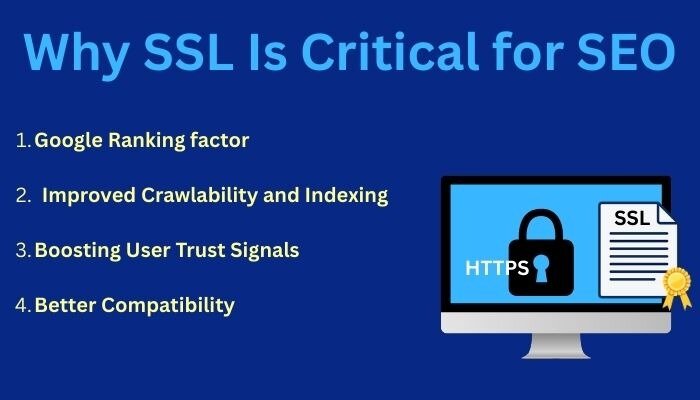
1. HTTPS as a Google Ranking Factor
Google has confirmed that HTTPS is a ranking signal. Websites with SSL certificates are more likely to rank higher in search results than those without.
What is SSL on a website? SSL (Secure Sockets Layer) ensures that all data transmitted between the browser and the website is encrypted and secure. Google rewards this extra layer of security, which is essential for a better user experience and SEO performance.
SSL plays a key role in improving visibility in search results. Search engines give preference to secure websites, making it easier for users to find them.
2. Improved Crawlability and Indexing
Google prefers websites with SSL certificates because they provide a secure, trustworthy environment. Websites with HTTPS are indexed more efficiently by search engines.
Having an SSL certificate improves your site’s crawlability. With SSL for SEO, Google can crawl and index your pages without encountering issues related to non-secure connections.
Using SSL for SEO also helps reduce crawl errors. When a website uses HTTPS, Google can consistently access all pages and correctly index them. This ensures that your content reaches the right audience.
3. Boosting User Trust Signals
A website without SSL shows a "Not Secure" warning in browsers, especially Google Chrome. This can scare off visitors and increase your website’s bounce rate.
When users trust your website, they are more likely to stay longer and engage. This improved engagement reduces bounce rates and boosts your SEO rankings.
Better user trust means better SEO performance. Websites with SSL signals to users and search engines that the site is secure and reliable.
4. Better Compatibility with Modern Web Technologies
Modern web technologies like AMP (Accelerated Mobile Pages) and Progressive Web Apps (PWAs) require HTTPS to function properly. Websites without SSL are not compatible with these technologies.
Additionally, payment gateways and APIs depend on HTTPS to keep transactions secure. Websites using SSL for SEO can fully integrate these technologies, improving functionality, user experience, and SEO performance.
SSL’s Role in Building Customer Trust
SSL is essential for building trust with your website visitors. It not only protects sensitive information but also improves your site’s reputation. SSL SEO plays a crucial role in how users perceive your website and how they interact with it.
1. Creating a Professional Online Presence
Browsers show a padlock symbol next to HTTPS websites. This simple visual indicator assures users that the website is secure.
The presence of a padlock and HTTPS increases conversions by making users feel more confident. When users know their data is safe, they are more likely to complete purchases or share personal information.
Having an SSL certificate SEO is essential for presenting a professional and trustworthy online presence. Websites that lack security indicators may be perceived as less credible, leading to higher bounce rates.
2. Protecting E-commerce Transactions
Online stores must always use HTTPS to protect their customers' financial data. SSL ensures that credit card details and personal information are encrypted during transactions, preventing data breaches.
An SSL certificate SEO also plays a role in compliance with PCI DSS (Payment Card Industry Data Security Standard) requirements. This is mandatory for any website that handles credit card information, ensuring that e-commerce sites meet security standards.
3. Increasing Brand Credibility
Businesses that use SSL and display HTTPS are seen as more reliable by consumers. Websites without SSL often display warnings like “Not Secure,” which can drive customers away.
The SEO SSL factor influences customer decision-making. When visitors see that a website is secure, they are more likely to trust the brand, leading to improved engagement, loyalty, and conversions.
Top 3 Technical Benefits of Installing SSL
Installing SSL not only secures your website but also brings several technical benefits. SSL for SEO helps improve your site's performance and enhances security, which in turn boosts its visibility in search engine results. Enterprise SEO is greatly benefited by SSL as it supports the larger scale of website operations, reducing bounce rates and ensuring trust.

1. Faster Website Performance with HTTP/2
When a website uses HTTPS, it enables HTTP/2, a faster protocol for loading web pages.
HTTP/2 reduces the time it takes for data to be transferred between the server and the browser, leading to faster website performance. This improved speed benefits SSL for SEO by decreasing page load times, which is an important ranking factor for search engines.
A faster, secure site with SSL improves user experience and increases engagement. Websites that load quickly have lower bounce rates, and this improved performance contributes to higher SEO rankings.
2. Improved Analytics Accuracy
When a website switches from HTTP to HTTPS, it can face referral data loss in analytics tools. This occurs when secure traffic is misreported or lost in tracking.
Using SSL for SEO ensures that referral data is preserved. This allows websites to get more accurate insights into their traffic sources and user behavior. With SSL, analytics tools can track secure traffic properly, providing cleaner, more reliable data.
3. Better Integration with Security Tools
SSL is a crucial part of modern website security. It integrates seamlessly with other security tools like Web Application Firewalls (WAFs), firewalls, and Content Delivery Networks (CDNs).
Using SSL for SEO helps websites stay compatible with advanced security tools that block malicious traffic and improve website protection. SSL also adds an additional layer of defense to a site's cybersecurity stack, making it less vulnerable to attacks.
How to Choose the Right SSL Certificate?
Choosing the right SSL certificate is important for securing your website and improving your SSL SEO. The type of certificate you need depends on your website’s purpose and requirements. Selecting the right SSL certificate ensures that your site is secure and trusted by both users and search engines. Businesses that incorporate programmatic SEO into their approach will find SSL certificates vital for maintaining security and improving their ranking strategies.
1. Understanding Your Website’s Needs
Choosing the right SSL certificate depends on your website’s specific needs. Whether you run an e-commerce store or a business site, SSL is essential for securing data, building trust, and boosting your SSL SEO efforts. Here’s how SSL fits different website types:
2. E-commerce
For online stores, SSL is a must. It secures transactions and customer data. SSL certificates protect payment information, boosting user trust and improving rankings in search engines. Centric, with its expertise in SSL for SEO, helps e-commerce sites secure sensitive data and improve their online presence.
3. Business Websites
Business websites need SSL to protect sensitive information and build credibility. SSL also helps with SEO by boosting rankings. Whether you are offering services or information, SSL is essential for gaining user trust and enhancing your SEO performance.
4. Multi-domain Setups
If your business operates multiple domains, you may need a Multi-Domain SSL certificate. This certificate can secure several domains with a single certificate, reducing costs and simplifying management.
5. Factors to Consider
When choosing an SSL certificate, several factors must be taken into account to ensure it meets your website’s needs. These factors, such as validation level, number of domains, and your hosting environment, all play a crucial role in securing your site and enhancing SSL SEO.
6. Validation Level
The validation level indicates how thoroughly the website is checked before issuing the SSL certificate. Domain Validated (DV) certificates are the quickest and easiest, while Extended Validation (EV) certificates provide the highest level of trust.
7. Number of Domains
If your site has multiple subdomains, consider a Wildcard SSL certificate. It secures the main domain and all its subdomains with one certificate.
8. Budget and Hosting Environment
The cost of an SSL certificate can vary based on the type and validation level. Consider your budget and the hosting environment. Some hosts, like Centric Technology Services, offer SSL certificates as part of their hosting packages, making it easier for businesses to secure their websites.
10 Steps to Install SSL on Your Website
Installing SSL on your website is crucial for securing your site and improving your SSL SEO. Whether you’re using cPanel or cloud hosting, the process is straightforward and ensures that your site is trusted by both users and search engines. To make the most of your Content Marketing strategy, it’s essential that SSL is properly installed, as it boosts SEO performance while protecting user data.
1. For cPanel Websites
Setting up SSL on cPanel websites is a straightforward process. Follow these simple steps to install and configure SSL, ensuring that your site is secure and optimized for SSL SEO.
2. Upload Certificate
The first step is to upload your SSL certificate to the cPanel dashboard. After obtaining the certificate, go to the SSL/TLS section in cPanel and install it on your server. This ensures your website is properly secured with SSL.
3. Enable HTTPS Redirect
Once the certificate is installed, you need to redirect HTTP traffic to HTTPS. This can be done in your cPanel’s .htaccess file by adding a rule to force all visitors to use the secure version of your site. This step ensures that SSL SEO benefits are fully utilized.
4. For Cloud Hosting
Cloud hosting platforms offer flexible and efficient ways to implement SSL on your website. Whether you’re using Cloudflare, AWS, or other cloud services, setting up SSL helps secure your site and boosts SSL SEO.
5. Using Cloudflare
Cloudflare offers free SSL certificates and makes it easy to enable HTTPS across your website. Simply sign up for Cloudflare, activate the SSL feature, and set your DNS settings to route traffic through their secure servers. Cloudflare will handle the SSL connection, ensuring SSL SEO improvements for your site.
6. Using AWS, Azure, and GCP
For cloud hosting providers like AWS, Azure, or Google Cloud Platform, you can use their SSL certificate management tools. These platforms allow you to easily install SSL certificates through their services. Using SSL for SEO on cloud platforms improves site security and performance, which directly impacts your rankings.
7. Maintaining SSL
Once your SSL certificate is installed, it's essential to keep it up to date and properly configured. Regular maintenance ensures your website remains secure, providing ongoing SSL SEO benefits and preventing issues that could affect user trust and search rankings.
8. Renewal
SSL certificates need to be renewed periodically, typically every 1–2 years. Make sure to renew your certificate before it expires to avoid "Not Secure" warnings on your website, which can harm user trust and SEO performance.
9. Auto-renew Setups
Many hosting providers offer auto-renewal options for SSL certificates. This ensures your SSL is always up-to-date, providing continuous security for your website. Enabling auto-renew simplifies the management process and ensures that your site remains secure without interruptions.
10. Fixing Mixed Content Issues
Sometimes, even after installing SSL, your site may still load some resources over HTTP. This is called mixed content. To fix this, you need to update your website’s internal links and resources (like images or scripts) to HTTPS. This ensures that SSL SEO benefits are fully realized and no security warnings appear in the browser.
Why Not Having SSL Is a Serious Risk?
Not having SSL on your website is more than just a security risk; it can directly affect your SSL SEO efforts and user trust. Websites that lack SSL certificates face significant challenges in both security and performance, which can lead to serious consequences for your business.
1. Loss of Organic Traffic
Not having SSL on your website can significantly harm your organic reach. Search engines prioritize secure websites, and without SSL, your site may lose rankings and visibility. This makes it harder for potential visitors to find your site, reducing the effectiveness of your SEO strategy.
2. Impact of Lower Rankings
Google uses HTTPS as a ranking factor, meaning websites without SSL are at a disadvantage in search rankings. Websites without SSL are more likely to drop in rankings, resulting in lower visibility on search engines. This directly impacts your organic traffic and the effectiveness of your SEO strategy.
3. Drop in Click-through Rates Due to “Not Secure” Warnings
Browsers like Chrome display "Not Secure" warnings for websites without SSL. Users are less likely to click on these websites when they see this warning. This leads to a significant drop in click-through rates, which negatively impacts your SEO SEO performance. Without SSL, you lose potential visitors who may otherwise engage with your site.
4. Customer Distrust and High Bounce Rate
Without SSL, users may feel uneasy when interacting with your website, especially when they see the "Not Secure" warning in their browser. Security concerns are a major factor in user decisions, and SSL is crucial for maintaining trust. This directly impacts your SSL SEO efforts.
5. Users Leaving Insecure Sites Instantly
Many users will leave a website immediately if they see a "Not Secure" warning in their browser. This customer distrust can result in a higher bounce rate. SSL for SEO helps reduce bounce rates by assuring visitors that their data is protected, which improves user engagement and SEO performance.
6. Compliance Risks
Not having SSL on your website can lead to serious compliance issues. SSL certificates are not only important for security but are also essential for meeting various legal and industry standards. Without SSL, your website may face penalties and damage to its reputation.
7. PCI Compliance
If you run an e-commerce site, PCI DSS (Payment Card Industry Data Security Standard) compliance is a must for handling credit card transactions. Not having SSL puts your site at risk of non-compliance with PCI standards. SSL certificates are required to protect sensitive payment data and avoid penalties or legal consequences.
8. Data Protection Laws
Many countries have strict data protection laws (like GDPR in the EU) that require websites to protect personal data. Without SSL, your site may fail to meet these legal requirements. This could lead to fines and damage to your reputation. SSL ensures that your website complies with these laws and secures users’ personal information.
Frequently Asked Questions
What’s the difference between SSL and TLS?
SSL (Secure Sockets Layer) and TLS (Transport Layer Security) are cryptographic protocols that ensure secure communication over a computer network. SSL is the predecessor of TLS, and while SSL was commonly used in the past, it has been largely replaced by TLS due to its stronger security features. Essentially, TLS is a more modern and secure version of SSL, and most websites today use TLS protocols to protect their data, although the term "SSL" is still commonly used.
Is SSL important for all websites?
Yes, SSL is crucial for all websites, regardless of their size or type. It secures the communication between your website and its users, protecting sensitive data like passwords, credit card information, and personal details. SSL also helps build trust with your audience, as most modern browsers show a padlock symbol next to HTTPS websites, signaling that they are secure. Additionally, SSL is important for SEO, as search engines like Google give preference to websites with SSL certificates, potentially improving your search ranking.
Can I use SSL with my e-commerce site?
Absolutely! In fact, SSL is essential for e-commerce websites. It secures transactions between your customers and your site, ensuring that sensitive information like credit card details and personal addresses is encrypted. Not only does this protect your customers' data, but it also prevents malicious attacks such as man-in-the-middle attacks. Moreover, SSL certificates boost customer trust, which is crucial for online shopping experiences, and they’re a must-have if you're processing any form of payment.
How often should I renew my SSL certificate?
SSL certificates typically have a validity period ranging from 1 to 2 years. It’s essential to renew your SSL certificate before it expires to ensure that your website remains secure and trusted by visitors. Failing to renew your certificate can result in browser warnings or a complete loss of HTTPS status, which can harm your site's SEO rankings and discourage users from visiting your site. Most SSL providers send reminders well before expiration, so it’s important to stay on top of renewal dates.
Conclusion
What Is SSL? SSL SEO is not just a security feature, but a critical element for improving your website's trustworthiness, SEO performance, and overall user experience. By implementing SSL on your website, you protect sensitive data, boost your rankings in search engines, and enhance customer trust. Without SSL, your website risks losing traffic, customer engagement, and potential sales, while also facing legal and compliance challenges.
Centric understands the importance of SSL for both security and SEO. It offers expert solutions to help businesses implement SSL seamlessly, ensuring both secure user interactions and enhanced visibility in search results. Don’t risk your website’s credibility, secure it with SSL today!