





Ever wondered why your website isn’t ranking as well as it should? That’s where an SEO audit comes in.
An SEO audit is a deep dive into your website’s overall health and performance in search engines. It helps you understand what’s working, what’s not, and where to focus your optimization efforts.
When you learn how to audit a website for SEO, you’re essentially uncovering opportunities to make your site faster, more visible, and more user-friendly.
It’s about checking everything, from on-page elements like titles and meta tags to technical aspects such as site speed, mobile responsiveness, and indexing issues.
Search engine algorithms keep evolving, and so should your website. Regular SEO audits help you stay aligned with these updates while spotting and fixing issues like broken links, duplicate content, or poor site structure that could hurt your rankings.
When your website loads faster, has clear navigation, and delivers valuable content, visitors stay longer and engage more.
In this blog, we’ll break down why SEO audits are essential, the key areas to focus on, and how consistent auditing can lead to higher rankings, better visibility, and long-term digital success.
Importance of SEO Audits for Website Success
An SEO audit is essential for improving a website's visibility, traffic, and rankings. Auditing a website for SEO usually involves evaluating various aspects, including on-page optimization, technical SEO, and the quality of backlinks. The SEO audit pricing can vary depending on the depth of the audit and the tools used.
Understanding why SEO audit is important can help businesses identify areas for improvement that directly influence how well their website performs in search engine results. By conducting an SEO audit, you can identify areas of improvement that directly influence how well your website performs in search engine results.
By conducting an SEO audit, you can identify areas of improvement that directly influence how well your website performs in search engine results.
An audit evaluates key factors such as on-page SEO, backlinks, and technical issues, all of which impact your site’s ability to rank higher and attract organic traffic.
For example, if your site has broken links, slow page load speeds, or improper redirects, search engines may struggle to crawl and index your site, which can negatively impact your rankings.
Additionally, a poor user experience due to issues like mobile responsiveness or complicated navigation can lead to higher bounce rates and lower engagement.
By fixing these technical problems, you improve how search engines view your site and ensure a seamless experience for users, which contributes to better rankings and higher traffic.
6 Benefits of Conducting an SEO Audit of Your Website
Running an SEO audit isn’t just a one-time task, it’s an ongoing process that keeps your website in top shape. Regular audits help you catch issues early, adapt to changing algorithms, and stay ahead of your competitors.
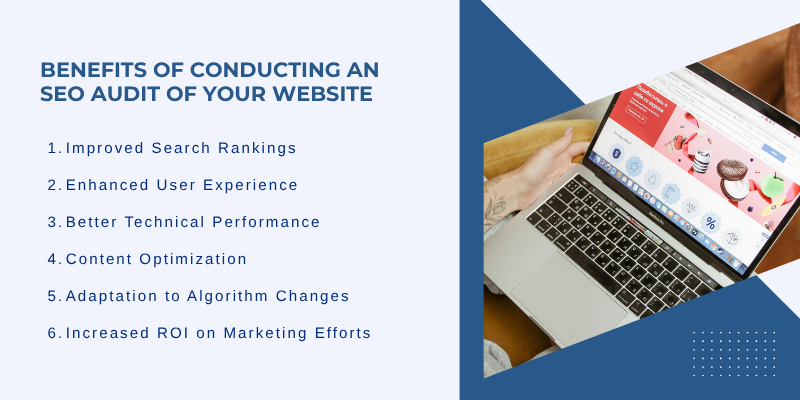
Here are the key benefits of conducting SEO audits consistently:
1. Improved Search Rankings
Regular audits identify weak spots that may be pulling your rankings down, such as broken links, missing meta tags, or outdated content. Fixing these improves your website’s SEO health and helps you climb higher in search results.
2. Enhanced User Experience
SEO audits help optimize site speed, mobile usability, and navigation. When visitors find your website easy to use and fast to load, they stay longer, engage more, and are more likely to convert.
3. Better Technical Performance
Audits uncover technical issues like crawl errors, poor site structure, or indexation problems. Resolving these ensures search engines can easily crawl and understand your content, improving visibility.
4. Content Optimization
Regular reviews highlight underperforming pages or keyword gaps. You can then refresh outdated content, improve readability, and ensure every page aligns with your audience’s search intent.
5. Adaptation to Algorithm Changes
Search engines frequently update their ranking algorithms. By auditing regularly, you can stay compliant with new standards, protecting your site from sudden drops in visibility.
6. Increased ROI on Marketing Efforts
An optimized website attracts more organic traffic without increasing ad spend. Regular audits ensure every SEO effort delivers maximum value and long-term growth.
Thus, learning how to audit a website for SEO and doing it consistently is key to sustained success. It ensures your website remains optimized, competitive, and ready to convert visitors into loyal customers.
How to Conduct a Website Audit?
Performing a website audit helps you understand how well your site is optimized for search engines and users.

Here’s how to do it step by step:

1. Run the Website URL Through a Site Audit Tool
Start by entering your website’s URL into an SEO audit tool such as Ahrefs, SEMrush, or Google Search Console. These tools scan your site and provide insights into performance issues, broken links, missing tags, and other SEO-related errors. SEO ranking report softwares allow you to track your site’s ranking over time and get a clearer picture of your overall SEO health.
2. Find Technical Errors
Technical SEO is the backbone of a healthy website. Check for crawl errors, broken links, slow page load speeds, and mobile usability issues. Fixing these ensures that search engines can properly index your pages and that users can navigate your site without problems.
3. Analyze Design and UX
User experience (UX) directly affects engagement and conversions. Evaluate your site’s layout, navigation, mobile responsiveness, and overall design. A clean, fast, and intuitive website keeps visitors engaged and encourages them to take action.
4. Assess Website Content
Review the quality and relevance of your content. Make sure it’s keyword-optimized, informative, and aligned with your audience’s intent. Eliminate duplicate or outdated pages, and ensure every piece of content adds value to the user.
5. Create a Website Audit Report
Summarize your findings in a clear report. Highlight key issues, prioritize them by impact, and include actionable recommendations. This report becomes your roadmap for improving SEO, performance, and user experience.
Get Your Free SEO Audit Report Today!
Why Check Your Website's SEO?
Checking your website's SEO is crucial for ensuring that it performs optimally in search engine results. SEO is not a one-time task; it requires continuous monitoring and optimization to stay competitive.
Here are key reasons why checking your website's SEO regularly is important:
1. Improve Search Rankings
Regular SEO checks help identify areas that need improvement, such as keyword optimization, metadata, and on-page content, which can boost your website’s rankings on search engines like Google.
2. Increase Organic Traffic
By optimizing your site based on SEO insights, you can attract more organic traffic. This leads to higher visibility, more potential customers, and ultimately, better conversions.
3. Fix Technical Issues
SEO audits identify hidden technical problems like broken links, slow page speeds, or crawl errors that could prevent search engines from indexing your content correctly. Resolving these issues ensures a smooth user experience and helps your site rank higher.
4. Stay Competitive
SEO trends and algorithms are constantly changing. Regular SEO checks ensure your website stays updated with the latest SEO practices and maintains a competitive edge in your industry.
5. Enhance User Experience
SEO optimization isn't just about search engines it’s about your users too. Optimizing for SEO also improves site navigation, load times, and mobile-friendliness, providing a better overall user experience.
Best 4 Tools for SEO Audits
There are several powerful tools available to help diagnose SEO issues on your website, each offering unique features that target different aspects of SEO performance.
Below is an overview of some popular SEO audit tools and their roles in identifying and fixing SEO problems:
1. Google Analytics
Google Analytics is a comprehensive tool that helps track website traffic, user behavior, and conversions. It provides insights into which pages are performing well and which need improvement, helping you understand the effectiveness of your SEO efforts. You can identify bounce rates, page load speeds, and user flow to pinpoint areas where SEO enhancements are necessary.
2. Screaming Frog
Screaming Frog is a website crawler that analyzes your site's structure and provides in-depth SEO data. It checks for broken links, redirects, duplicate content, missing meta tags, and other technical issues that may affect search engine crawling and indexing. It also offers a detailed analysis of page titles, headers, and images, helping you optimize on-page elements for better rankings.
3. Ahrefs
Ahrefs is a robust tool for analyzing backlinks, tracking keyword rankings, and auditing your website's overall SEO health. Its Site Audit feature crawls your site and identifies technical issues such as slow load times, broken links, and missing tags. Additionally, it is one of the best SEO reporting software options for monitoring your website's health and providing detailed reports. Ahrefs is particularly useful for analyzing your backlink profile and assessing the quality and relevance of links pointing to your site.
4. SEMrush
SEMrush is an all-in-one SEO tool that provides detailed SEO audit reports, competitor analysis, and keyword tracking. It identifies on-page and technical issues, such as crawlability, indexability, and page speed, and suggests actionable improvements. SEMrush also allows you to track keyword rankings and monitor your site's overall health against your competitors.
Conclusion
In conclusion, knowing how to audit a website for SEO is a crucial element for long-term website success and visibility in search engine results. Regularly performing audits helps identify issues that can hinder your website's performance, such as technical errors, content gaps, or outdated optimization strategies. Also, it involves evaluating both on-page and off-page factors, ensuring your site stays aligned with the latest search engine algorithms and best practices. One of the most valuable assets for businesses is having a reliable SEO Audit Checklist to guide their audits consistently. By conducting continuous SEO audits, you can enhance user experience, maintain competitive rankings, and drive more organic traffic to your website, ultimately ensuring sustained online success. Partnering with Centric, a digital marketing agency can help you stay ahead of the curve, leveraging expert SEO strategies to boost your website’s performance and visibility.