Imagine this: You’ve just clicked on a link to check out a product you’ve been eyeing for days. You’re excited, ready to make a purchase, but then, the page takes forever to load. Frustrated, you hit the back button and move on to another site.
This scenario happens every day, and it raises the question: How important is page speed for SEO? The truth is, page speed is more critical than ever for both user experience and search engine rankings.
When your site loads slowly, visitors don't stick around, and that can severely impact your SEO efforts. Search engines like Google take this into account, which means slower pages are less likely to rank well.
Thus, if you want your website to thrive, speed should be a priority. This blog explains why page speed matters for SEO, how it affects rankings, user behavior, and what steps you can take to improve it. You will also learn how speed ties directly to traffic, visibility, and long-term website growth.
What is Page Speed?
Page speed is the time a web page takes to fully load in a browser. It shows how fast users can see and use your content. Faster pages give a better user experience. Slow pages frustrate users and increase exits. One way to monitor how this impacts your SEO is by using SEO audit tools to check your site's performance.
Page speed is usually measured in seconds. It tracks how quickly key parts of a page appear on screen. This includes text, images, and interactive elements. Search engines and users both care about these load times.
How is Page Speed Measured?
Page speed is measured using performance metrics. These metrics show how visible and usable a page becomes during loading. Tools like SEO ranking report softwares can help assess these metrics and suggest improvements.
The most common page speed measurements include:
- Largest Contentful Paint (LCP): Time taken to load the main content.
- First Input Delay (FID): Time before a page responds to user actions.
- Cumulative Layout Shift (CLS): Amount of visual movement during load.
Tools like PageSpeed Insights and GTmetrix use these metrics to score your site. These tools help you see what slows your pages and what needs fixing.
Why Page Speed Matters for SEO?
Page speed is a critical factor for SEO, and it’s officially confirmed as a ranking element for both desktop and mobile. Google has made it clear that extremely slow pages are less likely to rank well. Google prioritizes page speed because slow websites provide a poor user experience (UX).
Additionally, if you're working with a tech marketing agency or an oil and gas marketing agency, optimizing page speed becomes even more crucial, as these industries rely heavily on high-quality user engagement and visibility.
As page load times increase, the likelihood of users bouncing, meaning they leave without interacting, also increases. If a page takes more than three seconds to load, the chances of users bouncing rise significantly. This is why Google recommends that websites meet the "Good" thresholds for key page speed metrics. Faster pages not only lead to a better user experience but also improve your chances of ranking higher in search results.
How Page Speed Affects User Experience?
Page speed plays a significant role in shaping how users interact with your website. When a page loads slowly, users don’t wait around, they leave. This leads to a higher bounce rate, which tells search engines that users didn't find value quickly enough. Using top search engines' guidelines for page speed can help improve engagement and reduce bounce rates.
For businesses focusing on Google keyword ranking, a slow website can greatly impact how effectively your pages perform in search results. On the other hand, faster pages keep users engaged, reducing the bounce rate and encouraging them to explore more content. This sends positive signals to search engines, helping your SEO efforts.
Here’s how page speed impacts user experience:
- Bounce Rate: Slow pages increase the likelihood of users bouncing, while fast pages keep users engaged, leading to a lower bounce rate.
- Session Time: Page speed affects how long users stay on your site. Fast pages keep users on your site longer, improving engagement and trust.
- Conversions: Every extra second of load time reduces the chances of conversion. Fast pages make processes like checkout, forms, and navigation seamless, while slow pages break that flow.
Page speed influences user behavior from the very first click. It determines whether users leave, explore further, or convert into customers. That’s why speed isn’t just an SEO factor, it’s also a key driver of business growth.
Mobile Page Speed and SEO
With Google’s mobile-first indexing, mobile page speed has become a critical factor for SEO. Google now prioritizes the mobile version of your site when ranking pages. This is why best SEO reporting software can track mobile performance specifically and offer solutions for improvement. So, if your mobile site is slow, your rankings will drop, even if your desktop version performs well.
Mobile users have high expectations for fast loading times, and they often access websites through weaker internet connections. Slow mobile pages drive users away faster than slow desktop pages, leading to increased bounce rates and reduced engagement.
Here’s how mobile page speed affects SEO:
- Crawl Efficiency: Search bots spend less time crawling slow mobile pages, which can delay indexing and updates. Faster mobile pages help Google crawl and rank your content more quickly.
- Bounce Rate & Engagement: Slow mobile pages push users away, increasing bounce rates and reducing user engagement. Fast pages, on the other hand, keep users on your site longer.
- Conversions: A slow mobile checkout or form process leads to lost sales and leads. Fast mobile experiences build trust and encourage more actions.
In today’s mobile-first world, mobile speed is no longer optional. It directly impacts visibility, traffic, and growth in search results.
Explore Our Onsite and Technical SEO Services!
5 Common Factors That Slow Down Page Speed
Many issues can slow down page speed. Most of them are easy to fix once identified. For example, if your site has a lot of images, you may want to use an SEO website builder that compresses images automatically during the creation process.

1. Large Images
Uncompressed images take longer to load. High-resolution images add heavy file size. This delays content display.
2. Slow Server Speed
A weak server increases response time. Shared hosting often causes slow loading. Server delays affect every page on your site.
3. Heavy Java Script Files
Too many scripts block page loading. Some scripts load before content. This causes visible delays.
4. Unoptimized CSS Files
Large CSS files increase load time. Too many style files create extra requests. This slows down rendering.
5. Too Many Plugins
Every plugin adds weight. Poor plugins slow down your site. Conflicting plugins also affect speed.
Explore Our Digital Marketing Services!
How to Check Page Speed?
You must test your website speed to know what needs fixing. Speed tools show loading time, user experience issues, and technical errors. Tools like Best SEO Tools can help you check for these issues and prioritize fixes based on their impact on SEO.

1. Google PageSpeed Insights
This tool shows how fast your site loads on mobile and desktop. It gives a performance score. It also shows Core Web Vitals data. You get clear warnings and simple improvement tips.
2. GTmetrix
GTmetrix shows full page load time. It lists file sizes and slow elements. It helps you see what exactly slows down your site. You also get waterfall charts for deeper analysis.
3. Lighthouse
Lighthouse is built into Chrome. It audits speed, performance, and accessibility. It shows real lab data. It gives direct optimization suggestions for developers.
How to Improve Page Speed for SEO?
Improving page speed requires small but powerful changes. These fixes help both users and search engines. A solid technical SEO strategy can guide you through the technical adjustments needed, such as image compression, caching, and code optimization, to ensure your website runs smoothly and loads quickly.
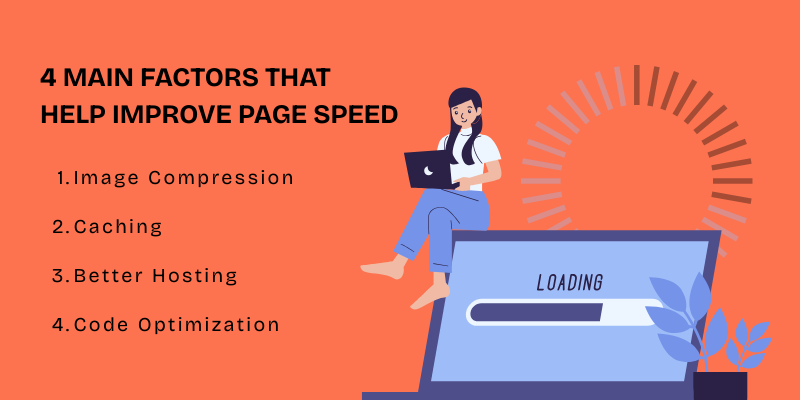
Main factors that help improve page speed
1. Image Compression
Compress all images before uploading. Smaller image sizes load faster. This reduces page weight without harming quality.
2. Caching
Caching stores parts of your site in the browser. This reduces repeat loading time. Returning visitors get faster access.
3. Better Hosting
Choose a fast and reliable hosting provider. Good hosting improves server response time. It keeps your site stable during traffic spikes.
4. Code Optimization
Remove unused code. Minify CSS and JavaScript files. Fewer file requests improve load speed.
Is Page Speed a Direct Ranking Factor?
Yes, page speed is a direct ranking factor, and Google has confirmed this. It plays a key role in Google’s ranking system for both desktop and mobile search. This means that digital marketing strategies must consider optimizing page speed as part of an overall SEO strategy.
- Faster Pages: Pages that load quickly have a better chance of ranking higher in search results.
- Slow Pages: On the other hand, slow pages are more likely to drop in rankings.
However, page speed alone doesn't guarantee top rankings. Content quality and backlinks remain important ranking factors. But when two pages have similar content, the faster page generally ranks better.
Page speed also supports other ranking signals, such as:
- Lower Bounce Rate: Faster pages encourage users to stay longer, which reduces bounce rates.
- Increased User Engagement: Fast sites lead to higher engagement, which positively impacts SEO.
That said, while page speed isn’t the only factor, it definitely has a direct influence on your rankings and overall SEO performance.
Page Speed and Conversions
Page speed has a direct impact on conversions. When a page loads quickly, users stay engaged and take action. Using SEO Reporting tools can give you insights into how page speed affects conversion rates and where to focus your improvements. However, when a page loads slowly, users are more likely to leave without interacting.
Here’s how page speed affects conversions:
- Easier Buying Process: Fast pages make the shopping experience smoother. Product pages load quickly, and checkout feels seamless, leading to more completed purchases. Slow checkout pages, on the other hand, often result in cart abandonment. Even a one-second delay can significantly reduce sales.
- Lead Generation: Fast-loading forms encourage users to complete them, increasing contact requests and lead submissions. Slow forms frustrate users and result in fewer submissions.
- Building Trust: A fast website builds trust. It feels reliable and secure, making users more comfortable with sharing their personal information and making payments. A slow website, however, feels broken and unreliable, leading users to hesitate in completing transactions.
Thus, speed plays a key role in both driving conversions and building trust, directly impacting your website’s performance and revenue.
Frequently Asked Questions (FAQs)
Does Website Speed Really Affect SEO Rankings?
Yes. Website speed is a direct ranking factor. Fast websites rank better than slow ones. Speed improves user experience. It also helps search engines crawl and index pages faster.
How Slow Is Too Slow For A Website?
If your page takes longer than three seconds to load, it is considered slow. Most users leave after that. This increases bounce rate and hurts SEO.
Is Mobile Speed More Important Than Desktop Speed?
Yes. Google uses mobile-first indexing. This means your mobile speed matters more for rankings. Slow mobile pages can lower your visibility in search results.
Can Improving Website Speed Increase Traffic?
Yes. Faster websites rank better and keep users longer. This leads to more organic traffic. It also improves engagement and conversions.
Conclusion
Now that you understand how important is page speed for SEO, let’s wrap it up. Page speed is one of the most powerful ranking signals and directly impacts user experience.
Here’s a quick recap of why page speed matters:
- User Interaction: Fast pages keep visitors engaged, while slow pages drive them away. This influences bounce rate, session time, and conversions.
- Crawl Efficiency: Speed affects how often search engines crawl your pages. Faster sites get indexed faster, which helps improve SEO.
- Long-Term Growth: A fast site supports stable rankings, boosts traffic quality, and builds user trust. It also shields your site from potential future algorithm updates.
Page speed isn’t a one-time fix, it requires regular monitoring and ongoing improvements. Websites that maintain speed remain competitive, ensuring strong SEO performance both today and in the future. For businesses like Centric, a digital transformation agency, maintaining high page speed is crucial for staying ahead of the competition.