In the ever-evolving landscape of digital marketing, What is AEO vs SEO is a question many businesses are grappling with. As AI technologies rapidly reshape the way we search and consume information, traditional SEO (Search Engine Optimization) strategies are being complemented by the rise of AEO (Answer Engine Optimization).
This shift has forced businesses to rethink how they optimize content not just for search engines, but also for AI-driven platforms that prioritize quick, concise answers.
CentricDXB has been at the forefront of helping businesses adapt to these changes. Its expertise in digital marketing ensures that our clients stay ahead of SEO trends while also tapping into the potential of new technologies like AEO.
In this guide, AEO and SEO explained will help you understand the key differences between these two strategies, why AEO is gaining traction, and how to integrate both into your digital marketing plan. Whether you’re an experienced marketer or just getting started, you’ll walk away with a clear roadmap for optimizing your content in the AI-driven world.
What is SEO?
SEO (Search Engine Optimization) is the process of improving your website to increase its visibility on traditional search engines like Google and Bing. The goal of SEO is to ensure your content ranks highly on search engine results pages (SERPs), making it easier for users to find your website.
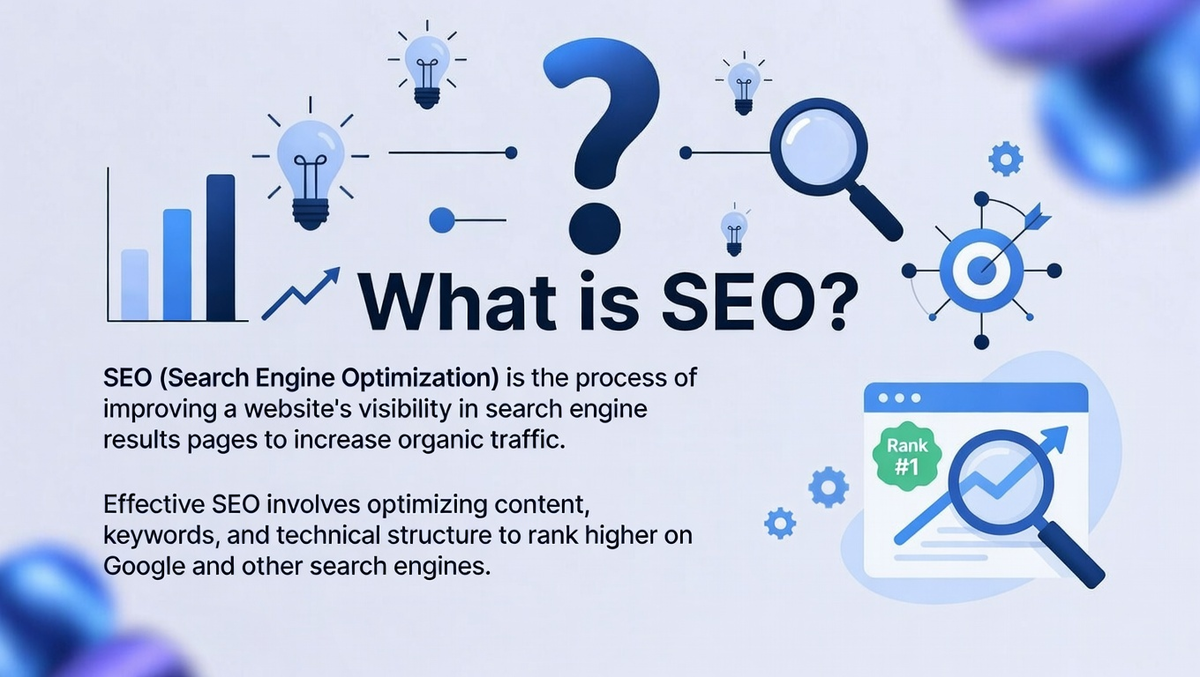
SEO Services play a crucial role in driving organic traffic, as it helps businesses reach potential customers who are actively searching for information related to their products or services.
SEO optimization vs AEO optimization differs mainly in their approach: SEO focuses on ranking your content higher on search engines, while AEO focuses on optimizing content for AI-driven platforms that deliver direct answers. Understanding both strategies is key to staying ahead in the ever-changing digital landscape.
4 Core Elements of SEO
To effectively optimize your website for search engines, you need to focus on several key elements. These elements work together to ensure your content is discoverable, relevant, and trustworthy to both search engines and users. Understanding these core components will help you create a strong foundation for your SEO strategy.
1. Keywords
Keywords are the foundation of SEO. By targeting specific search terms that your audience is looking for, you can help search engines understand what your content is about and improve your rankings.
2. Backlinks
Backlinks are links from other websites that point to your content. They signal to search engines that your content is valuable and trustworthy, which can improve your site's authority and search rankings.
3. On-page SEO (Meta Tags, Content Structure)
On-page SEO involves optimizing elements on your website, like meta tags, headings, and content structure. Properly formatted content, with relevant keywords and a logical layout, helps search engines understand your page’s relevance to a user’s query.
4. Technical SEO (Page Speed, Mobile Optimization)
Technical SEO focuses on improving the backend of your website, such as page speed, mobile responsiveness, and secure connections. A fast, mobile-friendly site helps improve rankings and ensures a better user experience.
How SEO Drives Traffic and Conversions?
SEO works by optimizing content to match user queries, which helps attract organic traffic. By ranking higher on SERPs, your website becomes more visible to potential customers. As more users visit your site, the chances of generating leads and conversions increase.
SEO also focuses on creating content that aligns with user intent, guiding users through the brand awareness, consideration, and decision stages of the buyer’s journey.
By focusing on keyword optimization, high-quality content, and technical improvements, SEO helps businesses build trust with both users and search engines, driving traffic and increasing conversion rates. In this way, SEO is a powerful tool for both visibility and business growth.
What is AEO?
AEO (Answer Engine Optimization) is a strategy designed to optimize content for AI-driven search engines like Google’s AI Overviews, chatbots, and voice assistants. Unlike traditional SEO, which focuses on ranking content on search engine results pages, AEO targets AI systems that provide direct, concise answers to user queries.
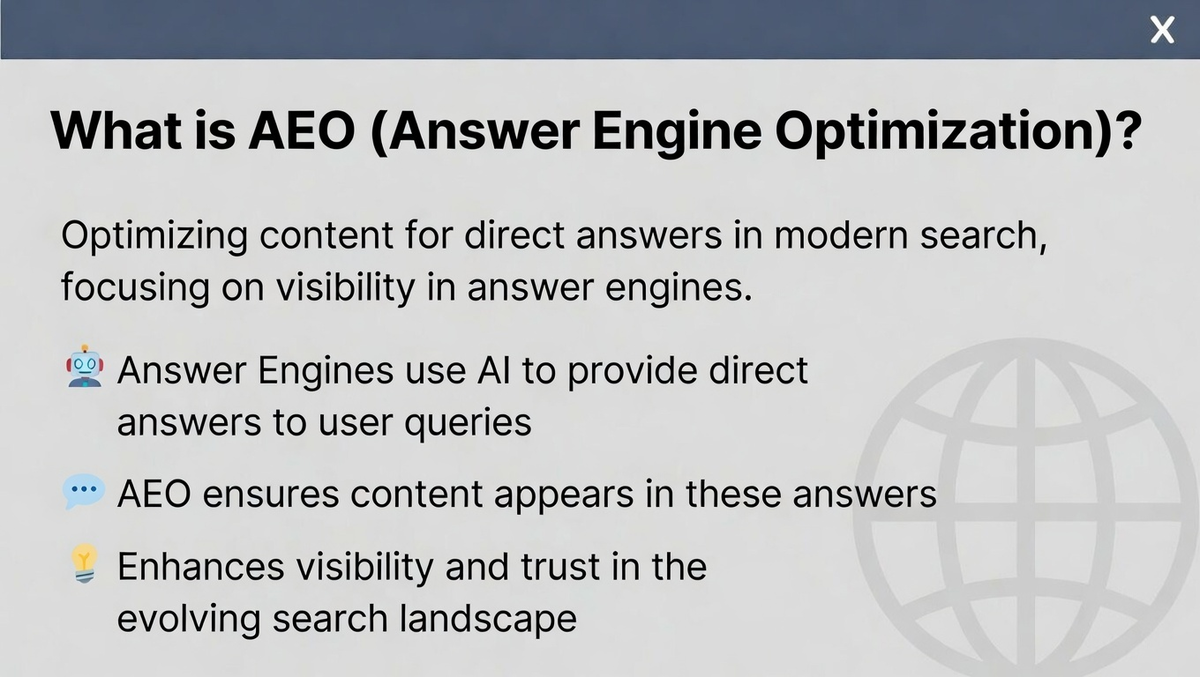
With the rise of AI-powered tools such as ChatGPT and voice assistants like Siri and Alexa, optimizing for AEO is becoming crucial for businesses to maintain visibility in an AI-dominated search landscape.
In this guide, we will compare AEO vs SEO for digital marketing and explain why both strategies are important for staying competitive in today’s online environment.
3 Key Components of AEO
AEO focuses on creating content that is clear, concise, and easy for AI systems to interpret. Below are the key components that help AEO work effectively.
1. Structured Content and Schema Markup
Structured content, along with schema markup, helps AI systems easily identify and display relevant information. By using structured data formats like schema.org, businesses can tell AI systems exactly what their content is about, making it easier for them to extract and display useful answers directly in search results.
2. Conversational and Concise Answers
Since AI systems are increasingly using conversational queries, AEO focuses on providing short, snappy answers that directly address the user's question. Optimizing your content to answer questions clearly and briefly helps ensure that AI systems can deliver your content in a format that’s easily digestible for users.
3. Entity-Based Optimization
Entity-based optimization involves associating your content with specific people, places, or things (entities) that AI models can easily recognize and connect. By ensuring your content is clearly linked to these entities, you improve its chances of being referenced in AI-generated responses.
How AEO Works?
AEO optimizes content to ensure it can be easily understood and presented by AI models, such as voice assistants or chatbots. These AI systems are designed to prosvide quick, direct answers to users' questions without requiring them to click through to a website. By structuring content to meet the needs of these AI platforms, businesses can ensure that their content is featured in AI-driven responses, even if users never visit their website.
Explore Our Answer Engine Optimization Services
AEO vs SEO: What's the Difference?
While both SEO and AEO aim to enhance online visibility, they have distinct objectives and approaches. SEO focuses on improving search rankings and driving traffic through traditional search engines, while AEO targets AI-driven search platforms and voice assistants to provide direct, concise answers to user queries.
Understanding the differences between AEO and traditional SEO is crucial for marketers looking to stay ahead in the evolving digital marketing landscape. In this section, we’ll dive into the primary distinctions between SEO and AEO.
Focus and Objectives
Here are the focuses and objectives: SEO aims to improve website rankings on search engines, while AEO focuses on providing direct, concise answers through AI-driven platforms.
SEO: Improving Website Rankings
SEO’s primary goal is to improve website rankings on traditional search engines like Google and Bing. It involves optimizing your website with specific keywords, improving technical elements like page speed, and building backlinks to attract organic traffic to your site.
AEO: Providing Direct Answers
AEO, on the other hand, is designed to provide concise, direct answers to user queries on AI-driven platforms, such as Google’s AI Overviews, voice assistants, and chatbots. Instead of focusing on ranking a website, AEO ensures content is displayed directly in AI-driven search results, eliminating the need for users to click through to a website.
Content and Structure
Here are the content and structure differences: SEO focuses on long-form, keyword-rich content that provides in-depth coverage, while AEO requires structured, concise answers designed for easy extraction by AI systems and quick delivery through voice assistants or chatbots.
SEO: Long-Form, Keyword-Focused Content
SEO content is typically long-form, detailed, and keyword-focused. It aims to cover a topic comprehensively, incorporating targeted keywords and providing in-depth information. The goal is to rank highly on search engine results pages (SERPs) and encourage users to click through to the site for more detailed insights.
AEO: Structured, Concise Answers
AEO requires content to be structured and concise, providing direct answers that can be easily extracted by AI systems. This includes using clear headings, concise phrasing, and answering questions directly in a way that makes it easy for voice assistants or chatbots to present the content without requiring the user to visit a website.
User Targeting
Here are the user targeting focuses: SEO targets users searching for detailed information through search engines, aiming to drive traffic to a website, while AEO targets users seeking quick, direct answers via AI-driven platforms like voice assistants and chatbots.
SEO: Traditional Searchers
SEO targets traditional search engine users who enter text-based queries into platforms like Google. These users are typically looking for detailed content and are more likely to click through to a website to explore further information.
AEO: Voice and AI-Based Queries
AEO, however, focuses on users who rely on voice assistants or AI-powered platforms to receive quick, concise answers. These users typically prefer immediate responses, such as those provided by voice search or chatbots, rather than clicking through to a website.
In the AEO vs SEO for digital marketing context, it’s essential to understand that SEO and AEO target different types of users and require different strategies to optimize content effectively for each.

Can AEO and SEO Work Together?
SEO and AEO are not competing strategies—they are complementary. As the digital marketing landscape continues to evolve, businesses need to integrate both SEO and AEO into their strategies to remain visible across various search platforms.
While SEO helps improve search rankings on traditional search engines like Google, AEO ensures that content is optimized for AI-powered platforms that deliver direct, concise answers. Together, they ensure a comprehensive digital presence that meets the needs of all users, whether they’re using a search engine or an AI-driven platform.
Incorporating AEO for improving search rankings alongside traditional SEO tactics ensures that businesses are not only ranking on traditional search engines but also appearing in AI-driven responses, like Google AI Overviews and voice assistant results. By combining both strategies, businesses can enhance their online visibility, drive traffic, and engage users across different touchpoints.
How to Integrate AEO into Your SEO Strategy?
To effectively integrate AEO into your SEO strategy, focus on optimizing your content for both human users and AI systems. Here are some key tips for combining these two strategies:
1. Focus on Structured Data
Structured data, or schema markup, plays a crucial role in both SEO and AEO. It helps search engines and AI systems understand the context of your content, making it easier to extract relevant information. By using schema markup, you can ensure that your content is more likely to appear in AI-generated answers or featured snippets.
2. Optimize for Featured Snippets
Featured snippets are a prominent part of both SEO and AEO. These concise, direct answers are pulled by search engines and AI platforms alike. To increase your chances of appearing in these snippets, structure your content with clear, straightforward answers to common questions. Use bullet points, lists, and tables to make the information easily scannable and digestible for both users and AI systems.
3. Adopt Conversational Formats
Since AEO focuses on providing concise answers, adopting a conversational format in your content can make it more AI-friendly. Create FAQ sections, provide clear headings, and answer questions directly. This helps not only in AEO for improving search rankings but also in providing the clarity needed for AI platforms to use your content as an answer.
By integrating these tactics into your SEO campaign, you’ll ensure your content is optimized for both traditional search rankings and AI-driven platforms, expanding your reach and enhancing your visibility.
4. Monitor and Adapt
Finally, regularly monitor how AEO affects SEO by tracking your visibility in AI-powered results and traditional search rankings. Adjust your strategy based on the evolving landscape of AI and search engines to keep your content optimized for both.
This approach will ensure that you’re maximizing your digital marketing efforts by aligning your SEO and AEO strategies for greater impact.
Why AEO is Becoming Crucial for Digital Marketing?
The rise of AI-driven search engines, voice assistants, and zero-click searches has changed how people search for information online. AEO services (Answer Engine Optimization) is becoming increasingly crucial for digital marketing as these platforms grow in popularity.
With more users relying on AI-powered tools like Google’s AI Overviews, Siri, Alexa, and chatbots, businesses must adapt to ensure their content appears in these new search formats.
Traditional SEO methods, which focus on ranking high on search engines, are no longer enough to ensure visibility across all touchpoints. AEO benefits businesses by helping them get featured in AI-generated responses, thus ensuring their content is seen even if users never click through to their websites.
As AI-powered platforms continue to dominate search results, AEO will be an essential strategy for brands to remain competitive in this rapidly changing digital environment.
Changing User Behavior
User behavior has shifted significantly in recent years, moving away from traditional text-based searches and towards voice search and conversational queries. Today, millions of people use voice assistants like Siri, Alexa, and Google Assistant to perform everyday tasks, from checking the weather to ordering products online.
With the rise of smart speakers, wearables, and mobile devices, voice search is becoming a preferred method for obtaining quick information.
This change in behavior means businesses must optimize their content to cater to voice search users, who typically ask questions in a more natural, conversational tone. AEO focuses on providing clear, concise answers that are easy for AI systems to pull and present directly to users.
As voice and conversational searches continue to grow, optimizing for AEO benefits businesses by ensuring their content appears in these instant-answer results.
The Future of Search and AI
The future of search is increasingly shaped by artificial intelligence. As AI technologies evolve, they will continue to drive how search engines and voice assistants deliver information. AI-driven platforms will become even more intuitive, using machine learning to better understand user intent and deliver more relevant and personalized results.
In the future, AEO will play a pivotal role in how businesses optimize their digital presence. As AI algorithms improve, they will prioritize content that is structured for quick, direct answers, making it easier for AI models to find and present the best possible responses.
AEO benefits businesses by positioning their content in a way that AI-driven platforms can easily access and use, ensuring that they remain visible in these evolving search environments.
By aligning with these emerging AI-driven trends, businesses can future-proof their digital marketing strategies and capitalize on the growing influence of AI and voice search. AEO will continue to be a critical factor in securing visibility in the future of search.
AEO and SEO Trends to Watch in 2026
As digital marketing continues to evolve, both AEO (Answer Engine Optimization) and SEO (Search Engine Optimization) are adapting to new technological advances. In 2026, AI-driven search engines, voice assistants, and zero-click searches will become even more prevalent.
These trends are forcing businesses to rethink their strategies and adapt their content marketing to stay competitive. In this section, we'll explore the key trends to watch in both AEO and SEO, as well as how businesses can leverage these trends to improve their online visibility.
The future of digital marketing will be shaped by the increasing importance of AEO vs SEO for businesses and how they can strategically use both to reach their target audience.
Businesses must consider the shift from traditional SEO strategies towards AI-optimized content to capture both text-based and voice-based search traffic. Understanding the differences in AEO strategy vs SEO strategy will be essential for marketers in 2026.
AI-Driven Algorithms and Content Relevance
AI-driven algorithms are revolutionizing how search engines interpret and deliver content to users. These algorithms are becoming increasingly sophisticated, using machine learning to better understand content relevance and user intent.
Unlike traditional algorithms, AI systems are designed to provide more accurate, personalized answers based on the context of the search query.
For businesses, this means that AEO will play a bigger role in ensuring that their content is presented directly in AI-powered answers, whether in voice search results or AI Overviews. AEO vs SEO for content marketing will increasingly focus on how well content is structured to be understood by AI, including the use of semantic markup, clear headings, and concise answers.
In 2026, businesses will need to adapt their content to be not only SEO-optimized but also AI-friendly. Content that is structured for relevance and clarity will become even more important as AI-driven platforms continue to evolve. AEO strategy vs SEO strategy will involve integrating traditional SEO tactics while focusing more on how AI interprets and ranks content.
The Impact of Voice Search on SEO and AEO
Voice search has been growing rapidly, and this trend is expected to continue well into 2026. With the increasing adoption of voice assistants like Alexa, Siri, and Google Assistant, users are now more likely to ask questions conversationally, expecting immediate and relevant answers. This has a direct impact on both SEO and AEO strategies.
For SEO, the rise of voice search means that businesses must optimize for natural language queries, which are more conversational and longer than traditional search queries.
To stay relevant in this new search environment, businesses will need to focus on answering specific questions and ensuring their content is structured in a way that makes it easy for voice assistants to pull direct answers.
On the other hand, AEO will continue to be critical as businesses optimize content specifically for AI-driven platforms and voice search results. AEO vs SEO for businesses will become more important as businesses look for ways to ensure their content appears not only in traditional search results but also in voice assistant responses.
To do so, they will need to provide clear, concise answers that align with user intent and the conversational nature of voice search.
By optimizing for voice search, businesses can increase their chances of appearing in voice assistant queries, making AEO an essential strategy for digital marketing in 2026.
FAQs
Is AEO better than SEO?
AEO and SEO are complementary strategies, not competitors. While SEO focuses on traditional search engine rankings, AEO optimizes content for AI-driven platforms. Both are essential for businesses aiming to capture a broad audience across different search environments.
Is AEO part of SEO?
AEO is an extension of SEO, specifically designed for AI-powered platforms. It builds on the foundations of SEO by focusing on providing direct, concise answers to voice assistants, chatbots, and AI-powered search engines.
What are the key differences between SEO and AEO?
The key differences lie in their focus and purpose. SEO aims to improve website rankings on traditional search engines, while AEO optimizes content for AI platforms, providing instant answers to users. Understanding AEO vs SEO for businesses is crucial for creating a complete digital marketing strategy.
How do I implement AEO in my SEO strategy?
To implement AEO in your SEO strategy, focus on structuring your content to provide clear, concise answers that AI systems can extract. Use structured data and optimize for featured snippets and voice search to ensure your content is easily accessible by AI platforms.
Conclusion
What is AEO vs SEO? Understanding the differences between these two strategies is essential for businesses aiming to stay ahead in the digital landscape. SEO focuses on improving search rankings on traditional search engines, while AEO optimizes content for AI-powered platforms, ensuring your brand appears in direct answers provided by voice assistants and chatbots.
Centric helps businesses stay competitive by adopting a dual approach to both SEO and AEO. By combining traditional SEO practices with AEO strategies, we ensure that your content is visible across all search platforms—whether users are searching via text or voice.
As AI-driven search continues to grow, businesses must optimize for both SEO and AEO to maximize their reach. Investing in both strategies will help you thrive in the future of search and stay ahead of the competition.