Lead generation is all about finding and attracting potential customers, also known as leads, for your products or services. It’s the very first step in bringing someone into your sales funnel and turning them into a paying customer.
Think of it as the foundation of your entire marketing and sales process.
In today’s fast-paced business world, lead generation is crucial for fueling growth. By identifying people who are already interested in what you have to offer, you can engage with them in a more personalized and impactful way.
But how does this all work? Once you've got a steady stream of leads coming in, it’s not just about reaching out and hoping for the best. It’s about nurturing these leads through tailored strategies like content marketing, email campaigns, and social media interactions.
Engaging with prospects early on in their buying journey allows you to build trust, address their pain points, and guide them toward a purchase.
In this blog, we’ll dive into different types of lead generation, explore tools and techniques to run successful campaigns, and discuss the importance of nurturing leads to turn them into lifelong customers.
What is Lead Generation?
Lead generation is the process of sparking interest in your product or service and converting that interest into sales. It streamlines the sales cycle by targeting the most valuable prospects, resulting in higher customer acquisition and conversion rates. Understanding Lead Generation Strategies for Oil and Gas Companies is crucial for industries with specific market needs, as these strategies can be customized to target the right leads in highly competitive sectors.

There are three types of leads:
- Qualified Lead (QL): A prospect who has shown genuine interest and is more likely to convert.
- Unqualified Lead: A prospect with little to no interest in becoming a customer.
- Warm Lead: A prospect with some interest, requiring follow-up to determine if they can be qualified.
The lead generation process starts with building awareness and engaging potential leads through content like blog posts and social media. Once captured, leads often sign up for newsletters or access gated content such as webinars or ebooks.
These leads then become Marketing Qualified Leads (MQLs), those who’ve engaged with your marketing efforts and are more likely to convert. MQLs can be nurtured with personalized communication and campaigns to move them toward becoming Sales Qualified Leads (SQLs), who are ready to make a purchase or speak with your sales team.
Explore Our B2B Marketing Services!
What are The Most Effective Lead Generation Strategies?
To move prospects from interest to buyer, start by creating, sharing, and testing content that captures attention. Using Lead Generation Examples from industries such as technology, retail, and even real estate can help illustrate how different approaches may work for diverse audiences.
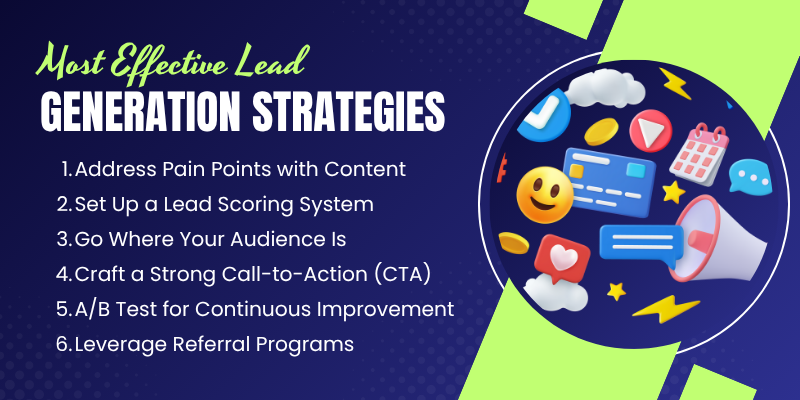
1. Address Pain Points with Content
Begin with strong content that resonates with your target audience’s pain points. For instance, if you offer project management software, create videos on project planning tips or case studies that demonstrate your software’s success. Show customers how your solution works in real-life scenarios.
2. Set Up a Lead Scoring System
Implement a lead scoring system where points are assigned based on specific actions like attending webinars or downloading whitepapers. Leads engaging with high-value content, such as product features, should get a higher score, allowing sales teams to focus on those most likely to convert.
3. Go Where Your Audience Is
Identify the social media platforms your target audience uses and tailor your content to those channels. If your business targets a visually-oriented demographic, platforms like Instagram or Pinterest may yield better results than others.
4. Craft a Strong Call-to-Action (CTA)
Whether it’s on your website or social media, ensure you have a compelling CTA. A well-designed, persuasive sign-up form on your landing page, paired with customer testimonials, can increase conversion rates, especially for subscription-based services.
5. A/B Test for Continuous Improvement
Use A/B testing to refine your approach. Test variations of headlines, visuals, and CTAs based on real-time performance data. For example, A/B testing email subject lines can help determine the most effective messaging, optimizing future email campaigns for better engagement and conversion.
6. Leverage Referral Programs
Encourage existing customers to refer others by offering incentives or rewards. Referral programs tap into your current customer base, turning them into brand advocates. This strategy can help generate high-quality leads because they come from trusted sources, making them more likely to convert.
By combining these strategies, you can create a comprehensive lead generation plan that attracts, nurtures, and converts prospects into loyal customers.
5 Common Methods for Nurturing Leads
Once you've scored and qualified your leads, the next step is nurturing them to guide them through the sales journey.
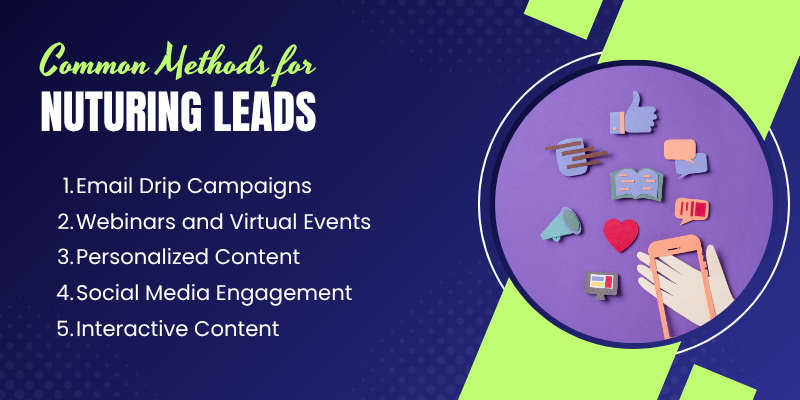
Here are some effective methods:
1. Email Drip Campaigns
Automated email sequences, such as a welcome series for new subscribers, help nurture leads toward their first purchase.
Drip marketing delivers a series of targeted, relevant messages over time to keep leads engaged and move them closer to conversion.
2. Webinars and Virtual Events
Webinars and virtual events are great for gathering insights and directly engaging with your audience.
For example, a software company could host a webinar series demonstrating advanced features, followed by a Q&A session, to answer questions and build trust.
3. Personalized Content
Tailoring content based on individual preferences increases engagement.
For instance, an online fashion retailer could send personalized product recommendations based on a lead’s browsing history, creating a more relevant and engaging experience.
4. Social Media Engagement
Knowing which social media channels your leads use is essential.
Actively participating in discussions, sharing relevant content, and engaging with comments on platforms like X, LinkedIn, or Facebook helps build brand awareness and credibility while nurturing leads.
5. Interactive Content
Quizzes, surveys, or assessments engage leads while providing valuable data for future marketing efforts.
A fitness app, for example, could offer a quiz to help users determine their ideal workout routine, gathering insights to personalize content and promotions.
By combining these methods, you can effectively nurture your leads and build strong relationships that drive conversions
Get Started with Our Content Marketing Services
How Lead Generation Helps in Building a Strong Sales Pipeline?
Generating quality leads is essential for filling the sales funnel with potential customers who are genuinely interested in a business's products or services.
The Lead Generation Funnel is a critical concept here, where the process ensures that sales teams focus on high-quality prospects, increasing the chances of conversion as leads move from awareness to consideration.
When leads are carefully targeted and qualified, they move through the sales funnel, from initial interest to deeper engagement.
This process ensures that sales teams focus on high-quality prospects, increasing the chances of conversion.
Nurturing these leads is equally important. By staying engaged with prospects through personalized follow-ups, relevant content, and ongoing communication, businesses can build trust and guide leads toward making a purchasing decision.
Lead nurturing helps transform initial interest into a committed relationship, increasing the likelihood of long-term customer retention. Without proper lead nurturing, businesses risk losing potential customers before they ever reach the final stage of the sales process.
Therefore, effective lead generation and nurturing strategies are critical for building a strong sales pipeline that drives sustained business growth.

Top 3 Tools for Lead Generation
Tools for Lead Generation include CRM tools, lead magnets, and email automation tools that help businesses attract, manage, and nurture potential customers. When it comes to attracting qualified buyers, Best Lead Generation For Realtors often involves real estate-specific tools that provide insights and lead-scoring mechanisms.
Main tolls for lead generation are as follows:
1. CRM Tools
Customer Relationship Management (CRM) tools help businesse manage and analyze customer interactions and data. These tools streamline the lead generation process by tracking potential customers, organizing contact information, and enabling personalized communication, all of which help nurture leads more effectively.
2. Lead Magnets
Lead magnets are valuable resources or offers (such as eBooks, whitepapers, checklists, or free trials) provided in exchange for a prospect's contact details. These tools incentivize potential leads to share their information, allowing businesses to grow their database and initiate further engagement.
3. Email Automation Tools
Email automation tools help businesses send targeted, automated emails to leads at various stages of the sales funnel. These tools allow for personalized follow-ups, nurturing sequences, and timely responses, which are essential for maintaining engagement and guiding leads towards conversion.
Get More Conversions with Email Marketing Services
8 Best Practices for Effective Lead Generation
Implementing best practices in lead generation not only increases the quantity of leads but also builds trust and fosters long-term relationships with your audience. B2B marketing strategies should be a part of your lead-generation toolkit, as they allow businesses to reach other businesses through targeted content and personalized email campaigns.
Here are key practices to guide your lead generation efforts:
- Understand Your Audience: Develop detailed buyer personas to tailor your messaging effectively.
- Implement Lead Scoring: Assign numerical values to leads based on their engagement and fit.
- Maintain Consistent Messaging: Ensure uniformity in your brand's voice across all channels.
- Utilize CRM Tools: Leverage CRM systems to track and manage lead interactions.
- Optimize Lead Capture Forms: Design simple and user-friendly forms to encourage submissions.
- Conduct A/B Testing: Regularly test different elements to improve conversion rates.
- Leverage AI and Automation: Use AI tools to personalize and automate lead interactions.
- Foster Continuous Improvement: Regularly assess and refine your lead generation strategies.
Implementing these practices can enhance your lead generation efforts, ensuring a steady flow of qualified leads and improved conversion rates.
6 Current Trends in Lead Generation
Lead generation in 2025 is evolving rapidly, driven by advancements in technology and shifting consumer expectations. For example, B2B Lead Generation is now heavily reliant on automation tools that allow businesses to target decision-makers more precisely and scale their efforts more effectively.
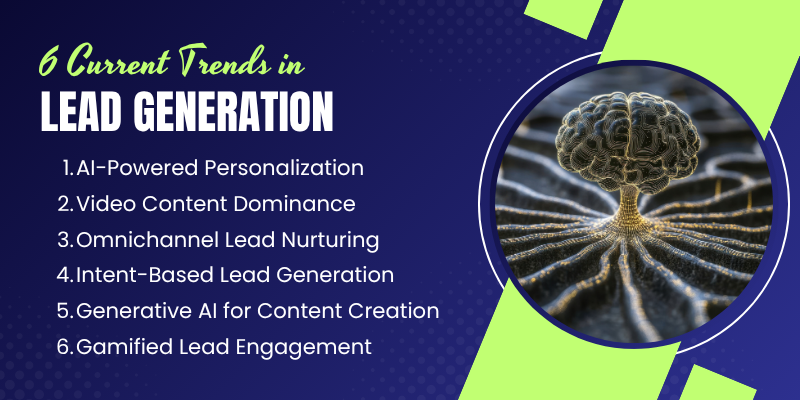
Here are the top trends shaping the landscape:
1. AI-Powered Personalization
Artificial Intelligence (AI) is revolutionizing lead generation by enabling hyper-personalized experiences. Tools like ChatGPT-4 and predictive analytics platforms allow businesses to tailor content, offers, and interactions based on individual behaviors and preferences. This approach enhances engagement and conversion rates by delivering the right message at the right time.
2. Video Content Dominance
Video continues to be a powerful medium for lead generation. Platforms such as TikTok, YouTube, and LinkedIn are central to engaging potential leads through short-form videos, live streams, and interactive content. Video allows businesses to convey complex information quickly and in an engaging manner, making it easier to capture and nurture leads.
3. Omnichannel Lead Nurturing
Effective lead nurturing now requires a seamless experience across multiple platforms, social media, email, SMS, and mobile apps. Aligning sales and marketing efforts across these channels ensures that leads receive consistent messaging and timely follow-ups, improving the chances of conversion.
4. Intent-Based Lead Generation
Understanding buyer intent is becoming a critical strategy. By analyzing signals such as content engagement, search behaviors, and social interactions, businesses can identify prospects who are actively interested in their offerings. This targeted approach allows for more efficient use of resources and higher-quality leads.
5. Generative AI for Content Creation
Generative AI is being utilized to produce personalized marketing offers and content at scale. Models like Google's T5, fine-tuned with contrastive learning, are enhancing the relevance and appeal of marketing materials, leading to improved engagement and conversion rates.
6. Gamified Lead Engagement
Innovative approaches like gamified voice competitions are emerging to engage users interactively. Platforms such as Vocalize use audio processing and large language models to create engaging experiences that capture attention and gather leads in a fun and memorable way.
Frequently Asked Questions
What is lead generation and why is it important?
Lead generation is the process of attracting and capturing interest from people who might become your customers — usually by offering something valuable like a guide or a free trial in exchange for contact information. It’s important because it fills your sales pipeline with people who are already interested in what you offer, helping you grow your business more efficiently.
How does lead generation work in digital marketing?
In digital marketing, lead generation works by using online channels like websites, social media, search engines, and email to draw in visitors and convert them into leads. This often involves content such as blog posts, landing pages, and sign‑up forms that encourage people to share their contact details.
What are the common methods used in lead generation?
Common lead generation methods include content marketing (like blogs and ebooks), search engine optimization (SEO), social media engagement, email campaigns, and online ads. These tactics help attract the right audience and encourage them to show interest in your products or services.
What’s the difference between lead generation and lead nurturing?
Lead generation focuses on getting contact information from potential customers, while lead nurturing is all about building a relationship with those leads by sending helpful content, staying in touch, and guiding them toward making a purchase.
How long does it take to see results from lead generation?
The time you see results from lead generation can vary. Paid tactics like ads can start generating leads quickly, while organic approaches like SEO and content marketing may take several months before you see consistent growth.
Can small businesses benefit from lead generation?
Yes! Lead generation isn’t just for big companies. Small businesses benefit by attracting customers who are already interested in their offerings, which can boost sales, improve targeting, and help them grow without wasting resources on uninterested audiences.
Conclusion
Lead generation is a vital component of business growth, enabling businesses to attract and nurture potential customers while filling the sales pipeline with qualified prospects. Digital marketing plays a key role in modern lead generation efforts, offering businesses advanced tools like search engine optimization and social media campaigns to effectively engage their target audiences. A digital transformation agency name, such as Centric, can play a crucial role in helping businesses refine their lead generation strategies through advanced tools and technologies. By employing effective strategies such as targeting the right audience, leveraging the right tools, and creating valuable content, businesses can boost conversion rates and foster long-term customer relationships. Regular measurement and optimization of lead generation efforts ensure continued success, making it a key factor in sustaining business growth and maintaining a competitive advantage.