Ever landed on a webpage and immediately clicked away because it didn’t give you what you were looking for?
That quick exit is part of what’s known as the bounce rate in SEO, and it’s a big deal when it comes to your site’s performance.
So, what is bounce rate? It’s the percentage of visitors who land on a webpage and leave without exploring any other pages on the site.
Think of it as a gauge of how well your site is holding the attention of visitors. If your page has a high bounce rate, it could mean that users didn’t find what they were expecting, which can hurt your search engine rankings.
But don’t worry. There are ways to improve it. To reduce bounce rates, you’ll want to make sure your content is relevant and engaging, your pages load quickly, and your overall user experience is top-notch.
In this blog, we’ll break down what bounce rate means, why it matters for SEO, and some practical tips to reduce it, so you can keep visitors around longer and improve your site’s performance.
What is Bounce Rate?
Bounce rate is a key website analytics metric that measures the percentage of visitors who land on a site and leave without interacting with any other pages. A high bounce rate can affect your website’s visibility in search engines, which is why many use SEO audit tools to identify and address issues that could be causing high bounce rates.
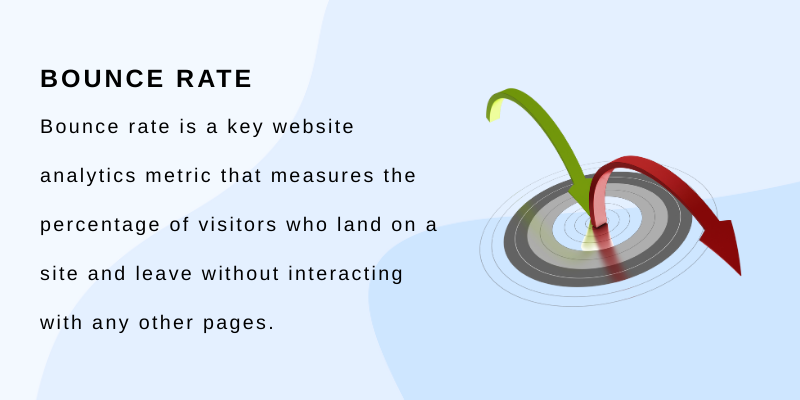
It’s calculated by dividing the number of single-page sessions by the total number of sessions.
A higher bounce rate often indicates that users didn’t find what they were looking for or didn’t engage with the content.
What Does Bounce Rate Mean in SEO?
In SEO, bounce rate is a key metric that shows how many visitors land on a page and leave without exploring other pages on the website. To track this, you might consider using SEO ranking report softwares, which provides valuable insights into how well your pages are performing and what may be contributing to a high bounce rate.
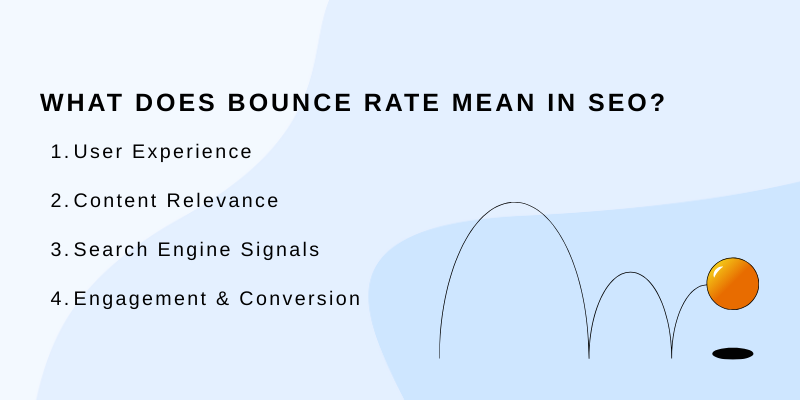
This is an important indicator of user experience and content quality, as search engines, like Google, take it into account when ranking pages.
Here’s why bounce rate matters in SEO:
- User Experience: A high bounce rate may indicate poor user experience, such as slow page load times or irrelevant content.
- Content Relevance: If users leave quickly, it suggests the content might not be relevant or engaging, which could hurt your rankings.
- Search Engine Signals: Search engines may interpret a high bounce rate as a sign of low-quality content, leading to decreased visibility in search results.
- Engagement & Conversion: Lower bounce rates typically signal higher engagement, meaning visitors are more likely to interact with your site, which can lead to better conversions.
Optimizing your website to lower bounce rates, by improving content, speeding up load times, and enhancing user experience, can positively impact your SEO performance.
Why Do People Bounce?
People bounce from a website for a variety of reasons, often due to a poor user experience or content that doesn’t meet their expectations. For example, using outdated Google keyword ranking strategies may lead to irrelevant content, which can cause users to leave quickly.
Here are some common factors that cause users to leave a site quickly:
- Slow Load Times: If a page takes too long to load, visitors may become impatient and leave before it fully loads.
- Irrelevant or Unclear Content: When users don't find what they’re looking for right away or the content doesn’t match their needs, they are more likely to bounce.
- Poor Mobile Experience: With mobile-first indexing, sites that aren't optimized for mobile can drive visitors away, especially if they are hard to navigate or slow to load.
- Intrusive Pop-ups or Ads: Overly aggressive pop-ups or ads can disrupt the user experience and cause people to leave immediately.
- Confusing Navigation: If users have difficulty finding what they're looking for or navigating through the site, they may bounce in frustration.
- No Clear Call to Action (CTA): If the website lacks clear guidance or CTAs, visitors may leave without interacting further with the content or taking desired actions.
- Design and Aesthetics: An outdated or cluttered design can make users feel that the site is untrustworthy or unprofessional, prompting them to leave quickly.
Reducing bounce rates involves improving site speed, ensuring relevant and engaging content, and optimizing the user experience.
What is the Difference Between Bounce Rate and Exit Rate?
Exit rate measures the percentage of sessions that end on a specific page. However, top search engines may interpret a high exit rate on certain pages as a sign of poor content, leading to a decrease in visibility for those pages. It's calculated by dividing the number of exits by the total sessions.
For example, if a visitor reads one article, clicks on another, and then leaves the site, it increases the exit rate of the second article, but it's not a bounce.
Bounce rate, on the other hand, refers to sessions where visitors land on a page and leave without interacting further, typically within a short time.
For example, if a visitor reads an article and leaves immediately, it counts as a bounce, increasing that page's bounce rate.
Thus, exit rate tracks when users leave the site, while bounce rate tracks when they leave after a single-page visit without engagement.
How Do You Calculate Bounce Rate?
Bounce rate is calculated by dividing the number of unengaged sessions by the total number of sessions, then multiplying by 100 to get a percentage.
Bounce rate = (Unengaged sessions / Total sessions) × 100
For example, if your site has 2,500 sessions and 450 of them are unengaged, the bounce rate would be:
Bounce rate = (450 / 2,500) × 100 = 18%
Since bounce rate is the inverse of engagement rate, if your bounce rate is 18%, the engagement rate would be 82%.
How Does Bounce Rate Work in Google Analytics 4?
The way bounce rate is calculated in Google Analytics 4 (GA4) differs from Universal Analytics (UA) by focusing on a more comprehensive measure of user engagement. For marketers, integrating social media marketing tools with GA4 can provide additional insights into how social traffic affects bounce rates.
In UA, bounce rate is calculated solely based on user interaction with the page. However, in GA4, bounce rate is determined by considering factors like page views, session duration, and conversion events, offering a more holistic view of user behavior.
In GA4, a session is considered engaged if it meets any of these criteria:
- Duration of more than 10 seconds
- Triggered a conversion event
- Generated at least two pages or screen views
If a session doesn’t meet any of these criteria, it’s classified as "not engaged" or bounced. As a result, the bounce rate in GA4 is essentially the inverse of the engagement rate.
This shift allows GA4 to provide deeper insights into user engagement and interaction.
Explore Our Digital Marketing Services!

How to Reduce Bounce Rate?
Reducing your bounce rate is crucial for improving user engagement and SEO performance. A high bounce rate signals that visitors aren’t finding what they’re looking for or that the user experience is poor. You can enhance engagement by using performance marketing strategies to target the right audience and provide tailored content.
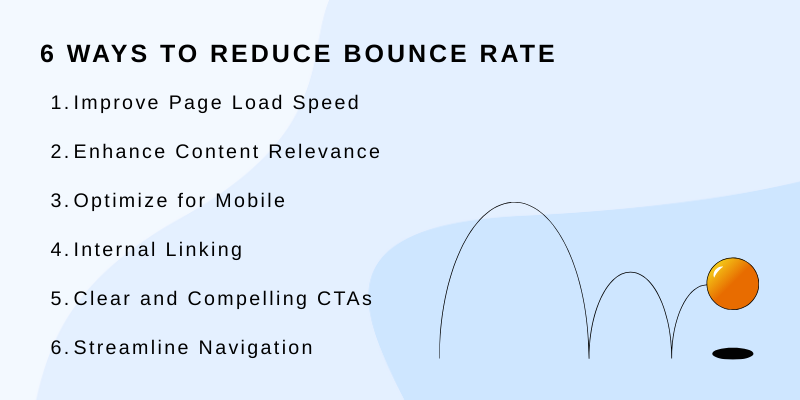
By optimizing your website, you can keep visitors engaged and encourage them to explore more pages
Here are the key elements to focus on:
1. Improve Page Load Speed
Slow-loading pages are one of the top reasons for high bounce rates. By optimizing your site for single page website SEO, you can ensure faster load times and a better user experience. If a page takes more than a few seconds to load, visitors are likely to leave. Optimizing images, reducing server response time, and using caching techniques can significantly speed up your site and lower your bounce rate.
2. Enhance Content Relevance
Ensure that the content on your pages is valuable and relevant to what users are searching for. Clear, well-organized content that answers user questions keeps them engaged. Using strong headlines, engaging visuals, and compelling calls-to-action (CTAs) can also encourage visitors to stay longer.
3. Optimize for Mobile
With mobile-first indexing, having a mobile-friendly site is essential. If your website isn’t optimized for mobile devices, users may leave quickly. This is especially important for digital marketing efforts, where mobile optimization can significantly improve user retention. Ensure your site is responsive, the text is legible without zooming, and navigation is easy on mobile.
4. Internal Linking
Include relevant internal links to guide users to more related content. This encourages them to explore your site further, reducing the chance of them bouncing. Use contextual links that flow naturally within the content to create a more engaging experience.
5. Clear and Compelling CTAs
A clear call to action can help guide visitors to the next step. For businesses, partnering with an oil and gas marketing agency can provide targeted CTAs that resonate with specific industry audiences, reducing bounce rates. Whether it’s signing up for a newsletter, checking out a product, or reading another article, a well-placed CTA can keep visitors engaged and reduce bounce rates.
6. Streamline Navigation
If users can’t easily find what they’re looking for, they’ll leave. Simplifying your site’s navigation, providing a search bar, and using clear categories and menus can help users quickly find relevant content and encourage them to stay longer. By focusing on these elements, you can create a more engaging user experience, leading to a reduced bounce rate and higher user retention on your website.
Frequently Asked Questions
Is bounce rate a ranking factor in SEO?
While Google has stated that bounce rate is not a direct ranking factor, it can still indirectly affect your SEO performance. A high bounce rate may indicate that users are not finding the content they expect, which could negatively impact their overall engagement with your site. This could lead to lower user experience scores, which indirectly influence rankings.
Does bounce rate affect SEO?
Yes, bounce rate can affect SEO, although not directly. A high bounce rate could signal poor user experience or irrelevant content, which might lead to reduced engagement. Over time, this could impact your search rankings as Google may interpret this behavior as a sign that your page isn’t meeting user expectations. (backlinko.com)
How does a high bounce rate affect SEO?
A high bounce rate may suggest that visitors leave your page too quickly, meaning they aren’t engaging with the content or exploring more of your site. This lack of interaction can influence SEO indirectly by reducing the likelihood of conversions, social shares, or backlinks, which are important for rankings.
What is a good bounce rate for SEO?
A "good" bounce rate varies by industry and page type. For example, blogs may naturally have higher bounce rates because users often find the information they need on one page. Ecommerce websites usually aim for a lower bounce rate since multiple page views are ideal for completing purchases.
How can I reduce bounce rate and improve SEO?
To reduce your bounce rate and improve SEO, focus on improving content relevance, speeding up page load times, using clear calls-to-action, adding engaging multimedia, and creating a seamless mobile experience. These tactics keep users on your page longer, increasing the likelihood of further interactions and improving your site's SEO
Conclusion
Now that you understand what bounce rate is in SEO and why it matters, let's conclude. Bounce rate is a critical metric that reflects user engagement, with a direct impact on SEO performance. A high bounce rate often signals issues with content relevance, user experience, or page load speed. To improve bounce rate, focus on enhancing content quality, optimizing page speed, and ensuring a seamless user experience. For businesses seeking expert help in improving SEO and user engagement, partnering with Centric, a digital marketing agency, can offer tailored strategies to enhance your site’s performance. By addressing these factors, you can encourage visitors to stay longer, explore more pages, and ultimately improve your website’s search engine rankings.