Wondering how to use social media for SEO? This is a question many businesses ask as they try to improve their online visibility. In today’s digital world, social platforms are not just for posting updates they play a key role in shaping how audiences discover, trust, and interact with your brand.
This is why social media marketing tools are so valuable. Even though social media is not a direct Google ranking factor, it influences SEO through increased visibility, higher engagement, brand recognition, and opportunities to earn backlinks.
When people share your content on platforms like Facebook, LinkedIn, YouTube, Instagram, and Pinterest, your website gains more referral traffic.
This increased activity signals to search engines that your content is useful and relevant. Another powerful benefit is relationship building.
When you actively engage with your audience, influencers, and industry experts, you increase your chances of earning mentions, collaborations, and external links all of which contribute to stronger SEO performance.
In this blog, we will explore practical strategies to combine social media and SEO. You will learn how to optimize profiles, create shareable content, and boost your search visibility.
What is Social Media SEO?
Social media SEO refers to the indirect influence social media has on search engine optimization. While social media signals like shares, comments, and likes are not direct ranking factors for search engines like Google, they play a crucial role in boosting search visibility.
By engaging on social platforms, businesses increase their brand’s online presence and encourage traffic to their websites.
This traffic can lead to increased exposure, more backlinks, and greater authority, all factors that indirectly contribute to higher search engine rankings.
Social Signals vs. Ranking Factors
Social signals refer to the interactions and engagement a piece of content receives on social media platforms, such as likes, shares, retweets, and comments.
These signals help demonstrate content popularity and relevance, potentially leading to more people discovering and linking to the content.
On the other hand, ranking factors are criteria that search engines use to determine the position of a page in search results.
These include backlinks, keyword optimization, user experience, and site structure. While social signals don’t directly affect rankings, they contribute to building these ranking factors, especially by generating backlinks and driving organic traffic to top search engines.
Why Social Media Matters for SEO?
The following are the reasons why social media is important for SEO.
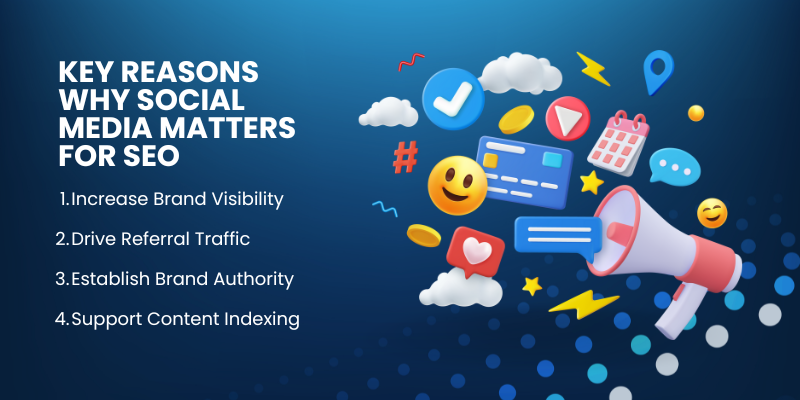
1. Increase Brand Visibility
Social media platforms are an excellent way to increase brand awareness. By sharing valuable content, participating in conversations, and engaging with your audience, you build your brand’s presence.
The more visible your brand is, the more likely it is to be recognized and trusted by your audience, which ultimately helps boost your SEO efforts.
2. Drive Referral Traffic
Social media channels can drive significant traffic to your website. When users share your content or engage with your posts, they increase the chance of others visiting your site.
This increased traffic signals to search engines that your content is relevant and valuable, which can have a positive impact on your SEO rankings. This is where digital marketing strategies come into play, as they help track and enhance this organic reach.
3. Establish Brand Authority
Social media activity helps search engines gauge the authority of your brand. High engagement and interaction with your content are signs of authority and relevance in your field.
When influencers, customers, or other authoritative figures share or mention your content, it strengthens your brand's credibility, which search engines take into consideration.
4. Support Content Indexing
Social media platforms act as a secondary source for search engines to discover and index your content. As your content is shared and re-shared across platforms, it becomes more likely to be indexed by search engines, improving its chances of showing up in search results.
Additionally, sharing content on social media encourages others to link to it, further enhancing your SEO efforts.
Explore Our Performance Marketing Services!
7 Simple Steps to Use Social Media for SEO
By creating shareable content, you can increase the chances of your posts being shared across various platforms. Whether you’re using social ads to boost a post or creating valuable, interactive content, these efforts directly impact your SEO by increasing visibility and generating backlinks. The key to success is consistently integrating your social media marketing campaigns with your SEO goals.
To leverage social media effectively for SEO, follow these key steps to boost your search visibility and online presence.
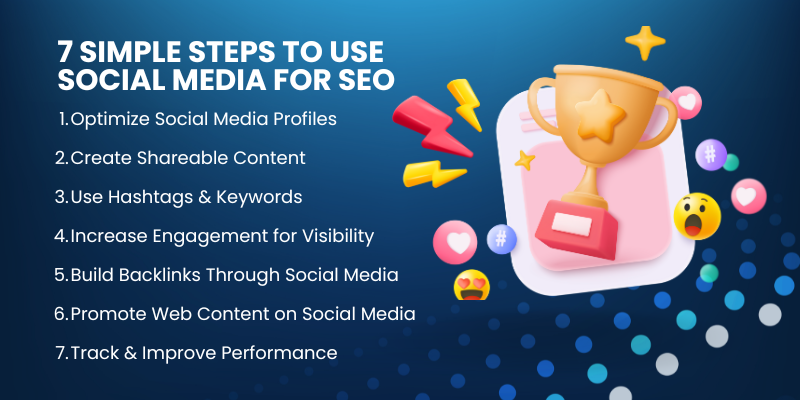
1. Setting the Foundation: Optimize Your Social Profiles
To set a strong foundation for social media SEO, it's important to optimize your social profiles. Start by ensuring consistent NAP (Name, Address, Phone) across all platforms.
Here are steps to optimize your brand’s social profile:
- Ensure consistent NAP (Name, Address, Phone) across all platforms.
- Add relevant keywords to your bios and descriptions for better visibility.
- Use branded profile images and cover photos that reflect your brand identity.
This consistency helps search engines verify your business information, especially for local SEO. Additionally, make sure to add relevant keywords to your bio and descriptions.
This increases your visibility in search results for those keywords and helps potential customers find you. Finally, using branded profile images and cover photos is crucial.
2. Create Shareable Content That Boosts SEO
Creating shareable content is one of the most effective ways to boost SEO. The more engagement your content receives, the more likely it is to be shared, which can drive traffic and improve your search visibility.
Here are a few ways to create content that’s easily shareable.
- High-quality posts that encourage engagement (likes, shares, and comments).
- Use visual content like infographics, videos, and carousels to increase shareability.
- Implement content repurposing strategies to extend the reach and life of your content.
By turning blog posts into videos, infographics, or social media snippets, you can reach a wider audience and increase your chances of being shared across different platforms.
3. Use Social Media to Build Backlinks
Using social media to build backlinks is a powerful strategy for improving SEO.
Here are some of the key elements to use social media to build backlinks
- Shares lead to organic backlinks as content is shared across networks.
- Outreach through social channels helps secure backlinks from influencers and industry experts.
- Tagging influencers and partners increases the chances of content being shared, leading to more backlinks.
When users share your content across their networks, it often leads to organic backlinks as other websites link back to the content they find valuable.
4. Leverage Hashtags and Keywords Strategically
Leveraging hashtags and keywords strategically can significantly boost your social media SEO. Branded and niche hashtags help your content reach a more targeted audience, improving its visibility and engagement. By adding high Google keyword ranking data to your social media posts, you ensure that each post reaches its optimal audience, increasing your content's searchability.
In addition, adding keywords to captions, descriptions, and alt text on social platforms ensures that your posts are optimized for search, making it easier for search engines to find and index your content.
Some key strategies to leverage hashtags and keywords effectively.
- Use branded and niche hashtags to increase targeted reach and engagement.
- Add keywords to captions, descriptions, and alt text to optimize your social media posts for search.
This combined approach enhances discoverability and drives more organic traffic to your profiles and website.
5. Improve Engagement to Increase Visibility
Some key strategies to improve engagement and increase visibility.
- Posting frequency ensures consistent visibility and engagement with your audience.
- Community engagement strengthens relationships and encourages more interaction.
- Responding to comments shows active participation and increases content value.
- Using polls and interactive content encourages user participation and boosts shares.
Improving engagement helps your content reach more users. Higher engagement sends strong signals to platforms and search engines.
This increases your reach and improves brand visibility. Strong engagement also drives more traffic to your website and supports long-term SEO growth.

6. Promote Website Content on Social Platforms
Promoting your website content on social platforms helps drive traffic and supports SEO. Share your blogs, landing pages, offers, and resources to guide users to useful content. This keeps your brand visible and increases content reach across different platforms.
Key elements for content promotion on social media:
- Share blogs, landing pages, offers, and resources
- Use UTM parameters to track campaign performance
- Create a posting schedule for consistent visibility
Tracking performance helps you understand what works best. A clear posting schedule keeps your content active and improves reach. When done regularly, social promotion strengthens brand awareness and increases website visits.
7. Track, Measure, and Improve Performance
Tracking performance helps you improve your social media and SEO results. Use Google Analytics to see how much traffic comes from social platforms. This helps you identify which channels perform best. Engagement data shows how users react to your content.
Key elements to track and measure:
- Track social traffic using Google Analytics
- Monitor likes, shares, and comments
- Track click-through rates from social posts
- Measure conversion rates from campaigns
Regular tracking helps you fix weak areas and improve strong ones. When you review data often, your social media strategy becomes more effective. This leads to better traffic, stronger engagement, and improved SEO results.
Explore Our Digital Marketing Services!
7 Social Media Platforms That Support SEO the Most
Certain social media platforms offer significant advantages for boosting SEO.
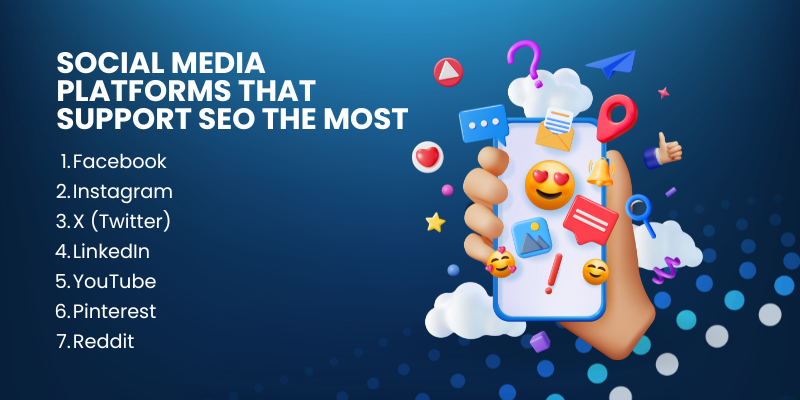
Here's how each platform contributes to your SEO strategy:
1. Facebook
Facebook helps drive steady referral traffic to websites. High engagement on posts increases content visibility. When users share links, they expand reach and bring more visitors to your site. This supports brand signals that help SEO.
2. Instagram
Instagram improves brand awareness and increases branded searches. Story links and bio links send traffic directly to websites. Strong visual reach helps your content spread fast. This supports indirect SEO growth through user activity.
3. X (Twitter)
X helps content get indexed faster by search engines. Public tweets with links are quickly crawled. High sharing increases content discovery. This supports faster visibility in search results.
4. LinkedIn
LinkedIn is strong for B2B SEO traffic. Posts rank in Google for business keywords. Profile and post links drive high quality visitors. This improves domain trust and site authority.
For example, oil and gas marketing agency clients can benefit from platforms like LinkedIn, where professional content resonates with the target audience, improving domain trust and driving targeted traffic to your website.
5. YouTube
YouTube videos appear in Google search results. Video titles and descriptions support keyword ranking. Strong watch time sends trust signals. This improves visibility across both video and web search.
6. Pinterest
Pinterest pins rank in both Google Images and web search. Each pin acts as a long-term traffic source. Links stay active for months or years. This brings steady organic referral visitors.
7. Reddit
Reddit threads rank for long-tail search keywords. Real user discussions build trust and relevance. Helpful links inside threads bring targeted traffic. This supports strong topical authority for SEO.
4 Best Practices for Using Social Media for SEO
To effectively use social media for SEO, it's important to follow best practices that align with both engagement and search optimization goals. Focusing on performance marketing will ensure your social media ads are aligned with SEO objectives, driving not only traffic but also improved conversions for higher rankings.
1. Be Consistent Across All Platforms
Consistency is key when it comes to branding and messaging across all social media platforms. Maintaining a uniform tone, visual style, and content strategy helps establish trust and reinforces your brand's presence, making it easier for search engines and users to recognize you.
2. Focus on Value-Driven Content
Create content that offers real value to your audience. Whether it's informative, entertaining, or educational, value-driven content is more likely to be shared, which can lead to increased organic traffic and better SEO performance.
3. Build Relationships, Not Just Followers
Engage with your audience on a personal level rather than focusing solely on the number of followers. Building genuine relationships encourages more meaningful interactions and can lead to increased shares, mentions, and backlinks important factors for SEO.
4. Align Social Strategy with SEO Goals
Ensure that your social media strategy is aligned with your SEO objectives. Use keywords, create shareable content, and engage with your community in ways that support your SEO goals, such as driving traffic, increasing brand awareness, and building authority.
Frequently Asked Questions
how to use social media for SEO and why does it matter?
How to use social media for SEO means using your social platforms in ways that help boost your search visibility — by increasing referral traffic, brand awareness, and engagement that eventually supports your overall SEO goals. Social signals don’t directly change rankings, but they help your content get seen and linked to, which can indirectly improve your SEO performance.
How does social media help SEO efforts?
Social media helps SEO by driving people to your website, increasing organic visibility, promoting content that others might link to, and building your brand presence online. When more users click, share, and interact with your content on social platforms, it sends positive signals about its relevance and reach — which is good for SEO.
Which social platforms are most effective for SEO?
Platforms like YouTube, LinkedIn, Instagram, and Facebook are particularly effective — each in its own way. YouTube is a huge search platform on its own, LinkedIn is great for professional content visibility, and Instagram and Facebook help with engagement and brand discovery that can indirectly support SEO.
How often should I post on social media to improve SEO?
There’s no perfect number, but consistency matters. Regular posting helps keep your audience engaged and increases your chances of earning shares and traffic. Tailor your posting frequency to each platform and your audience behavior for best results.
Do social media shares directly increase Google rankings?
No — search engines like Google do not use social media shares as a direct ranking factor. However, shares can help your content reach more people, earn backlinks, and bring referral traffic, which supports stronger SEO performance overall.
Can social media improve my website’s backlink profile?
Yes — by getting your content in front of more eyes on social platforms, you increase the likelihood that bloggers, industry sites, and influencers will link to your pages, which strengthens your backlink profile and boosts SEO.
Should I use hashtags and keywords when applying how to use social media for SEO?
Absolutely. Hashtags and keywords help your content become discoverable within social platform searches and can support visibility that leads back to your website — further helping your SEO indirectly.
Conclusion
Now that we understand how to use social media for SEO, let’s wrap up. Social media amplifies SEO by strengthening visibility, authority, and audience engagement. By consistently optimizing social profiles, creating shareable content, and interacting with your community, you can enhance your online presence and improve search engine rankings. When social media efforts are aligned with SEO goals, they create a powerful synergy that drives traffic, builds brand credibility, and boosts SEO performance. Partnering with a digital marketing agency like Centric, which is can help streamline your approach and ensure that your social media efforts are fully aligned with your SEO objectives.