Imagine you’re about to build a product that could transform your business, but you’re not sure what to build first, who should do what, or how it all fits together.
That’s where understanding how to create a product roadmap becomes essential.
A product roadmap is a strategic plan that outlines your product’s vision, goals, and development stages. It acts like a blueprint for your team, keeping everyone aligned and focused on the same objectives.
To build an effective roadmap, you need a clear view of your long-term product vision, your customers’ needs, and the resources your team can realistically commit.
The process starts with defining a product vision that supports your wider business goals. From there, you gather input from key stakeholders, development, marketing, sales, and even customers, to prioritize features and initiatives that matter most.
Once priorities are clear, you can organize them into phases, set timelines, and allocate resources.
Learn how to create a product roadmap with a clear step-by-step process. Follow these strategies to align your team and deliver successful products.
What is a Product Roadmap?
A product roadmap is a high-level Product Launch Strategy that outlines the vision, goals, and future direction of a product. It shows what will be built, why it matters, and when different features or improvements are expected to be delivered.
In simple words, it’s a visual guide that helps teams and stakeholders stay aligned, make informed decisions, and understand how the product will grow over time.
Why Are Product Roadmaps Important?
Product roadmaps play a crucial role in guiding software companies, especially those operating with a product-led growth approach. They help by:
-
Aligning the entire organization around clear, shared product goals.
-
Supporting product owners in managing and prioritizing the product backlog.
-
Building customer excitement by giving visibility into the product’s future direction.
Product managers and product owners commonly use the Product Launch Checklist to plan and coordinate the release of new features. However, not every product team chooses to rely on detailed roadmaps.
Explore Our Product Launches Service
How To Create A Product Roadmap: (5 Steps)
Creating a successful product roadmap requires clarity, alignment, and a structured approach. It helps teams stay focused, prioritize features, and deliver value efficiently.
Here are the 5 key steps to create a product roadmap.
1. Define Your Product Vision and Goals
The first step in building a product roadmap is to clearly define the product vision and strategy. This foundation drives every decision that follows and ensures all efforts move in the right direction.
Understanding your product’s long-term vision and strategic goals helps set a clear direction for exciting or New Product Development Process and growth.
Make sure this vision aligns with overall business objectives and evolving market needs, so your product remains relevant, competitive, and valuable to users.
2. Align Product Roadmap Planning With Business Objectives
Ensure your product roadmap aligns closely with overall business goals. This keeps product efforts contributing to company strategy rather than drifting off in isolation.
Especially if you follow an agile approach, design your roadmap to stay flexible as priorities evolve.
Revisit your product strategy and business objectives regularly (for example, quarterly) to confirm ongoing alignment, and schedule recurring check-ins with leadership to revisit priorities.
3. Identify Key Initiatives and Features
Next, identify the core initiatives or features that will help you achieve your goals. Conduct team workshops to brainstorm ideas, then prioritize and group them before adding them to your roadmap.
Collaborative methods, such as voting or ranking exercises, can help ensure the team’s voices are heard and high-impact ideas surface. This collective process leads to a roadmap that reflects shared priorities.
4. Prioritize Based on Business Impact
Use a prioritization framework (like a prioritization matrix) to evaluate which initiatives are likely to deliver the biggest business value.
Ask yourself: “Which items most strongly align with business objectives and stakeholder priorities?” and “Why might some items be deprioritized?”
Reflect often, adjusting as needed based on stakeholder feedback and shifting priorities. This helps ensure the roadmap focuses on what matters most.

5. Share, Iterate, and Update Regularly
A roadmap should not be static. Share it widely across your organization using collaborative tools so everyone, teams, stakeholders, has visibility. Invite feedback, adjust items as circumstances or insights change, and keep the roadmap evolving.
Regular updates maintain clarity on direction and ensure the plan adapts as your business and product grow.
Explore How to Launch a New Product?
Who Uses Product Roadmapping?
Product roadmapping isn’t just for product managers, it’s a collaborative tool used across the organization. Several key teams rely on a roadmap to stay aligned and informed:
-
Product Management: Owns the roadmap, updates it, and ensures it reflects priorities and strategy.
-
Design & UX: Plans research, testing, and design work based on upcoming product phases.
-
Engineering: Uses the roadmap to structure development cycles and monitor progress.
-
Marketing & Sales: Aligns Successful Marketing Campaigns, messaging, and Product Launches activities with planned releases.
-
Customer Success & Support: Prepares for new features and communicates upcoming changes to users.
-
Executives & Leadership: Ensures product plans support broader company objectives.
When your go-to-market teams operate around a shared product roadmap, it builds alignment, clarity, and transparency, especially valuable for remote or hybrid teams.
5 Types of Product Roadmaps
Different product roadmaps focus on various aspects, such as long-term vision, strategic goals, short-term actions, releases, and technical evolution.
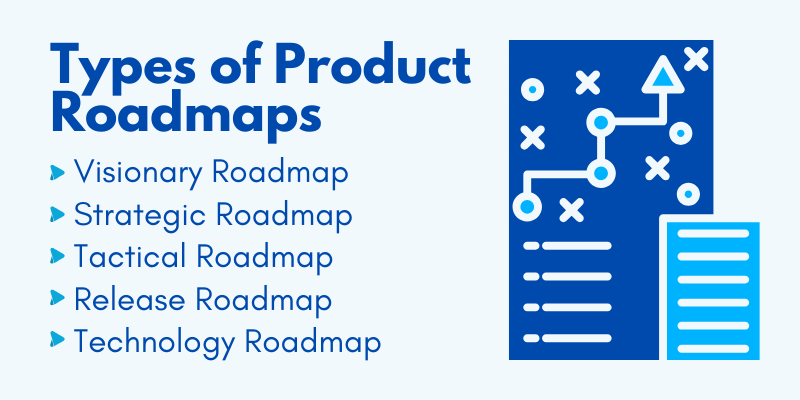
- Visionary Roadmap: Highlights long-term goals and the overall product vision. It presents the big-picture direction for the product’s future.
- Strategic Roadmap: Aligns product goals with business objectives over a 1–3 year period. Focuses on high-level priorities that support business growth and market demands.
- Tactical Roadmap: Covers short-term goals, usually over a few months. Provides detailed action items and timelines to achieve near-term product milestones.
- Release Roadmap: Outlines upcoming product releases. Specifies which features and improvements will be included in each release to keep development on schedule
- Technology Roadmap: Focuses on the technical evolution of the product, including infrastructure, backend updates, scalability, performance, and security improvements.
Best Practices for Creating Effective Product Roadmaps
Creating and maintaining a strong roadmap isn’t just a one-time activity — it’s an ongoing discipline that shapes how your product team works. Here are some key practices to ensure success:
-
Tailor the level of detail to your audience, keeping information clear and relevant.
-
Balance short-term actions with long-term vision so the roadmap reflects both immediate priorities and strategic goals.
-
Review and update the roadmap regularly to keep it accurate as priorities or conditions change.
-
Ensure visibility and accessibility so everyone on the team can reference the roadmap whenever needed.
-
Maintain open communication with stakeholders to stay aligned on goals, expectations, and progress.
Frequently Asked Questions
What is a product roadmap example?
A product roadmap is a visual plan that outlines the development goals, key features, and milestones for a product over time, helping teams stay aligned on what needs to be done and when.
How do you actually build a roadmap from scratch?
Start by defining your product vision and business goals. Break these down into key tasks, prioritize them, and create a timeline. Involve stakeholders to ensure the roadmap aligns with their needs, and update it regularly as things evolve.
How to make a roadmap example?
Identify your product goals and key features. Group tasks, set timelines, and use tools like Gantt charts to visualize the roadmap. Keep it flexible and clear to guide your team effectively.
What is the best tool to create a roadmap?
The best tools depend on your needs. Popular options include Aha! for strategic planning, Trello for simple projects, Monday.com for team collaboration, and Jira for agile teams. Choose one that fits your workflow.
Conclusion
Understanding how to create a product roadmap is essential for guiding your product from vision to execution with clarity and purpose. When you know how to create a roadmap effectively, you empower your team to stay aligned, prioritize strategically, and deliver meaningful results. A well-structured product roadmap provides direction, supports decision-making, and keeps everyone focused on shared goals.
It bridges long-term vision with actionable steps, ensuring every feature, milestone, and resource contributes to real value for users and the business. By gathering input from stakeholders, prioritizing features, setting clear timelines, allocating resources wisely, and continuously refining tc, Centric build a roadmap that evolves with market needs and organizational objectives.