Web design and web development are crucial for any business aiming to succeed online. They shape how users interact with your website and determine its functionality. Web design focuses on the look and feel of a website, while web development deals with how it works behind the scenes.
Centric specializes in web design and development, offering creative and technical solutions that enhance user experiences and drive business growth. It ensures that your website is not only visually appealing but also fully functional and optimized.
In this guide, we will explore the difference between web design and web development, explain how both fields work together, and provide insights into why you need both to succeed online.
What is Web Design?
Web design is the process of creating the visual and interactive elements of a website. It focuses on how a website looks, feels, and behaves when users interact with it. The goal of web design is to make websites user-friendly, aesthetically pleasing, and easy to navigate. For businesses who are looking to optimize their online presence, web design and development services are essential for creating a cohesive and functional website that meets user needs and expectations.
In the web design vs web development debate, web design is primarily concerned with the look and experience of a website, while web development handles the functionality and structure behind the scenes. Both are essential for a successful website, but their roles differ.
Web designers work on the layout, color scheme, and overall appearance, ensuring the site looks good and is easy to use. Meanwhile, web developers handle the technical aspects, making sure the website works smoothly. This distinction helps define the web designer vs web developer roles.
Understanding the Role of Web Designers
Web designers are responsible for creating websites that are not only visually attractive but also functional. They ensure that a website’s design aligns with the brand’s image while also providing a seamless user experience (UX).
The creative aspect of web design involves making decisions about the layout, color scheme, fonts, and overall look of the site. Web designers also focus on user interface (UI), ensuring that users can easily interact with the website.
While web development and design are often closely linked, a web designer vs web developer has different responsibilities. A web designer focuses on appearance and usability, while a web developer focuses on coding and functionality. Together, they create a complete website.
3 Key Components of Web Design
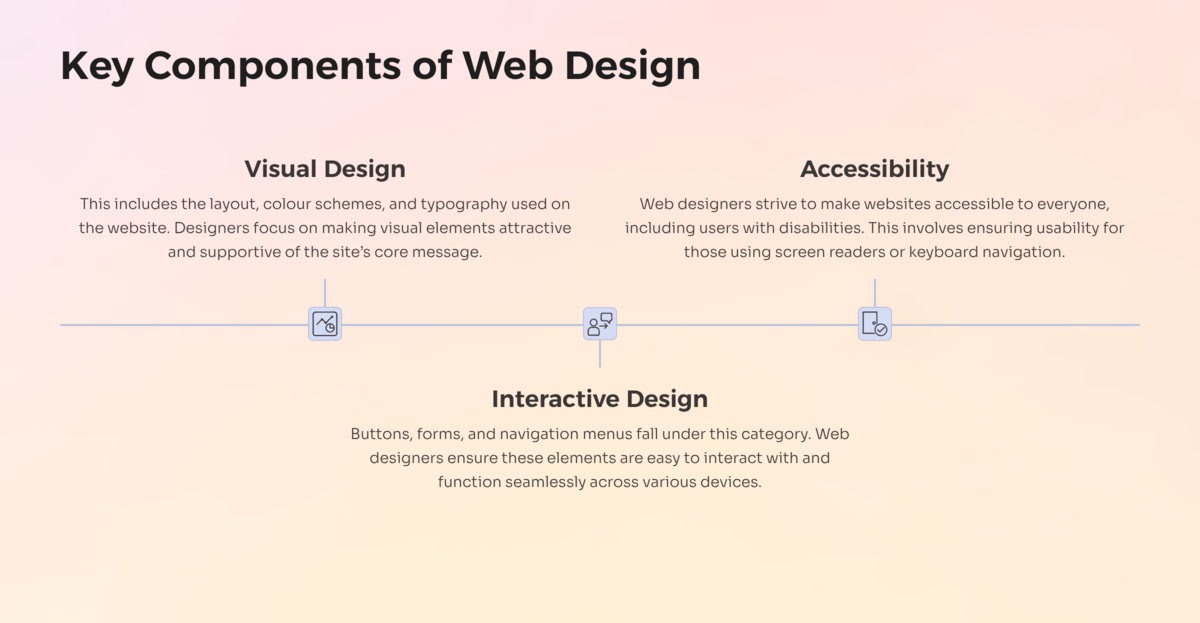
- Visual Design: This includes the layout, color schemes, and typography used on the website. Designers work on making sure the visual elements are attractive and support the site’s message.
- Interactive Design: Buttons, forms, and navigation menus fall under this category. Web designers ensure that these elements are easy to interact with and work properly across devices.
- Accessibility: Web designers strive to make websites accessible to everyone, including users with disabilities. This involves making sure the site is usable for people with different needs, like using screen readers or keyboard navigation.
What Are The Tools and Technologies Used by Web Designers?
Web designers use a variety of tools and software to create stunning websites. Some of the most common tools include:
- Software like Adobe XD, Figma, Sketch: These are used to create wireframes, prototypes, and the overall design layout for websites.
- Design frameworks like Bootstrap and Material Design: These frameworks help web designers create responsive and modern websites faster by providing pre-designed elements and styles.
In the web design vs web development debate, the tools listed above are critical to web design, while web developers might use other tools to ensure the site functions properly. A web developer designer may use a combination of both design and development tools to achieve a cohesive result.
What is Web Development?
Web development is the process of building and maintaining the functionality of a website. It involves turning the visual designs created by web designers into a fully functioning website. For mobile-first websites, Mobile App Development may also play a crucial role in ensuring seamless interaction across all platforms and devices. While web design vs web development focuses on different aspects of website creation, both work together to build a successful online presence.
Web developers are responsible for coding the website, setting up databases, and ensuring the site works across different devices and platforms. They handle everything behind the scenes that makes a website interactive and functional.
In the difference between web designer and web developer, the designer handles the aesthetics, while the developer focuses on how things work technically. This web development vs web design distinction highlights the separate but interconnected roles that both play.
Understanding the Role of Web Developers
Web developers are responsible for bringing web designs to life. They take the visual and interactive elements created by web designers and transform them into a working website.
The technical aspect of web development involves writing code in languages like HTML, CSS, and JavaScript. Web developers also work with databases, server-side programming, and APIs to ensure the website functions correctly.
The developer vs designer distinction lies in the fact that developers deal with the functionality, performance, and technical aspects, while designers focus on the look, feel, and usability of the site.
3 Types of Web Development
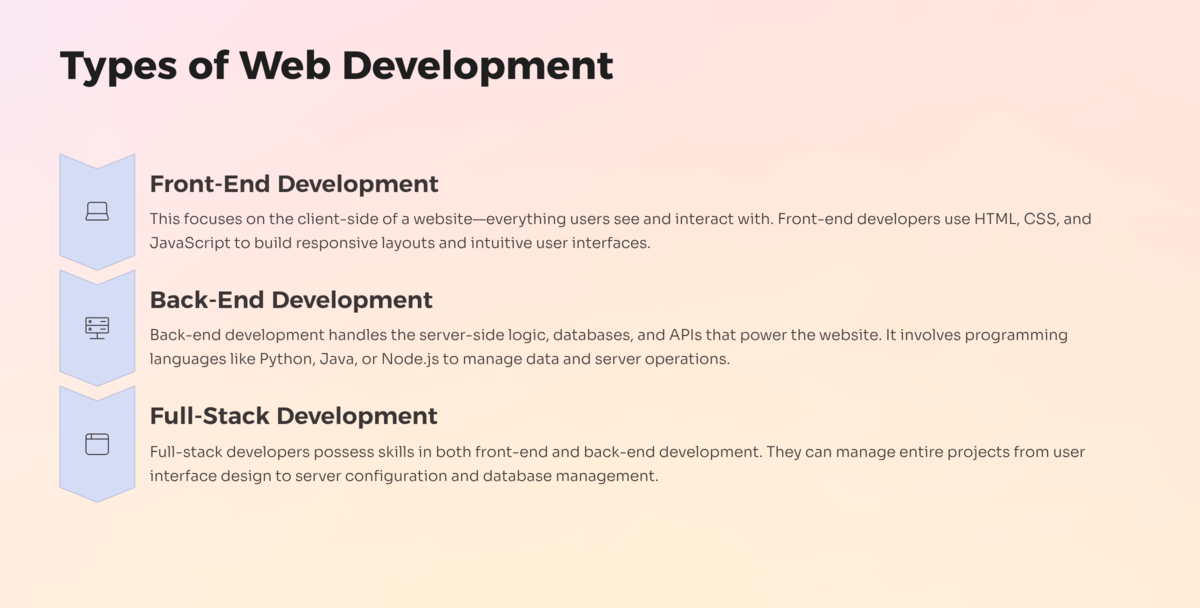
- Front-End Development: This involves working with the visual elements of the website that users interact with, like layout and design. Front-end developers use HTML, CSS, and JavaScript to create responsive and user-friendly websites.
- Back-End Development: This is the server-side of web development, where developers handle databases, server management, and APIs. Technologies like PHP, Python, and Node.js are often used for back-end development.
- Full-Stack Development: Full-stack developers handle both front-end and back-end development. They have the skills to work on both the design and functionality of a website, making them versatile and capable of managing all aspects of web development.
Tools and Technologies Used by Web Developers
Web developers use a wide range of tools and technologies to create functional websites. These include:
- Development frameworks: Frameworks like React, Angular, and Vue.js are popular for front-end development, while Node.js, Django, and Ruby on Rails are commonly used for back-end development.
- Databases and APIs: Developers use databases like SQL and MongoDB to store and manage data. They also use RESTful APIs and GraphQL to enable communication between the front-end and back-end of a website.
In the web design vs web development conversation, the tools used by web developers are more focused on functionality and performance, whereas web designers use tools for visual design and user experience. The developer vs designer distinction remains clear: developers build the website’s framework, while designers create its look and feel.
What Are The Key Differences Between Web Design and Web Development?
Understanding the key differences between web design and web development is essential for anyone looking to build a website. Web design and web development are two distinct aspects of website creation, each with its own focus and set of skills. Companies engaging in B2B Web Design Development may prioritize functionality and scalability, focusing on business-driven objectives.

Web designers handle the aesthetics and user experience, while web developers focus on making the website work smoothly. Both play crucial roles in creating a website that is visually appealing and functional. The web designer and web developer work together to ensure that the website not only looks good but also performs well.
The Focus of Web Design vs Web Development
Web design focuses primarily on the look and feel of the website. Designers create the layout, choose the color scheme, and ensure the user interface (UI) is easy to navigate. Their goal is to make the website visually attractive and user-friendly.
On the other hand, web development is all about functionality and performance. Developers write the code that makes the website work, handle the database, and ensure the site functions across different devices. While web design handles how the site looks, web development ensures that the site works as expected.
The web developer vs web designer distinction lies in their respective goals: designers focus on appearance, and developers focus on technical aspects.

Skills Required for Web Design and Web Development
- Design skills: Web designers need to be skilled in graphic design, creativity, and have a strong understanding of UI/UX principles. They use tools like Adobe XD, Figma, and Sketch to create visually appealing designs that engage users. On the development side, professionals in B2C Web Design Development need to integrate their design expertise with the functionality required for consumer-focused websites.
- Development skills: Web developers need a strong foundation in coding, problem-solving, and a deep understanding of web development frameworks. They work with languages like HTML, CSS, JavaScript, and backend technologies like PHP and Node.js to create functional websites.
Both web designers and web developers need to understand the other’s role, but the web developer vs web designer comparison shows that their skills are different but complementary.
Collaboration Between Web Designers and Web Developers
Web designers and web developers must work closely together to build a seamless website. Designers create the visual elements and user experience, while developers bring those designs to life by coding and ensuring functionality.
The collaboration between the two roles is essential for creating websites that are not only visually stunning but also work smoothly. The web designer and web developer must communicate effectively to ensure that the design is implemented accurately and that the website performs well.
In web design vs web development, both are crucial, and collaboration between designers and developers is key to delivering a website that meets both aesthetic and functional goals.
Why Both Web Design and Web Development Are Essential for a Successful Website?
When creating a website, both web design vs web development play crucial roles. Web design shapes the user experience, while web development ensures that the site functions smoothly and securely. Companies can benefit from working with a tech marketing agency to combine web design and development services with strategic marketing, ensuring their site attracts and engages the right audience.
To build a successful website, it's essential to integrate both design and development effectively. Web developer and web designer work hand in hand to create a website that looks great and functions flawlessly. Each has a distinct role but must collaborate closely to meet the needs of users and achieve business goals. Without either design or development, a website would be incomplete.
The Importance of a Good User Experience (UX)
A well-designed website enhances user experience (UX), which is crucial for user engagement. Good web design ensures that users can easily navigate the site, find what they need, and enjoy interacting with the content. When users have a positive experience, they are more likely to stay longer, return, and engage with the website’s content.
Web developer vs designer: While designers create the visual appeal and usability, developers ensure the technical aspects, like loading speed and responsiveness, are optimized to further enhance the user experience. Together, they create a seamless journey for visitors, increasing satisfaction and interaction.
The Role of Web Development in Functionality and Performance
Web development ensures that a website performs well and is functional across various devices. Developers focus on coding, building databases, and setting up servers. They make sure that the website loads quickly, works seamlessly, and is optimized for performance.
Security is another critical aspect that developers handle. They implement measures like encryption and firewalls to ensure the website is safe from cyber threats. Web developer and designer must collaborate closely to ensure that both performance and aesthetics meet the needs of the website’s users.
The Balance Between Design and Development
Both design and development are essential for a successful website. Web developer and web designer must work in balance, combining creativity with functionality. The visual elements of a site must align with its purpose, while the technical aspects should support the design seamlessly.
When web design and web development are aligned, the website will not only look great but also provide an excellent user experience and perform optimally. Balancing aesthetics and functionality is the key to building a website that attracts and retains users while meeting business objectives.
How to Choose Between Web Design and Web Development?
Choosing between web design vs web development depends on the specific needs of your website. Both elements are crucial, but there are times when one may take priority over the other. Understanding the Difference Between B2B and B2C Website Development and when to focus on design or development will help you create a website that meets both aesthetic and functional goals.
Web design vs web development isn't a competition, it's about determining which element is most important for the specific stage or goal of your project.
When to Focus on Design?
You should prioritize design when your main goal is to establish a strong brand presence, improve user engagement, and create a visually appealing site. Design is critical for attracting and retaining visitors, as it creates the first impression of your brand.
When to focus on design:
- For branding and establishing a unique identity.
- When aiming to enhance user engagement through intuitive UI and visually appealing layouts.
- When visual appeal is critical for your audience (e.g., e-commerce, portfolio sites).
Great design helps users understand what your brand stands for and keeps them interested in your content.
When to Focus on Development
Focus on development when your website needs strong technical performance, functionality, and scalability. Development ensures that the website operates smoothly and is equipped to handle traffic, security, and data management.
When to focus on development:
- For creating complex functionalities, like e-commerce platforms or custom features.
- When ensuring scalability for future growth, such as handling large user bases or adding new features.
- When optimizing technical performance for speed and security.
In web design vs web development, development takes precedence when the website needs to perform well and remain secure under heavy usage or future expansion. Web developer and web designer must collaborate to balance technical aspects with the visual design.
FAQs
What is the Difference Between Web design and Web Development?
Web design focuses on the look and feel of a website, including layout, colors, and user interface. Web development, on the other hand, handles the website's functionality, coding, and performance to ensure it works smoothly across different devices.
Why is Both Web Design and Web Development Important?
Both are crucial for a successful website. Design makes the site attractive and user-friendly, while development ensures functionality and performance. Together, they create a seamless, engaging experience that meets both aesthetic and technical requirements, leading to higher user satisfaction and engagement.
When Should I Prioritize Web Design Over Development?
Prioritize web design when branding, user engagement, and visual appeal are key. A strong design helps create a unique identity, attracts visitors, and enhances user experience. Design is especially important for e-commerce, portfolios, and sites where visuals are central to success.
Conclusion
In the web design vs web development debate, it's clear that both play essential roles in creating a successful website. Web design focuses on the aesthetics, user experience, and interface, while web development ensures the website is functional, secure, and performs well. A successful website requires both aspects, the creativity of design and the technical expertise of development. The collaboration between web designers and web developers is key to building a site that is not only visually appealing but also delivers excellent performance and functionality. Centric is a trusted partner for businesses seeking expert web design and development solutions. It combines design creativity with technical expertise to help businesses thrive in the digital world.